 Skip to content
TL;DR:
- Proper, consistent maintenance is essential to extend hardwood floor lifespan significantly.
- Different flooring types require tailored care to maximize durability and refinishing cycles.
- Regular cleaning, humidity control, and proactive upkeep prevent early floor failure in Denver’s climate.
Hardwood floors look tough. They feel solid underfoot, they age with character, and they seem like they could last forever on their own. But here’s the truth most homeowners don’t hear until it’s too late: without consistent, smart maintenance, even the most beautiful hardwood floors start losing their charm within just a few years. In Denver, where dry air, dramatic seasonal swings, and heavy foot traffic all conspire against your floors, the right maintenance routine isn’t just helpful. It’s essential. This guide walks you through what actually protects your floors, how different flooring types respond to care, and exactly what to do to keep them looking stunning for decades.
Table of Contents
- Why floor maintenance is crucial for longevity
- Types of flooring and their lifespan with maintenance
- Best practices for cleaning and preventing damage
- Preventive maintenance strategies for commercial properties
- Our take: Most overlooked truths about floor longevity
- Professional floor care: Denver’s best resource
- Frequently asked questions
Key Takeaways
| Point | Details |
|---|---|
| Consistent care matters | Regular cleaning and maintenance are crucial for maximizing the life and appearance of your floors. |
| Material impacts longevity | Solid hardwood outlasts engineered and other flooring types when maintained properly. |
| Denver’s climate challenges | Dry air and heavy traffic require special attention for floor care in the Denver Metro Area. |
| Prevention saves money | Proactive maintenance reduces repair costs and extends the time before replacement is needed. |
Why floor maintenance is crucial for longevity
Let’s bust a common myth right away. A lot of homeowners assume that because hardwood is a premium material, it basically takes care of itself. Lay it down, enjoy it, done. But that thinking leads to floors that need full replacement years before they should.
The reality is that maintenance is the single biggest factor in how long your floors last. It matters more than the wood species you choose. It matters more than the finish brand. And it definitely matters more than how carefully you walk on them.
“A well-maintained hardwood floor isn’t just prettier. It’s a protected investment that compounds in value over time, while a neglected one quietly hemorrhages its potential every single day.”
Think about what happens without proper care. Dirt and grit act like sandpaper every time someone walks across the floor. Moisture from spills or dry Colorado air causes the wood cells to expand and contract. Finishes wear thin without anyone noticing, leaving raw wood vulnerable to deeper damage. These aren’t dramatic events. They’re slow, quiet, and expensive.
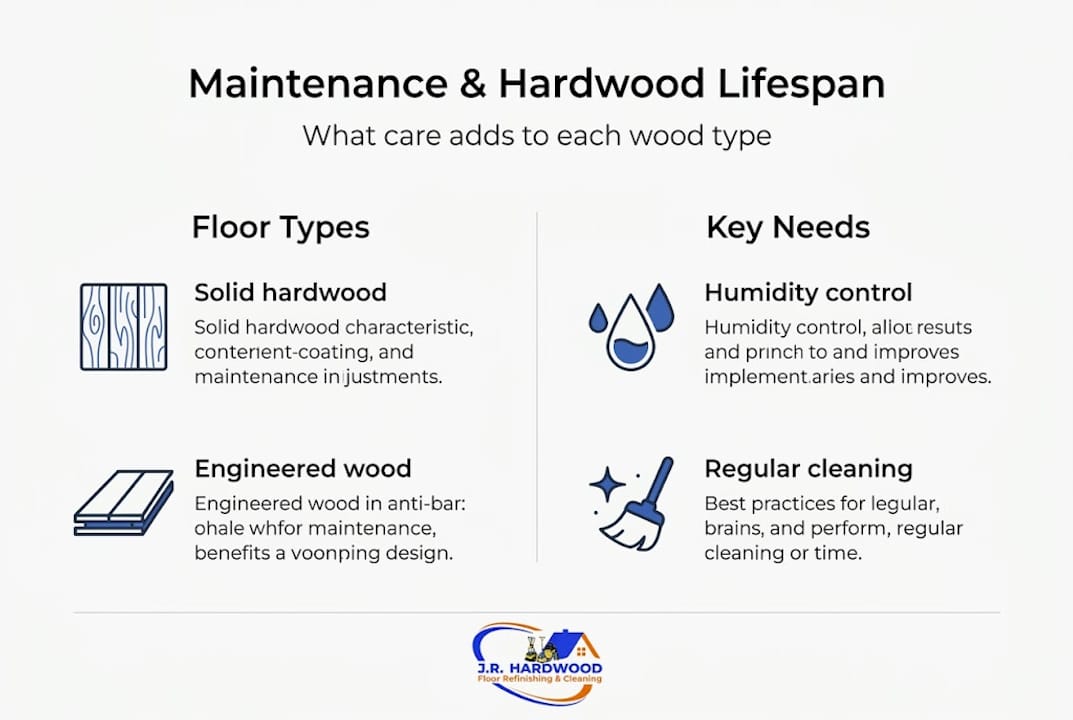
The good news? Consistent extending hardwood lifespan practices genuinely work. Research confirms that solid hardwood can last between 30 and 100 years or more with proper care and multiple refinishing cycles, while engineered hardwood, with its thinner veneer layer on top, typically lasts 20 to 40 years with one to three refinishes. That’s a massive range, and where your floors land on that spectrum depends almost entirely on how well you care for them.
Here’s what makes Denver floors particularly vulnerable:
- Dry air year-round pulls moisture from wood, causing gaps, cracks, and cupping (when the edges of boards curl up)
- High elevation and intense sun can fade and degrade finishes faster than in more temperate climates
- Active lifestyles mean boots, pets, ski gear, and grit are constant companions to your floors
- Seasonal extremes create expansion and contraction cycles that stress wood joints and adhesives
A solid maintenance guide for hardwood beauty built around Denver’s specific conditions can mean the difference between a floor that needs replacement at 20 years and one that still looks stunning at 60.
Types of flooring and their lifespan with maintenance
Now that we know how much maintenance matters, let’s look at the specific numbers. Different floor types respond very differently to care and neglect, and knowing what you’re working with helps you set realistic expectations.
| Floor type | Lifespan with good care | Refinish cycles | Key maintenance need |
|---|---|---|---|
| Solid hardwood | 30 to 100+ years | 3 to 10 times | Humidity control, regular refinishing |
| Engineered hardwood | 20 to 40 years | 1 to 3 times | Gentle cleaning, moisture avoidance |
| Laminate | 15 to 25 years | Not refinishable | Dry mopping, scratch prevention |
| Luxury vinyl plank (LVP) | 20 to 40 years | Not refinishable | Low-abrasive cleaning, UV protection |
| Tile | 50 to 100+ years | Not applicable | Grout sealing, crack inspection |
The standout story here is solid hardwood. According to research, solid hardwood floors last 30 to 100 years or more with proper maintenance and three to ten refinishing cycles, while engineered hardwood reaches 20 to 40 years with only one to three refinishes, limited by veneer thickness. That gap between 30 years and 100 years is entirely about how the floor is treated.
Engineered hardwood is a smart choice for Denver’s humidity-challenged environment because it handles moisture fluctuations better than solid wood. But the trade-off is fewer refinishing opportunities. Once the top veneer is too thin to sand, the floor needs replacement. That makes consistent surface-level care even more important for engineered floors.
Laminate and LVP are popular in high-traffic areas because they’re durable and budget-friendly. But they can’t be refinished when they start looking tired. Their clock runs on a one-way timer, which means preventive maintenance is the only strategy available. Scratches from furniture legs, grit tracked in from outside, and harsh cleaning products all accelerate that countdown.
For Denver homeowners specifically, the seasonal dryness, winter road salt, and particulate matter from outdoor activities make the surface of every floor type work harder. Checking out our refinishing frequency guide can help you time your next refinish for maximum protection.
Pro Tip: If you’re not sure what type of flooring you have, check the edge of a floor vent or a closet threshold. Solid hardwood will show consistent wood grain all the way through. Engineered hardwood has a thin top layer over a plywood core. Laminate will have a printed photographic layer with a fiberboard base underneath.
Key takeaways on floor types and lifespan:
- Solid hardwood rewards long-term investment and gives you the most refinishing flexibility
- Engineered hardwood suits Denver’s climate well but requires careful surface protection
- Laminate and LVP are low-maintenance but non-renewable, so prevention is everything
- Cutting corners on any floor type can slash years or even decades off its potential life
Best practices for cleaning and preventing damage
Here comes the practical part. Knowing your floor type and why maintenance matters is great, but the real magic happens in the daily and weekly habits you build around your floors.
First, let’s talk about what works and what really doesn’t.
The right way to clean your floors:
- Dry sweep or dust mop daily in high-traffic areas. Use a microfiber pad or electrostatic mop to trap fine particles instead of pushing them around. In Denver, outdoor grit and dust are relentless.
- Damp mop weekly with a wood-specific, pH-neutral cleaner. The mop should be barely damp. Think “wrung out until you can’t squeeze another drop.” Excess water is one of the top causes of wood cupping and finish damage.
- Wipe spills immediately. Don’t let liquids sit, even for a few minutes. Water that seeps into cracks or between boards is a slow disaster.
- Use doormats at every entrance. A good mat traps grit, salt, and moisture before it reaches your floors. This single habit extends floor life significantly in Colorado winters.
- Place felt pads under all furniture legs. Dragging chairs or tables across hardwood is one of the fastest ways to create deep scratches that require professional repair.
- Take off shoes at the door. High heels, in particular, concentrate enormous pressure per square inch, enough to dent even hard wood species.
Research from wood flooring experts confirms that wood-specific pH-neutral cleaners used with damp microfiber mops protect finishes and prevent structural damage, while steam mops, excess water, vinegar, oil soaps, and harsh chemicals all cause finish breakdown or cupping over time.
What to avoid completely:
- Steam mops (the heat and moisture penetrate and damage wood fibers and finishes)
- Vinegar or lemon juice solutions (they’re acidic and strip protective coatings over time)
- Oil soaps like Murphy’s Oil Soap (they leave residue that builds up and makes future refinishing harder)
- Bleach or ammonia-based cleaners (they discolor and break down finishes fast)
For more detail, our hardwood cleaning best practices page covers product choices and techniques in depth.
A note on humidity in Denver:
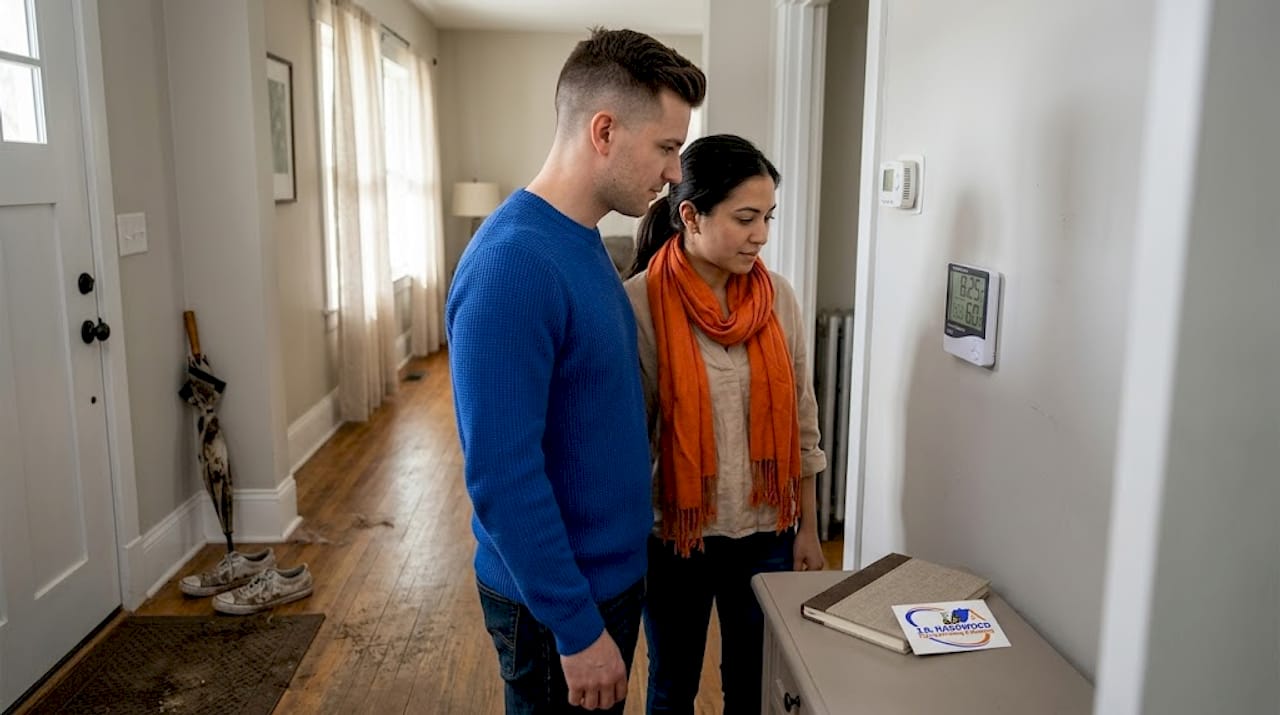
Denver’s average relative humidity hovers around 30 to 40 percent, which is on the low end for wood health. The ideal range for hardwood floors is 35 to 55 percent. Understanding humidity’s impact on maintenance helps explain why Denver homeowners see more cracking and gapping than people in more humid climates.
Pro Tip: Place a simple digital hygrometer (a humidity monitor, available for under $20 at most hardware stores) in your main living area. If humidity drops below 35 percent, run a whole-home humidifier. This single habit prevents more floor damage than any cleaning product on the market.
Learning how to prevent floor damage with environment-specific steps makes a real difference in Denver’s climate. Small, consistent actions compound into decades of protected floor life.
Preventive maintenance strategies for commercial properties
Residential care is one thing. But commercial spaces face a completely different scale of challenge. A retail store, office building, or multi-unit residential complex sees dozens, hundreds, or even thousands of foot traffic events every single day. That changes the math on floor maintenance entirely.
For facility managers and property owners, the difference between ad-hoc cleaning (handling problems as they appear) and a systematic preventive program is enormous. Let’s compare both approaches.
| Approach | Cost over 10 years | Floor condition | Downtime risk | Replacement frequency |
|---|---|---|---|---|
| Ad-hoc (reactive) | High (repairs + early replacement) | Declining | High | Every 10 to 15 years |
| Preventive (proactive) | Lower overall | Consistently good | Minimal | Every 25 to 40 years |
The numbers tell a clear story. Preventive maintenance programs consistently outperform reactive ones, both in cost and in floor appearance. Research confirms that preventive maintenance programs emphasize documented procedures, routine inspections, consistency over frequency, and staff training to extend floor life and reduce total costs.
For commercial spaces, here’s what a strong preventive program looks like in practice:
- Create a written maintenance schedule. Document what gets cleaned, how often, and with what products. This removes ambiguity and holds everyone accountable.
- Conduct regular visual inspections. Walk the floor every week and look for early signs of wear, finish dullness, scratches, or moisture intrusion. Catching problems early costs a fraction of what deferred repairs do.
- Train all cleaning staff on correct techniques. The wrong mop or cleaning product applied daily does more damage than a year of normal foot traffic. Staff training is a non-negotiable investment.
- Schedule professional maintenance cycles. Even well-maintained commercial floors need periodic screen and recoat services to refresh the finish layer before it wears through to bare wood.
- Use entrance matting systems. Commercial-grade entry mats capture grit from parking lots, sidewalks, and Denver’s notorious construction dust before it reaches your floors.
“Consistency in commercial floor care isn’t about doing more. It’s about doing the right things reliably, so your floors never have a chance to fall behind.”
Denver’s unique combination of dry air, heavy foot traffic, and seasonal dirt and salt makes these protocols even more important. Check out our commercial hardwood maintenance page for a breakdown of service schedules tailored to different commercial environments.
The bottom line for facility managers: a documented, consistent maintenance program is the single most cost-effective strategy for protecting your flooring investment and keeping your space looking professional year-round.
Our take: Most overlooked truths about floor longevity
We’ve seen thousands of floors across Denver, Parker, Castle Rock, Boulder, and beyond. And one pattern shows up again and again. The floors that fail early almost never fail because of one dramatic event. They fail because of small, consistent neglect over time.
A spill that wasn’t wiped up right away. A few months of skipped cleanings. A winter where humidity dropped to 20 percent and nobody noticed. These quiet, everyday lapses add up faster than people expect.
Here’s something we think most guides miss: you don’t need expensive products to protect your floors well. Preventive maintenance programs consistently show that consistency and proper technique outperform fancy cleaning solutions. A $15 bottle of the right pH-neutral cleaner used every week beats a $60 specialty product used twice a year.
In Denver’s climate, preserving hardwood in Colorado comes down to a few non-negotiable habits: monitor your humidity, respond to spills immediately, and get a professional evaluation before you can see visible wear. That last one is key. By the time you can see the floor needs help, it’s already working harder than it should be. Getting ahead of wear is always cheaper and easier than catching up to it.
Professional floor care: Denver’s best resource
Your floors work hard every day, and they deserve consistent support to keep performing their best. Whether you’re a homeowner looking to protect a beautiful solid hardwood investment or a property manager maintaining high-traffic commercial spaces, expert guidance makes the process simpler, smarter, and more effective.
At J.R. Hardwood Floor Refinishing & Cleaning, we help Denver homeowners and commercial clients get the most out of every floor. From free over-the-phone quotes to eco-friendly products and premium finishes, we make it easy to take the next step. Explore our professional floor refinishing options, read our guide to floor refinishing for a full overview of the process, or download our floor cleaning checklist to build a routine that protects your floors starting today.
Frequently asked questions
How often should hardwood floors be refinished to maximize longevity?
Most solid hardwood floors benefit from refinishing every 7 to 10 years depending on traffic, while engineered hardwood typically allows one to three refinishes over its lifespan due to veneer thickness limits. Timing your refinish before the finish wears through prevents costly repairs.
What is the best way to clean floors to avoid damage?
Use a damp microfiber mop with a pH-neutral wood cleaner and avoid steam mops, excess water, vinegar, and harsh chemicals that break down finishes or cause wood cupping. Less moisture is always better on hardwood.
Does floor maintenance really save money in the long run?
Absolutely. Preventive maintenance programs consistently show that routine care reduces repair bills and significantly delays full replacement, which is far more expensive than regular upkeep.
How does Denver’s climate impact hardwood maintenance?
Denver’s low humidity, typically 30 to 40 percent, causes wood to dry out and develop gaps, cracks, and cupping. Keeping indoor humidity between 35 and 55 percent and staying consistent with dry air floor care is essential for protecting your floors year-round.