 Skip to content
TL;DR:
- Skilled flooring craftsmanship relies on precise techniques, from acclimation to finishing, ensuring durability and beauty. It significantly outperforms standard installation by preventing issues like gaps, cupping, and uneven finishes, especially in Colorado’s challenging climate. Investing in expert craftsmanship extends your floor’s lifespan, enhances maintenance ease, and adds long-term value to your property.
Most people walk into a flooring project thinking the wood species or price tag is what separates a great floor from a mediocre one. The truth is, the craftsmanship behind every cut, nail, and coat of finish is what actually determines how beautiful, durable, and low-maintenance your floor turns out to be. In this article, we’ll show you exactly what skilled flooring craftsmanship looks like, how it compares to standard installation, and why it pays off year after year, especially in Colorado’s demanding climate. Whether you’re planning a new install or restoring aging hardwood, this is the knowledge you need before you spend a single dollar.
Table of Contents
- Why craftsmanship matters in flooring
- Core elements of skilled flooring craftsmanship
- Comparing craftsmanship: Professional vs. standard installation
- Craftsmanship’s impact on maintenance and longevity
- Why true flooring craftsmanship pays off—what most overlook
- Get exceptional flooring craftsmanship in Colorado
- Frequently asked questions
Key Takeaways
| Point | Details |
|---|---|
| Craftsmanship defines quality | The skill of your installer directly affects floor durability and appearance. |
| Expert work boosts longevity | Flooring done with care lasts longer and needs less maintenance. |
| Finishes require expertise | Proper finish application by skilled hands preserves and enhances wood’s look over time. |
| Maintenance is easier | Well-crafted floors are simpler to keep clean and restore, saving time and money. |
Why craftsmanship matters in flooring
Now that it’s clear flooring relies on more than just material, let’s explore why the expertise behind installation and finishing makes all the difference.
Flooring craftsmanship means paying close attention to every detail of the process, from how the wood acclimates before installation to how the final coat of finish is applied and buffed. It’s the difference between a floor that looks beautiful on day one and a floor that still looks beautiful ten years later. Think of it like this: two chefs can use the same ingredients and produce wildly different results. Skill, timing, and technique are everything.
Here in Colorado, floors face some genuinely tough conditions. Our altitude, low humidity, strong UV exposure, and dramatic temperature swings between seasons create a challenging environment for wood. A floor installed without proper attention to these factors can cup, crack, or develop gaps within just a few years. On the flip side, craftsmanship for durability means your floor is built to handle whatever Colorado throws at it.
Here’s what skilled flooring craftsmanship actually covers in practice:
- Proper wood acclimation to the home’s moisture and temperature before any boards are laid down
- Subfloor preparation that ensures a perfectly level surface, preventing creaks, movement, and future gaps
- Expert finishing choices tailored to the wood species and the room’s use level
- Careful plank selection and layout to minimize visible seams and maximize the floor’s natural grain pattern
- Edge work and transitions that blend seamlessly with walls, stairs, and adjoining rooms
As noted in a guide on craftsman flooring features, natural oil finishes versus high-gloss polyurethane allow wood to breathe and age gracefully, while wide planks reduce seams but need expert installation to perform well long-term.
The professional installation benefits go well beyond aesthetics. When a skilled craftsperson handles your flooring project, you’re getting someone who understands wood movement, finish chemistry, and how to prevent problems before they start. That expertise is worth every penny.
“The best floors aren’t just installed, they’re crafted. Every decision, from the direction of the boards to the sheen level of the finish, shapes the final result for years to come.”
Core elements of skilled flooring craftsmanship
With an understanding of its importance, let’s look closer at the hands-on skills that set true craftspeople apart.
Genuine flooring craftsmanship isn’t one big thing. It’s a series of precise steps, each one building on the last. Miss any of them, and the entire project suffers. Here’s a step-by-step look at what separates artisan quality from average work:
-
Substrate preparation and leveling. Before a single board goes down, a craftsperson evaluates the subfloor for flatness, moisture levels, and structural integrity. Any high spots or soft areas are corrected. Skipping this step leads to squeaky floors and board movement later.
-
Wood acclimation. Hardwood needs time to adjust to the indoor humidity and temperature of your specific home before installation. This process usually takes several days. Rushing it causes wood to expand or contract after install, creating gaps or buckling.
-
Pattern planning and precise measurement. A skilled installer maps out the layout before cutting a single board. This includes planning where cuts will fall at doorways, calculating how rows will look at the room’s edges, and minimizing short or awkward cuts in high-visibility areas.
-
Tight seam installation. Each board is secured and pressed firmly against its neighbor. Gaps between planks are a sign of rushed work or poor technique. Tight, consistent seams keep moisture out and give the floor a polished, intentional look.
-
Sanding and finish application. This is where things really get technical. Sanding must be done in stages with progressively finer grits to create a smooth, even surface. Uneven sanding leaves swirl marks and dips that show up dramatically under finish. As craftsman flooring features confirm, the choice between natural oil finishes and high-gloss polyurethane affects both the look and the long-term health of the wood.
-
Edge work and detail finishing. Baseboards, transitions between rooms, and stair nosings all require careful trimming and fitting. Sloppy edge work is one of the most common signs of a rushed job.
Pro Tip: When you’re evaluating a flooring contractor, ask them to explain their sanding process in detail. A true craftsperson will talk about grit sequences, the direction of sanding relative to the grain, and how they handle edges separately from the main floor. Vague answers are a red flag.
Understanding the difference between oil vs. water-based finishes is also key. Oil-based finishes tend to add a warm amber tone and are extremely durable. Water-based finishes dry faster, stay clearer, and have lower odor during application. Neither is universally better. The right choice depends on your wood species, your lifestyle, and the look you’re going for. A skilled craftsperson helps you make that decision confidently.
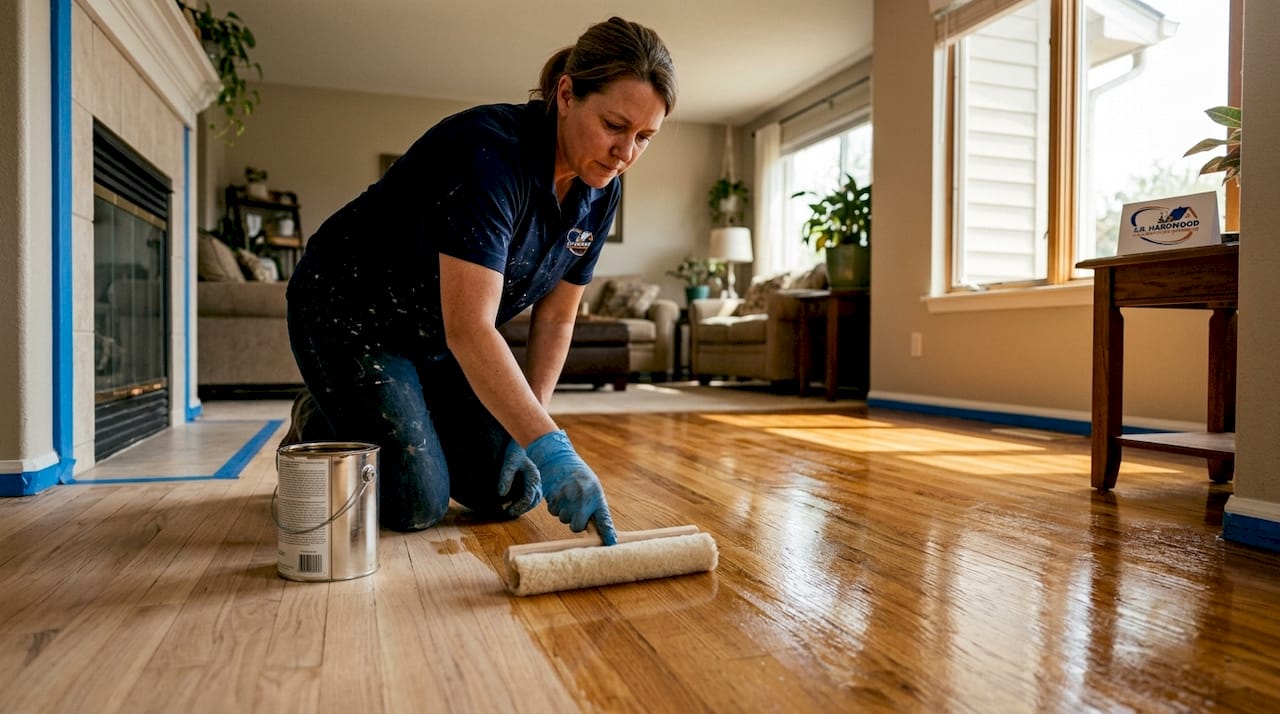
When reviewing floor installation steps, you’ll also notice that restoration work adds another layer of complexity. Blending new planks with existing floors, matching stain color, and evening out sheen between old and new sections requires a trained eye and years of experience.
Comparing craftsmanship: Professional vs. standard installation
Now, see how craftsmanship stacks up in real project outcomes.
Sometimes the easiest way to understand quality is to compare it side by side. Let’s break down how professional craftsmanship compares to a standard, less-detailed installation across the key factors that matter most to you as a homeowner or property manager.
| Factor | Craftsman-quality installation | Standard installation |
|---|---|---|
| Subfloor prep | Full leveling, moisture testing, structural check | Surface cleaning only |
| Acclimation | 3 to 7 days, monitored | Minimal or skipped |
| Seam tightness | Consistent, nearly invisible seams | Visible gaps, inconsistencies |
| Finish application | Multi-coat, even sheen, detailed edge work | Single or double coat, uneven edges |
| Color consistency | Stain matched and blended throughout | Blotchy or uneven tones |
| Problem prevention | Cupping, gaps, and warping largely prevented | Common issues appear within 1 to 3 years |
| Long-term cost | Fewer repairs, refinishing extends floor life | More frequent repairs or early replacement |
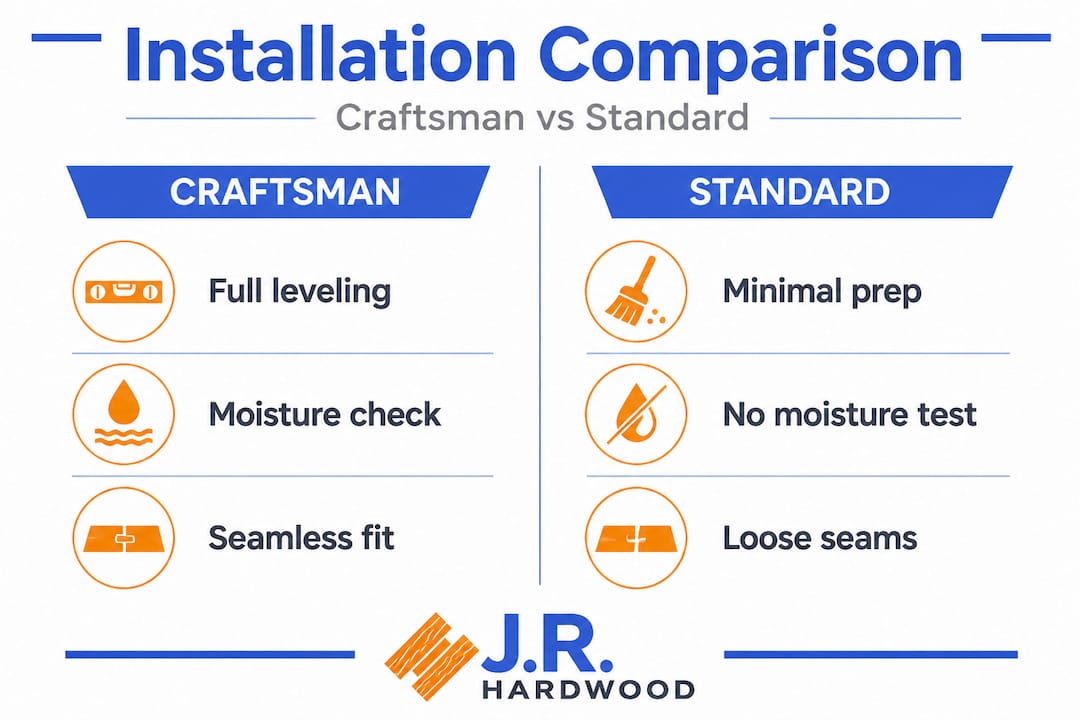
As experts in craftsman style flooring note, wide planks particularly need expert installation because their larger surface area makes them more vulnerable to movement from humidity changes. A standard installer may not account for this.
The most common problems we see from non-craftsman installs include:
- Cupping: Boards curve upward at the edges because of moisture imbalance, often caused by skipping acclimation or improper vapor barrier installation
- Gapping: Spaces appear between boards as the wood moves, often because the subfloor wasn’t level or the wood wasn’t acclimated properly
- Uneven coloring: Stain looks blotchy or inconsistent because the sanding wasn’t done evenly before the finish was applied
- Squeaking: Noise under foot often traces back to subfloor issues that weren’t addressed during prep
- Peeling finish: Happens when coats are applied too thick, too fast, or without proper bonding between layers
The good news is that most of these problems are entirely preventable. Reviewing a DIY vs professional refinishing comparison makes it easy to see why professional work saves money over time. Repairs and early refinishing add up fast. A well-crafted floor, on the other hand, can go many more years before it needs any significant attention.
If you’re starting a new project or revisiting a floor that needs help, a solid refinishing guide can help you understand what quality work looks like from start to finish.
Craftsmanship’s impact on maintenance and longevity
Beyond the initial installation, expert craftsmanship continues to deliver value for years by making maintenance simpler and extending floor life.
A beautifully installed floor isn’t just easier to look at. It’s genuinely easier to care for. When seams are tight, there are fewer places for dirt, pet hair, and moisture to hide. When the finish is applied evenly and correctly, cleaning products work better and the floor resists staining more effectively.
Here’s a practical look at how finish type and installation quality affect your day-to-day maintenance routine:
| Finish type | Cleaning ease | Scratch resistance | Refinishability | Best for |
|---|---|---|---|---|
| Natural oil | Easy, spot-repairable | Moderate | High | Character-rich, natural look |
| Water-based polyurethane | Very easy | High | High | Modern, light-colored spaces |
| Oil-based polyurethane | Easy | Very high | High | High-traffic, warm-toned floors |
| Wax (traditional) | Moderate | Low | Moderate | Historic or specialty floors |
According to craftsman flooring guidance, natural oil finishes allow wood to breathe and age gracefully, which means they’re especially forgiving in Colorado’s fluctuating humidity. They also make spot repairs easier because you don’t have to refinish the entire floor when a section gets damaged.
Tight, well-fitted floors also support durable custom flooring outcomes over time. When planks are correctly seated and the finish is properly cured, floors handle commercial-level foot traffic with far less wear. For commercial property managers especially, this translates directly to lower maintenance costs and longer intervals between major refinishing projects.
Pro Tip: Ask your flooring professional about the floor’s “refinish window,” which means how many times it can be sanded and refinished over its lifetime. A well-crafted solid hardwood floor installed with the right thickness can typically handle four to six full refinishes. That’s potentially 60 to 100 years of beautiful flooring from a single install.
For Colorado homeowners, following practical cleaning tips designed for our specific climate conditions makes a big difference. Low humidity in winter can pull moisture from boards faster than you’d expect. Knowing how to respond to that, and what products to use, keeps your floor looking its best year-round.
Reviewing floor cleaning best practices also helps you protect the finish layer, which is your floor’s first line of defense. Think of the finish like sunscreen for your wood. It takes the daily beating so your wood doesn’t have to.
Why true flooring craftsmanship pays off—what most overlook
Here’s something we’ve noticed after years of working on floors across the Denver Metro Area and beyond: most homeowners only start thinking seriously about craftsmanship after they’ve already had a bad experience. They notice the cupping, hear the creaking, or watch the finish peel up in sections. And then they wish they had asked better questions from the start.
The hidden value of craftsmanship isn’t just visual. It’s about flexibility. A well-crafted floor is a platform for future updates. It can be stained a darker color when your style evolves. It can be lightly screened and recoated to refresh the finish without a full sand-down. It can have individual damaged boards replaced and blended seamlessly, which is nearly impossible with a floor that was poorly installed to begin with.
In Colorado specifically, that flexibility matters. Our climate shifts significantly between seasons, and homes at elevation in areas like Castle Rock or Boulder experience even wider humidity swings. Floors installed with proper acclimation and tight technique handle those shifts without fuss. Floors that weren’t? They fight the climate every single year and lose ground slowly but surely.
We also believe craftsmanship is one of the smartest financial decisions a property owner can make. Real estate professionals consistently note that hardwood floors are among the top features buyers look for. But worn, poorly finished, or damaged hardwood can actually hurt a home’s value. Investing in restoration expertise before selling, or simply as part of responsible home ownership, returns real value. The math works out strongly in favor of doing it right the first time.
The uncomfortable truth is that low-bid flooring usually ends up costing more over time. The repairs, the early refinishing, the frustration of floors that never quite look right—these costs add up quietly. Craftsmanship is the investment that makes those costs disappear.
Get exceptional flooring craftsmanship in Colorado
If you’re ready to see the benefits of skilled flooring craftsmanship in your own property, here’s how to get started.
At J.R. Hardwood Floor Refinishing & Cleaning, we bring artisan-level skill to every project across the Denver Metro Area, Parker, Castle Rock, Boulder, Colorado Springs, and the communities in between. Whether you’re restoring aging hardwood or starting a full new installation, our team combines technical expertise with genuine care for your home.
We make it easy to take the first step. Our free over-the-phone quotes, based on your description and photos, give you a clear picture of what your project involves before any commitment is made. You can also explore our professional refinishing process to understand what quality work looks like from start to finish. If you want to go deeper before reaching out, our detailed refinishing guide walks you through every stage of the process. Your floors deserve craftsmanship that lasts. We’re here to deliver exactly that.
Frequently asked questions
What is craftsmanship in the context of hardwood flooring?
Craftsmanship in hardwood flooring refers to the expert techniques, precision, and attention to detail that result in a floor with long-lasting durability, beauty, and seamless installation. As craftsman flooring experts note, choices like finish type and plank width all require skilled execution to perform well.
How does professional craftsmanship affect floor maintenance?
Skilled installation reduces gaps and seams, making floors easier to clean and far less likely to trap dirt or moisture over time. Properly applied craftsman-quality finishes also make cleaning products work more effectively and protect the wood from daily wear.
Is there a difference between the appearance of a craftsman-installed floor and a standard one?
Yes, craftsman-installed floors have tighter seams, more consistent coloring, and finishes that enhance the natural character of the wood beautifully. Wide planks and natural finishes in particular require expert hands to look their best.
Why is craftsmanship especially important for Colorado floors?
Colorado’s climate demands tight installs and proper finishes to withstand dryness, dramatic temperature swings, and high-traffic use in both residential and commercial spaces. A properly acclimated install prevents common climate-related problems like cupping, gapping, and finish failure.
How can I verify a flooring installer’s craftsmanship?
Ask for portfolios, references, and a detailed explanation of their sanding process, finish selection, and restoration methods before hiring anyone. Watching video content of past projects, like the detailed YouTube videos we produce at J.R. Hardwood, gives you a clear, honest view of the work quality you can expect.