 Skip to content
TL;DR:
- Regular dry dust-mopping is crucial for protecting hardwood floors from grit abrasion and moisture damage. Proper cleaning routines, including avoiding harsh chemicals and addressing spills immediately, extend floor longevity in Colorado’s challenging climate. Professional refinishing may be necessary when visible wear, dull patches, or water absorption indicate the finish is beyond simple maintenance.
Most Colorado homeowners think about floor care in big moments: a scratch that won’t buff out, a finish that looks foggy, a plank that starts to cup near the back door. But how cleaning impacts floor longevity starts long before any of that visible damage shows up. It happens quietly, daily, in the grit your boots track in from a gravel driveway or the damp mop that sits a little too wet. Getting your cleaning routine right is genuinely one of the most powerful things you can do to protect your hardwood investment, and we’re here to walk you through exactly how.
Table of Contents
- Why cleaning matters for hardwood floor longevity
- Balancing dust removal and moisture control in cleaning routines
- Comparing cleaning frequencies and methods for different traffic levels
- Practical cleaning tips and common pitfalls to avoid
- When cleaning isn’t enough: signs you need professional floor refinishing
- Why daily dry cleaning is the unsung hero of hardwood floor longevity
- Protect and restore your hardwood floors with expert care from J.R. Hardwood
- Frequently asked questions
Key Takeaways
| Point | Details |
|---|---|
| Daily grit removal | Regularly removing dust and grit prevents abrasive wear that shortens floor life. |
| Balanced moisture use | Use only minimally damp mopping to avoid moisture damage like warping and cupping. |
| Tailor cleaning frequency | High-traffic and seasonal conditions require more frequent dry and damp cleaning. |
| Avoid harmful cleaners | Stay away from vinegar, ammonia, steam mops, and harsh chemicals to protect your finish. |
| Professional refinishing timing | Recognize dullness and bare wood to know when to schedule refinishing for restoration. |
Why cleaning matters for hardwood floor longevity
Think of your floor’s finish as a protective shield. It sits between your beautiful wood and everything the world throws at it. Every time that shield erodes, the wood underneath becomes vulnerable. Understanding what erodes it fastest is the first step toward keeping it strong.
Dirt and grit are the real culprits most people miss. When fine particles from Colorado’s sandy soil, gravel parking lots, and hiking trails get tracked inside, they don’t just sit there looking messy. They act like sandpaper under every footstep, grinding against your finish with every pass. Fine grit accelerates finish wear, while excess moisture causes cupping and warping in hardwood floors. Both threats are real, and both are manageable.
Here is what’s actually happening to your floors on a typical day:
- Grit abrasion: Tiny particles create micro-scratches in the finish coat, gradually dulling its sheen and thinning its protective layer
- Moisture infiltration: Water sneaks into seams between boards, causing the wood fibers to swell and eventually warp or cup
- Chemical residue: Leftover cleaning product builds up as a sticky film, attracting more dirt and dulling appearance faster
- Traffic patterns: High-use paths near entryways and kitchens wear much faster than low-traffic areas, creating uneven finish depth
“The damage isn’t usually dramatic. It’s the slow, daily grind that steals years from your floor before you even notice.”
For Colorado homes, the threat level is higher than average. We deal with gravel driveways, ski boot grit, road salt tracked in during winter, and dramatic humidity swings between our dry summers and snowmelt season. That combination means your floors are working harder than floors in more temperate climates. Investing in proper floor care for longevity pays real dividends here.
With the basics clear, let’s examine how cleaning methods affect your floor’s protection layer.
Balancing dust removal and moisture control in cleaning routines
Here’s where a lot of well-meaning homeowners go wrong. They reach for the mop before they reach for the vacuum, and that single habit can quietly cause more harm than good. Dry cleaning is not just a step you can skip when you’re in a hurry. It’s the foundation of everything else.
Follow this simple order to clean without causing damage:
- Dry dust-mop or vacuum daily in high-traffic areas like entryways, hallways, and kitchens. This removes the abrasive grit before it gets pressed into the finish.
- Vacuum along baseboards and corners weekly where dust accumulates unseen and attracts moisture.
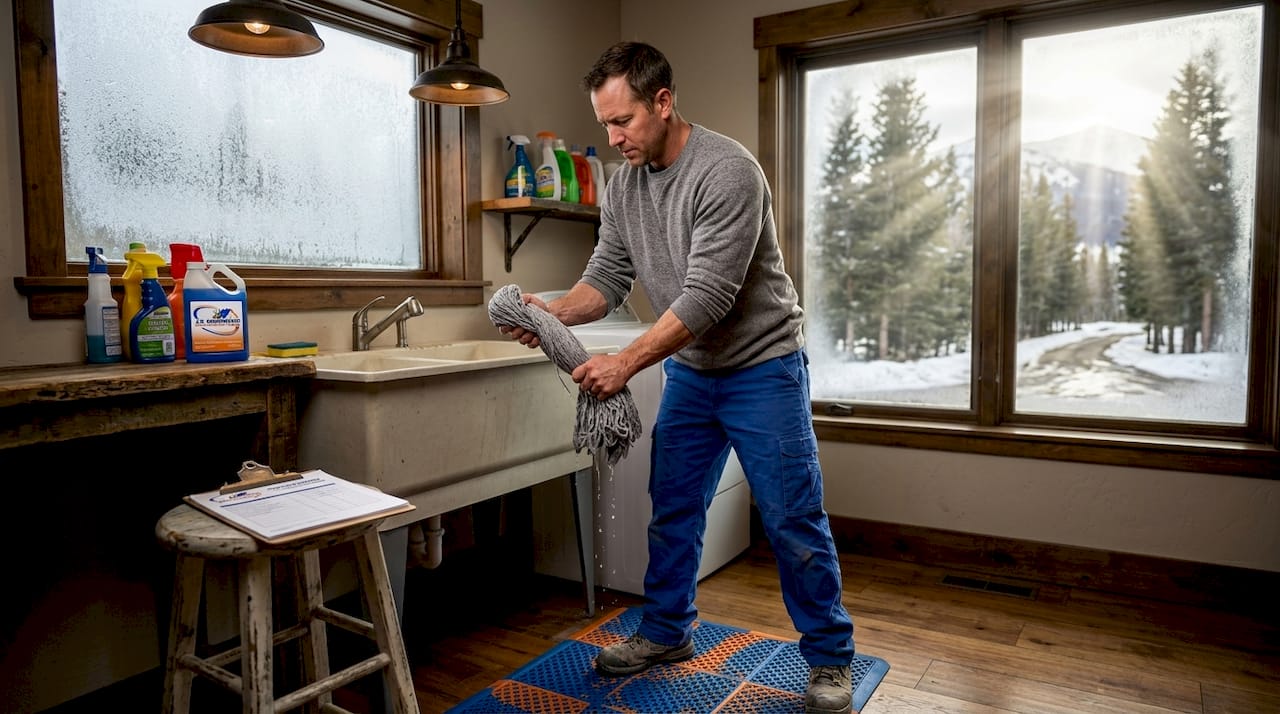
- Damp mop weekly using a microfiber mop wrung out so thoroughly it feels almost dry to the touch. Daily dry dust-mopping removes abrasive grit; weekly damp mopping with a barely damp microfiber mop avoids excess moisture damage.
- Spray your cleaner onto the mop, never directly onto the floor. This keeps moisture controlled and prevents pooling near seams.
- Dry any damp spots immediately after mopping. Standing water, even for a few minutes, is one of the fastest ways to damage a hardwood finish.
Colorado’s low humidity in summer actually helps dry floors faster, which is a small advantage. But our winters flip the script. Snowmelt, wet boots, and ice melt salts mean your floors face their toughest conditions between November and March. That’s when consistency in your routine matters most. Learning to prevent hardwood floor damage before it starts is far easier than fixing it later.
Pro Tip: Keep a microfiber dust mop right by your most-used entrance. When it’s visible and within reach, you’re far more likely to do a quick daily sweep. Think of it like putting your vitamins on the counter instead of hiding them in a cabinet.
Understanding the cleaning role in floor care goes beyond just keeping things tidy. It’s about protecting your finish so your floor stays beautiful for decades, not just years.
Now that you know why and how to clean properly, let’s compare cleaning frequencies and methods to find the ideal routine.
Comparing cleaning frequencies and methods for different traffic levels
Not every room in your home needs the same attention. Your entryway takes a beating that your guest bedroom simply never will. Matching your effort to actual traffic levels keeps your routine manageable and your floors protected.
| Area | Traffic level | Dry cleaning | Damp mopping |
|---|---|---|---|
| Entry and mudroom | Very high | Daily | 2x per week in winter, weekly in summer |
| Kitchen and hallways | High | Daily | Weekly |
| Living and dining room | Medium | Every 2 to 3 days | Every 1 to 2 weeks |
| Bedrooms | Low | Weekly | Monthly |
| Formal dining or guest rooms | Very low | Weekly | Monthly or less |
High-traffic areas need daily dry cleaning and more frequent damp mopping during winter melt periods, while low-traffic areas benefit from less frequent cleaning cycles. That table above is your simple reference point for building a routine that fits your actual home.
A few more habits that make a real difference:
- Place quality mats at every exterior door. A mat outside and a rug inside can trap up to 80% of the grit before it even reaches your hardwood.
- Add felt pads under all furniture legs. Chairs and tables drag across floors constantly and create the same micro-scratching effect as grit.
- Take shoes off at the door during ice melt season. Colorado road salt is particularly harsh. It’s not just abrasive, it’s chemically damaging to finishes over time.
- Use area rugs in high-traffic zones like the path between your kitchen and living room.
Applying these floor cleaning best practices consistently adds up to real, measurable protection over the years.
With the right routine defined, let’s explore practical cleaning tips to avoid common mistakes that harm your floors.
Practical cleaning tips and common pitfalls to avoid
Knowing what not to do is just as important as knowing the right steps. We see the same mistakes over and over in homes across Denver, Parker, and Castle Rock, and most of them are easy to fix once you know about them.
Here’s what to avoid:
- Mopping without dry cleaning first. Mopping without removing grit grinds abrasive particles into the finish. You’re essentially sanding your floor every time you skip the dust mop.
- Using vinegar, ammonia, or all-purpose cleaners. Vinegar is mildly acidic and degrades polyurethane finish over time. It might make your floor smell fresh, but it’s quietly eating through the protection.
- Steam mops. The heat and moisture combination is a double threat. Steam forces water vapor into wood seams and weakens finish adhesion. Avoid them entirely on hardwood.
- Soaking the floor. String mops or excessive water leave puddles that seep into seams within minutes.
- Ignoring spills. Even a water glass spilled and left for 20 minutes can leave a white haze or start to penetrate the finish.
Pro Tip: Look for cleaners labeled “pH-neutral” and “hardwood-safe” or “polyurethane-safe.” Brands like Bona or comparable wood-specific products are formulated to clean without stripping your finish. Spray it on your mop pad, not your floor.
Address spills immediately, every time. Blot, don’t rub, and follow up with a dry cloth. Quick action is the simplest way to prevent hardwood floor damage steps from becoming permanent.
Knowing these do’s and don’ts ensures your cleaning supports floor longevity. Next, let’s look at when professional refinishing may be necessary.
When cleaning isn’t enough: signs you need professional floor refinishing
Even the most disciplined cleaning routine can’t reverse wear that’s already happened. At some point, your finish reaches the end of its life, and no amount of mopping will bring back what’s been lost. Knowing when to call in the pros saves you money by catching problems before they reach the wood itself.
Watch for these warning signs:
- Dull patches that don’t respond to cleaning, especially in entryways or where furniture sits
- Visible scratches that catch light and create a hazy, worn appearance
- Color variation across planks, suggesting uneven finish wear or UV fading
- Water soaking in rather than beading up. Pour a few drops on a suspect area. If they absorb within a minute, your finish is gone there.
- Soft or spongy feel underfoot, which suggests moisture has already reached the wood
Dull patches, visible bare wood, and water absorbing into the surface signal that screen-and-recoat or full refinishing is needed. Here’s how those two options compare:
| Service | Best for | What it does | Disruption level |
|---|---|---|---|
| Screen and recoat | Light to moderate wear, finish dullness | Lightly abrades and adds a fresh finish coat | Low, back in 24 hours |
| Full sand and refinish | Deep scratches, heavy wear, staining | Removes finish and surface wood, restores completely | Moderate, 2 to 5 days |
Understanding your refinishing service options helps you make a confident, informed decision. And if you want the full picture, our hardwood floor refinishing guide walks through every stage in plain language.
Before wrapping up, here’s a perspective that might change how you think about all of this.
Why daily dry cleaning is the unsung hero of hardwood floor longevity
We talk to hundreds of Colorado homeowners every year, and here’s the pattern we see constantly: people spend a lot of energy debating which cleaner to buy or whether to damp mop once a week or twice. Meanwhile, they skip the daily dry mop entirely because it feels too simple to matter. That’s the mistake.
Daily dry dust-mopping removes grit that creates a “sandpaper effect” wearing down the sealant, making it the most impactful longevity strategy rather than just a cleanliness habit. The finish on your floor is designed to protect wood for 10 to 20 years or more. But that’s only true if you keep the abrasive grit off it consistently.
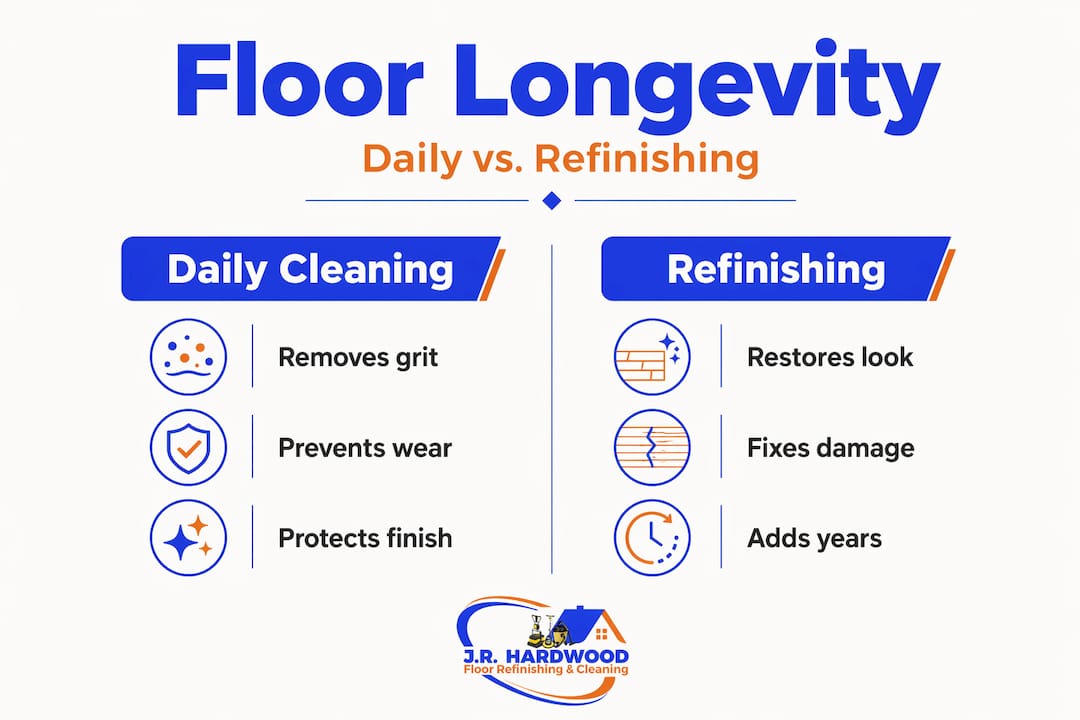
We’ve seen floors in Colorado homes that were refinished 15 years ago and still look beautiful, all because the owner kept a dust mop by the door and used it every single day. We’ve also seen floors that needed full refinishing after just 6 years because of heavy grit and wet mopping without dry cleaning first. The difference wasn’t the wood quality or the original finish. It was the daily habit.
Moisture control matters too, but it plays a supporting role. Keeping your mop barely damp, acting fast on spills, and skipping steam mops protects the wood structure beneath the finish. But it’s the dry cleaning that defends the finish itself, and the finish is your first line of defense.
The professional floor care impact becomes most visible when daily habits are already in place. Refinishing restores what’s been lost. Good daily habits make sure you need it far less often.
Protect and restore your hardwood floors with expert care from J.R. Hardwood
Your floors deserve more than a quick mop and a hope for the best. At J.R. Hardwood Floor Refinishing & Cleaning, we work with Colorado homeowners from Denver and Boulder to Parker, Castle Rock, and Colorado Springs to protect, restore, and extend the life of their hardwood floors. Whether you need a clean and buff to freshen up a tired finish or a full sand and refinish to hit the reset button on years of wear, we have the expertise and eco-friendly products to make it happen beautifully.
We offer free over-the-phone quotes based on photos and a quick conversation about your floor’s condition. No guessing, no surprises. Our team helps you understand exactly which service fits your floors and your budget, from a straightforward clean and buff to a full hardwood floor refinishing service. Ready to give your floors the care they’ve earned? Reach out today and let’s build a plan that keeps them looking great for years to come. You can also explore our floor refinishing guide to learn what the process looks like from start to finish.
Frequently asked questions
How often should I dry mop my hardwood floors to protect them?
Daily dry dust-mopping or vacuuming is recommended to remove abrasive grit that wears down the finish and extends your hardwood floor’s life. Daily dry dust-mopping removes grit that accelerates finish wear, making it the single most effective daily habit for protecting hardwood floors.
Can I use vinegar or steam mops to clean hardwood floors safely?
No, vinegar’s acidity and steam mops’ heat and moisture can damage the floor’s finish and cause warping or dullness over time. Vinegar degrades polyurethane lacquer over time, and steam mops cause irreversible swelling and finish damage, so both should be avoided entirely on hardwood.
What signs indicate my hardwood floor needs professional refinishing?
Dull patches, visible bare wood, and water soaking into the wood rather than beading signal that your floor’s finish is worn and professional refinishing is needed. Visible scratches, dull areas, and water absorption are the key indicators that it’s time to call in a professional.
How does Colorado’s climate affect cleaning frequency and floor care?
Seasonal moisture from snowmelt and dry dust in summer require a tailored approach: daily dry mopping year-round plus more frequent damp cleaning in winter to prevent both moisture damage and grit abrasion. Seasonal meltwater tracking increases wetting needs during winter while emphasizing daily dry cleaning as a constant throughout the year.
What type of cleaning products are best for hardwood floor maintenance?
Use pH-neutral, hardwood-specific cleaners applied with a barely damp microfiber mop; avoid harsh chemicals, ammonia, and overly wet methods to preserve finish integrity. Only pH-neutral hardwood-specific cleaners with a damp microfiber mop are safe long-term, as all-purpose or acidic products quietly break down the finish over time.