 Skip to content
Expect to pay roughly $1 to $2.75 per square foot for a screen and recoat, and $3 to $6.50 per square foot for a full sanding and refinish, according to Denver-area pricing data. A typical living and dining area around 600 square feet runs $600 to $1,500 for a recoat or $1,800 to $3,600 for a full refinish. Repairs, wood species, and stain color swing that number in either direction, so get two or three quotes before you commit to a contractor.
TL;DR:
- The average cost for a full sanding and refinish in Denver ranges from $4.20 to $5.50 per square foot, with typical prices around $1,764 for 600 square feet.
- Construction type, repair scope, and wood species significantly influence final costs, especially since engineered floors may be limited to a single refinishing due to thinner wear layers.
- Moisture testing before refinishing is crucial, as unaddressed subfloor issues can lead to finish failure and unexpected expenses.
- Detailed, itemized quotes that specify scope, repair, and coating details reduce surprises and should include proof of insurance, references, and clear timelines.
Table of Contents
- How Much Does Hardwood Refinishing Cost in Colorado?
- What Actually Drives the Price of Your Quote?
- Screen and Recoat vs. Full Sanding vs. UV Finish: Which One Fits?
- How Long Will Refinishing Take, and Can You Stay Home?
- What Should a Real Quote Include?
- Getting a Reliable Local Quote in Colorado
- Rural Colorado and Mountain Towns: What Changes
- Older Floors vs. Newer Floors: Why the Price Gap Exists
- Flat Rate or Per Square Foot: How Colorado Contractors Price Jobs
- What This Cost Data Actually Means for Your Decision
- Get a Free Quote Before You Commit to a Contractor
- Sources
- FAQ
How Much Does Hardwood Refinishing Cost in Colorado?
Colorado pricing generally falls into two tiers depending on the refinishing method chosen. A screen and recoat lightly abrades the existing finish and adds a new topcoat, whereas a full sanding and refinish removes the surface layer down to bare wood, addressing deeper damage and discoloration.
Angi’s Denver-market data puts average full-project costs between $1,068 and $2,532, with a typical household spending around $1,764. Per square foot, Angi’s range runs $3 to $8 depending on wood species, finish type, and how much repair work is involved. Labor makes up most of that number. Dustless sanding systems, which pull debris straight into a sealed vacuum instead of letting it settle across your home, tend to add a premium to the base rate because of the extra equipment involved.
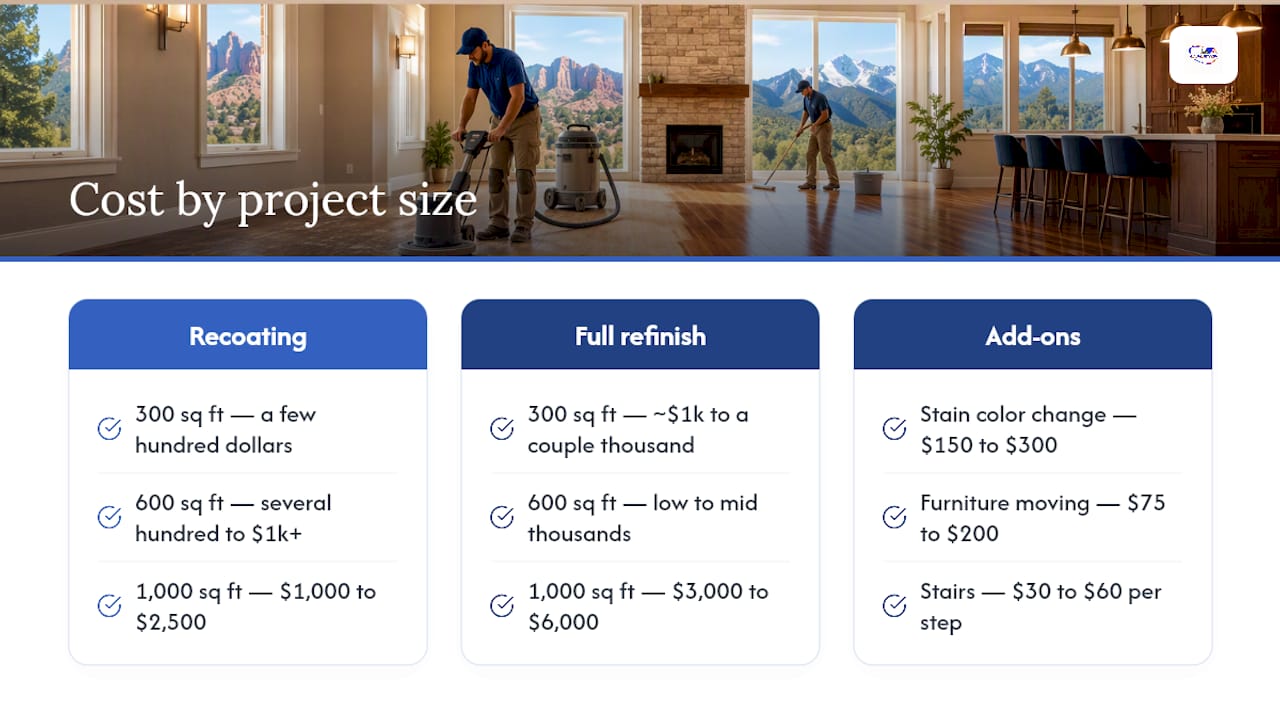
Here’s how the numbers break down by method and project size.
Those figures reflect Denver-area contractor pricing, and they line up closely with the full sanding and refinishing rates of $4.20 to $5.50 per square foot that Jrhardwoodfloorrefinishingandcleaning publishes for its own service, along with screen and recoat work starting at $2.50 per square foot and cleaning starting at $1.50 per square foot.
Now let’s put those rates into real square footage, since a rate alone doesn’t tell you what a check will look like.
300 square feet (a bedroom or small den): A screen and recoat costs a few hundred dollars, while a full refinish costs roughly a thousand to a couple thousand dollars depending on specifics. Add $150 to $300 if you want a stain color change, since staining requires an extra coat and drying window.
600 square feet (a combined living and dining room): Recoating costs several hundred to over a thousand dollars, while a full refinish costs in the low to mid thousands. Furniture moving, if you can’t clear the room yourself, typically adds $75 to $200.
1,000 square feet (most of a main floor): Recoating runs $1,000 to $2,500. A full refinish runs $3,000 to $6,000. Stairs, if included, often carry their own per-step charge of $30 to $60 because of the extra hand sanding they require.
One line item that catches a lot of Colorado homeowners off guard is sales tax. The Colorado Department of Revenue’s sales tax guide notes that service charges tied to tangible property, like the materials a refinishing job consumes, can be taxable unless the invoice separates labor from materials clearly. If your quote lumps everything into one number, ask your contractor to break it out. It matters when you’re comparing two bids that structure their pricing differently.
What Actually Drives the Price of Your Quote?
The per-square-foot rate is just the headline. What actually determines your final invoice is a list of variables that a good contractor will walk you through before they ever pick up a sander.
- Room layout and complexity. A wide-open great room sands faster per square foot than a home full of closets, tight hallways, and cut-in edges around cabinetry. More corners mean more hand-detailing time.
- Wood species. Red oak and white oak, Colorado’s most common hardwood species, sand predictably. Exotic or engineered woods with a thin wear layer limit how many times they can be refinished at all, which affects whether refinishing is even the right call.
- Extent of repairs. Replacing a handful of damaged boards might add $10 to $25 per board. Subfloor or moisture remediation, when a slab test reveals excess vapor, can add several hundred dollars before sanding even starts.
- Finish type and coat count. Standard oil-based polyurethane usually needs two to three coats. Hardwax oil finishes and UV-cured coatings often run a premium per coat but cure faster.
- Local labor market. Denver metro rates typically sit at the higher end of the state range, while smaller Colorado towns sometimes quote slightly less, though travel fees can offset that difference for remote jobs.
- Add-ons. Pet stain treatment, gap filling, and trim touch-ups usually appear as separate line items rather than being folded into the base rate.
Wood species deserves a longer look here, because it affects more than just the sanding cost. Solid hardwood typically has enough thickness to be sanded and refinished multiple times over its life. Engineered hardwood has a thinner veneer layer, and once that layer is gone, refinishing is no longer possible. That’s why a full sanding on an engineered floor should always start with a thickness check, not a price quote.
Moisture is the other variable that quietly changes a job’s scope. NWFA guidance on moisture testing explains that acclimation and vapor testing determine whether a slab or subfloor is safe for a fresh finish. The USDA Forest Products Laboratory’s research on wood behavior backs up why this matters: wood expands and contracts with moisture content, and finishing over an unstable subfloor can cause cupping or finish failure within months.
Pro Tip: Ask your contractor whether they perform a moisture test before quoting a full refinish. It’s a five-minute check that can save you from a much bigger bill down the road if hidden subfloor damage shows up mid-project.
Screen and Recoat vs. Full Sanding vs. UV Finish: Which One Fits?
Not every floor needs the same treatment, and picking the wrong method either wastes money or leaves damage unaddressed. Here’s how the four most common approaches compare.
- Screen and recoat. This method lightly abrades the existing finish and adds a new topcoat without removing wood. It works well when your floor’s finish is worn or dull but the wood itself has no deep scratches, stains, or discoloration. It’s the fastest and least expensive option, typically priced from $2.50 per square foot with Jrhardwoodfloorrefinishingandcleaning, and it produces minimal dust.
- Full sanding and refinish. This strips the floor to bare wood using progressively finer grits, then applies stain (if desired) and multiple coats of sealant. It’s the right call for deep scratches, water stains, or a color change, and it costs more because it involves several passes of equipment and drying time between coats.
- Dustless refinishing. This uses a sealed vacuum system attached to the sander, pulling dust directly into a containment unit instead of letting it settle over furniture, vents, and lungs. Dustless methods usually cost more than standard sanding, but the cleanup savings and health benefits make it worth the premium for occupied homes or anyone with allergies or respiratory sensitivities.
- Instant UV-curable finish. This finish cures instantly under UV light instead of air-drying overnight, so floors are walkable the same day. It commands a premium price over standard polyurethane, but it’s a strong fit for commercial spaces, rental turnovers, or any household that can’t afford a multi-day disruption.
Staining adds its own cost layer regardless of which method you choose. Expect an extra $0.50 to $1.50 per square foot for staining, since it requires an additional application step and a longer drying window before sealant goes on. If you’re simply trying to freshen a floor’s look without a color change, skipping the stain keeps both your budget and your timeline shorter.
How Long Will Refinishing Take, and Can You Stay Home?
A screen and recoat on an average room usually wraps in a single day, start to finish. A full sanding and refinish on the same space typically takes two to three days: one day for sanding, one for staining and the first coat, and another for additional coats with drying time between each. Larger whole-floor jobs, especially those with stairs or extensive repairs, can stretch to five days or more.
Cure times matter more than most homeowners expect. Water-based polyurethane is usually walkable in socks within 24 hours but needs several days before furniture goes back and up to a couple of weeks before rugs are safe. Oil-based polyurethane cures more slowly. UV-cured finishes are the outlier, safe to walk on the same day the coating is applied, which is exactly why they command a higher price.
Colorado’s low humidity actually works in your favor here. Denver’s dry climate shortens drying times compared to what contractors see in humid regions, which can shave a day off a multi-coat job.
Before your crew arrives, a little prep goes a long way:
- Clear the room of furniture, rugs, and floor lamps, or budget for the moving fee your contractor charges.
- Plan to be out of the house, or at least out of the work zone, during sanding and coating. This Old House’s refinishing guidance recommends keeping pets and occupants away entirely until finishes cure.
- Turn off HVAC return vents in the work area if possible, to avoid pulling dust or fumes through your ductwork.
- Line up a few days of alternate living arrangements for the kitchen or main living space if that’s where the work is happening.
What Should a Real Quote Include?
A vague quote is the single biggest reason homeowners end up arguing with a contractor mid-project. A complete quote should spell out the per-square-foot rate, any repair costs itemized separately, the number of finish coats included, the specific product brand being used, dust containment method, projected start and completion dates, cleanup responsibilities, warranty terms, and whether sales tax is included or added separately.
Beyond the paperwork, a few credentials are worth confirming before you sign anything:
- Proof of liability insurance, so you’re covered if something goes wrong on your property.
- Recent customer references you can actually call, not just a printed testimonial sheet.
- Photos of completed jobs, ideally similar in scope to yours.
- Familiarity with NWFA installation and maintenance standards, which signals a contractor who follows an established industry framework rather than improvising.
Watch for red flags too. A bid with no defined timeline, no mention of dust containment, or a scope written in one vague sentence (“refinish floors, $X”) is a bid that leaves too much room for surprise charges later. So is a contractor who won’t put a warranty in writing.
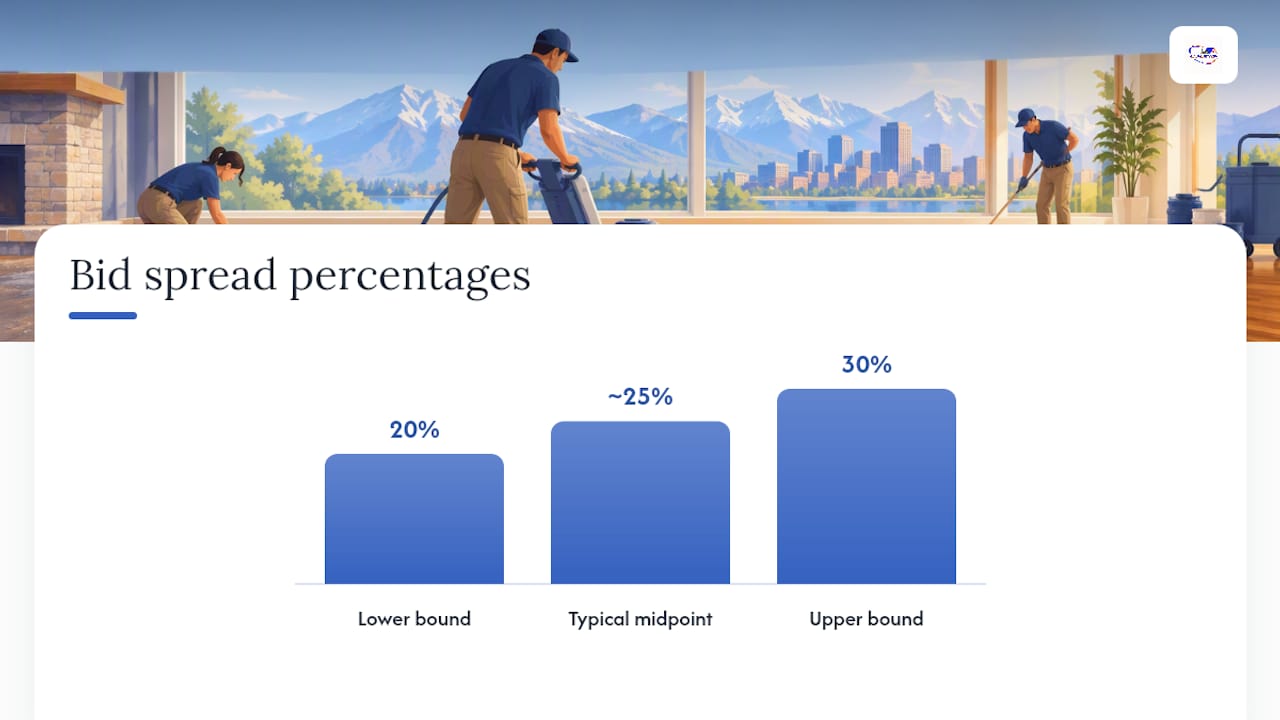
Once you have two or three quotes in hand, line them up item by item rather than just comparing bottom-line totals. A 20 to 30 percent spread between bids is common, and it usually comes down to differences in coat count, containment method, or how thoroughly repairs are itemized rather than one contractor simply being cheaper.
Pro Tip: If two bids differ by more than 30%, ask both contractors to walk you through their line items side by side. The gap almost always traces back to one crew including a repair or extra coat the other left out.
Getting a Reliable Local Quote in Colorado
Jrhardwoodfloorrefinishingandcleaning serves the Denver Metro Area, along with Parker, Castle Rock, Boulder, and Colorado Springs, offering full sanding and refinishing, screen and recoat, wax removal, and Instant UV-curable finishing for homeowners who need floors walkable the same day. Every finish is eco-friendly, and every job is scoped before a crew ever shows up.
That scoping can happen over the phone. Homeowners describe their floor’s condition and send photos, and some companies provide a free estimate based on that information, without an in-person walkthrough, allowing for initial budgeting before moving furniture.
Refinishing well ahead of a sale also tends to pay for itself. Well-preserved hardwood influences buyer perception more than almost any other visible surface in a home, which is worth factoring into your decision if you’re weighing refinishing against a sale timeline. For readers ready to see current pricing on full sanding and refinishing services, that page breaks down exactly what’s included.
Rural Colorado and Mountain Towns: What Changes
Denver and Colorado Springs pricing gives you a solid baseline, but the story shifts once you move into mountain towns and rural counties. Contractors serving Breckenridge, Vail, or Durango often factor in travel time and fuel costs that Front Range crews don’t carry, which can push per-square-foot rates modestly higher even when the labor itself is comparable.
Material delivery adds another wrinkle. Specialty stains or finish products that a Denver supplier stocks on the shelf might need to be special-ordered for a mountain job, adding both cost and lead time to a project. Altitude and humidity swings in high-country locations can also affect drying schedules; wood acclimates differently at 9,000 feet than it does at 5,280 feet, so a contractor unfamiliar with mountain conditions may need extra acclimation days before starting work.
On the flip side, smaller rural markets sometimes have less competition among refinishing contractors, which can mean fewer quotes to compare and less pricing pressure keeping bids down. If you live outside the metro corridor, it’s worth asking any contractor directly whether they routinely work in your area or whether your job would require a special trip, since that answer often explains a chunk of the quoted price.
Older Floors vs. Newer Floors: Why the Price Gap Exists
A floor installed in a 1920s Denver bungalow and a floor installed five years ago in a Highlands Ranch new-build rarely cost the same to refinish, even at identical square footage. Older solid hardwood floors often have more wood thickness remaining above the tongue and groove, since decades of prior refinishing gradually thin that margin. That extra thickness is actually good news. It usually means more sanding passes are still safely possible.
What drives up cost on older floors is everything else that comes with age: old nail heads that need to be set below the surface before sanding, uneven boards from decades of seasonal movement, existing finishes like wax or shellac that require special stripping steps before a sander can even be used, and a higher chance of hidden damage under rugs or furniture that’s sat in place for years.
Newer floors, by contrast, usually sand faster and more predictably, but they carry their own risk. If the floor is engineered rather than solid, the wear layer might already be too thin for another full sanding, which means a screen and recoat could be the only refinishing option left. Before assuming a newer floor is the cheaper job, it’s worth confirming construction type and remaining wear layer thickness with whoever installed it.
Flat Rate or Per Square Foot: How Colorado Contractors Price Jobs
Most Colorado refinishing contractors, Jrhardwoodfloorrefinishingandcleaning included, price primarily by the square foot rather than a flat whole-job rate. This model rewards transparency: you can multiply your floor’s square footage by the quoted rate and get a number that scales predictably, and it makes comparing two contractors’ bids far easier since you’re comparing like units.
Some contractors do offer flat-rate pricing, usually for very small jobs like a single room or a quick recoat, where the administrative simplicity of a single number outweighs the itemization benefits of per-square-foot pricing. Flat rates can also show up bundled into “package” pricing for combined services, like a screen and recoat plus a deep clean sold together at one price.
The trade-off with flat-rate pricing is that it can obscure what happens if your job’s scope changes mid-project, say, if sanding reveals water damage under a rug. Per-square-foot pricing with clearly itemized add-ons tends to give homeowners a clearer view of exactly what they’re paying for and why, which is one more reason to ask any contractor upfront which pricing model they use before you sign.
What This Cost Data Actually Means for Your Decision
Most guides to hardwood refinishing costs treat the price range as the whole story. It isn’t. The bigger risk in Colorado isn’t paying too much per square foot, it’s hiring a contractor who skips the moisture test, underestimates repair scope, or shows up without a written timeline, and then watching a $1,800 quote turn into a $3,200 invoice halfway through the job.
The conventional advice to “just get three quotes” is fine but incomplete. Three vague quotes tell you nothing except that vagueness is common. What actually protects your budget is asking every contractor the same specific questions: coat count, containment method, moisture testing, and what happens if they find rot or subfloor damage once sanding starts. That’s where a 20% price difference between bids usually reveals itself as a real difference in scope, not just profit margin.
If you take one thing from this guide, prioritize the moisture and repair conversation before the price conversation. A cheap quote that skips subfloor testing on an older Colorado home isn’t actually cheap. It’s a bill you haven’t received yet.
— J.R.
Get a Free Quote Before You Commit to a Contractor
Some companies offer detailed quotes based on phone consultations and photos rather than generic online calculators or in-person estimates, providing personalized pricing tailored to each floor’s condition and using eco-friendly finishes.

That approach matters most for homeowners juggling a renovation timeline or a home sale deadline, where waiting a week for a contractor to schedule a walkthrough just to get pricing isn’t practical. Whether a floor needs a same-day UV-cured finish, a straightforward screen and recoat, or a full sanding down to bare wood, local providers in the Denver Metro and surrounding areas offer free quotes based on a consistent process.
Ready to see what your floor actually costs to refinish? Visit the hardwood flooring services page to request your free over-the-phone quote today.
Sources
- Floor Care Services in Denver, CO: What Professional Flooring Maintenance Costs | HaveQuote
- How Much Does It Cost to Refinish Hardwood Floors in Denver? 2026 Data | Angi
- USDA Forest Products Laboratory report — technical guidance
- Colorado Sales Tax Guide (May 2026)
FAQ
How much does it cost to refinish 1,000 square feet of hardwood floor?
A full sanding and refinish on 1,000 square feet typically runs $3,000 to $6,000, while a screen and recoat on the same area costs $1,000 to $2,500, based on Denver-market per-square-foot rates. Repairs, staining, and stairs can push the total higher.
How long does it take to refinish 1,000 square feet of hardwood floors?
A full refinish on a space that size usually takes three to five days, accounting for sanding, staining if requested, and multiple coats with drying time between each. Colorado’s dry climate tends to shorten those drying windows compared to more humid states.
What does hardwood refinishing typically cost in Denver, Colorado?
Denver homeowners generally pay between $1,068 and $2,532 for a full project, with a typical household spending around $1,764. Per square foot, rates run $3 to $8 depending on method, wood species, and repair needs.
Can I stay in my house while my floors are refinished?
You can usually stay in the home, but you’ll need to vacate the work area entirely during sanding and coating and keep pets away until the finish cures. Refinishing guidance from This Old House recommends staying clear of the space until the finish is fully cured, not just dry to the touch.
What’s the difference between a screen and recoat and a full refinish?
A screen and recoat lightly abrades the existing finish and adds a new topcoat without removing wood, while a full refinish sands down to bare wood to remove deep scratches and stains. Screen and recoat costs less and takes about a day; a full refinish costs more and takes several days.