 Skip to content
Restoring hardwood floors in a Colorado home often starts with confronting confusing terminology and conflicting advice. For Denver homeowners, grasping the difference between hardwood and softwood can reshape your expectations about durability and help you navigate popular misconceptions. This guide clarifies essential flooring language, wood species distinctions, and refinishing practices so you can confidently choose refinishing options that enhance longevity and withstand the demands of Metro Denver living.
Table of Contents
- Defining Key Hardwood Floor Terms And Misconceptions
- Types Of Hardwood Floors And Finish Options
- Understanding Refinishing, Restoration, And Recoating
- Essential Grading, Wear, And Durability Terms
- Costs, Risks, And Common Hardwood Floor Mistakes
Key Takeaways
| Point | Details |
|---|---|
| Understanding Wood Types | Recognize the differences between hardwood and softwood for informed flooring choices. Consider the wood species’ characteristics for your home’s environment and traffic patterns. |
| Importance of Finishes | Choose appropriate finishes to enhance and protect hardwood floors based on your aesthetic preferences and maintenance capabilities. Explore various finish options with wood samples in your home lighting. |
| Maintenance and Care | Regularly assess your hardwood floors to address wear and damage early. Know the differences among refinishing, restoration, and recoating for effective floor upkeep. |
| Avoid Common Mistakes | Avoid incorrectly selecting wood species for high-traffic areas and neglecting maintenance. Understand environmental factors that can affect floor performance to protect your investment. |
Defining Key Hardwood Floor Terms and Misconceptions
Understanding hardwood floor terminology can feel like navigating a complex landscape of technical jargon. However, breaking down these key terms demystifies the world of hardwood flooring and empowers Denver homeowners to make informed decisions about their home’s most important surfaces.
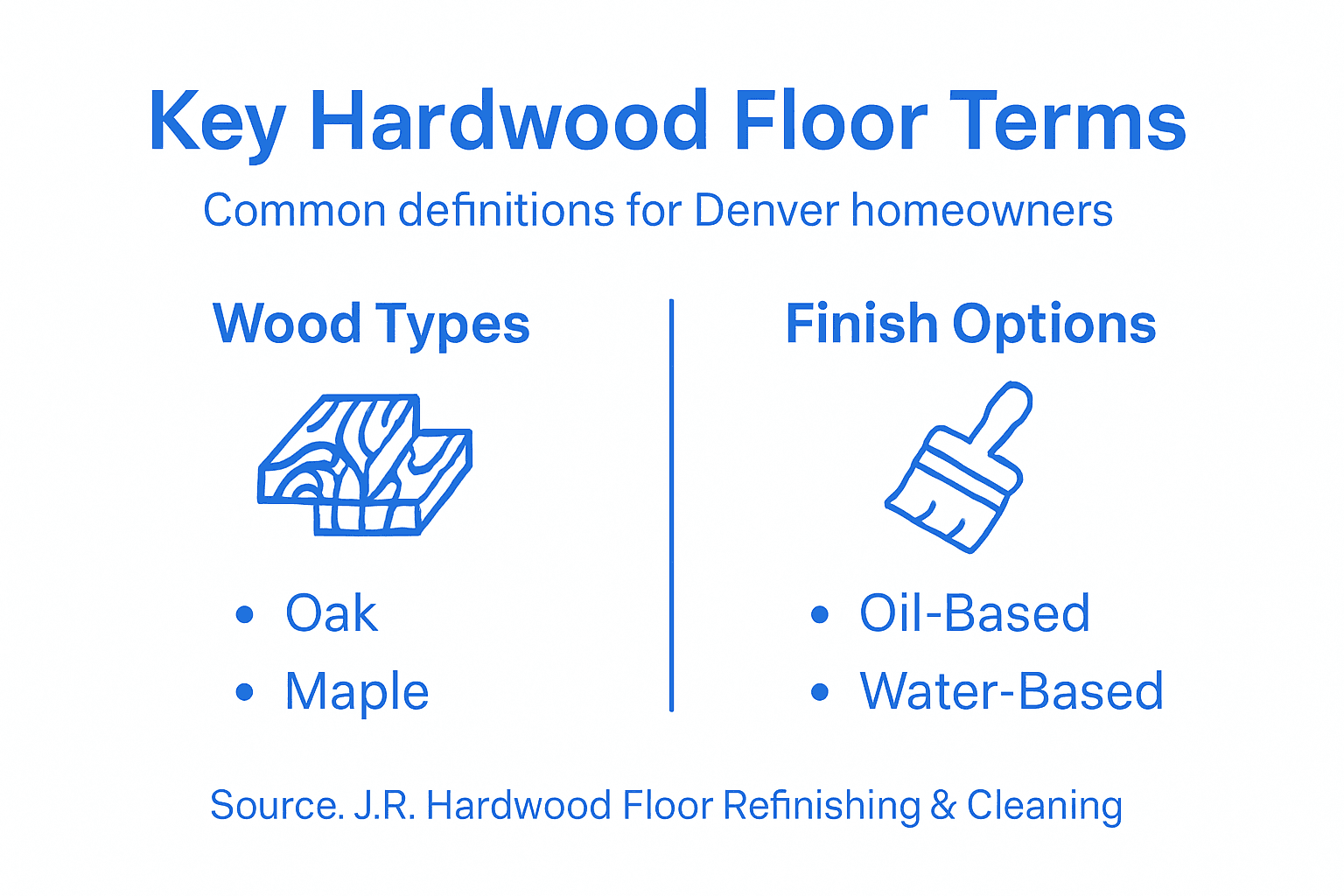
When discussing hardwood floors, it’s crucial to understand the fundamental distinction between hardwood and softwood. Contrary to popular belief, wood classification isn’t about physical hardness but rather the botanical origin of the tree. Hardwoods come from deciduous trees like oak and maple, while softwoods originate from coniferous trees like pine and cedar.
Key hardwood floor terminology includes several important concepts:
- Grain Pattern: The visual arrangement of wood fibers that determines the floor’s unique appearance
- Ray Tissue: Small horizontal lines in wood that contribute to its visual texture
- Board Width: The horizontal measurement of individual wood planks
- Wood Grade: A classification indicating the wood’s visual quality and number of natural characteristics
Many homeowners mistakenly believe that wood hardness directly correlates with durability. In reality, hardwood species vary significantly in wear resistance, which impacts long-term floor performance. For instance, hickory is substantially harder than pine, meaning it will withstand more foot traffic and resist dents more effectively.
Understanding these technical terms helps Denver homeowners make smarter flooring choices. When selecting hardwood floors, consider not just appearance, but the wood’s inherent characteristics, grain patterns, and potential performance in high-traffic areas.
Pro tip: Always request wood samples and examine their grain patterns, hardness, and grade before making a final flooring selection.
Types of Hardwood Floors and Finish Options
Navigating the world of hardwood floors requires understanding the diverse types of wood and finish options available to Denver homeowners. Each wood species and finish brings unique characteristics that can dramatically transform your living spaces.
Different wood species offer distinct visual and performance characteristics, making selection crucial for long-term satisfaction. Key hardwood types include:
- Red Oak: Classic American hardwood with prominent grain patterns
- Hickory: Extremely hard wood with dramatic color variations
- Maple: Smooth, light-colored wood with subtle grain
- White Oak: Slightly harder than red oak, with more neutral tones
- Walnut: Rich, dark wood with elegant, sophisticated appearance
When considering wood types, homeowners should examine wood structure and porosity variations that impact durability and finish. Wood can be categorized into three primary structural types:
- Ring-porous woods (like oak)
- Diffuse-porous woods (such as maple)
- Semi-ring-porous woods (including walnut)
Finish options play a critical role in protecting and enhancing hardwood floors. Common finish types include:
- Polyurethane: Durable, water-resistant coating
- Oil-based Finishes: Provide rich, amber tone
- Water-based Finishes: Clearer appearance, faster drying
- Penetrating Oils: Enhance wood’s natural grain
- Wax Finishes: Traditional, soft appearance
Choosing the right combination of wood type and finish depends on your home’s traffic patterns, aesthetic preferences, and maintenance capabilities. Consider factors like sunlight exposure, presence of pets, and overall interior design when making your selection.
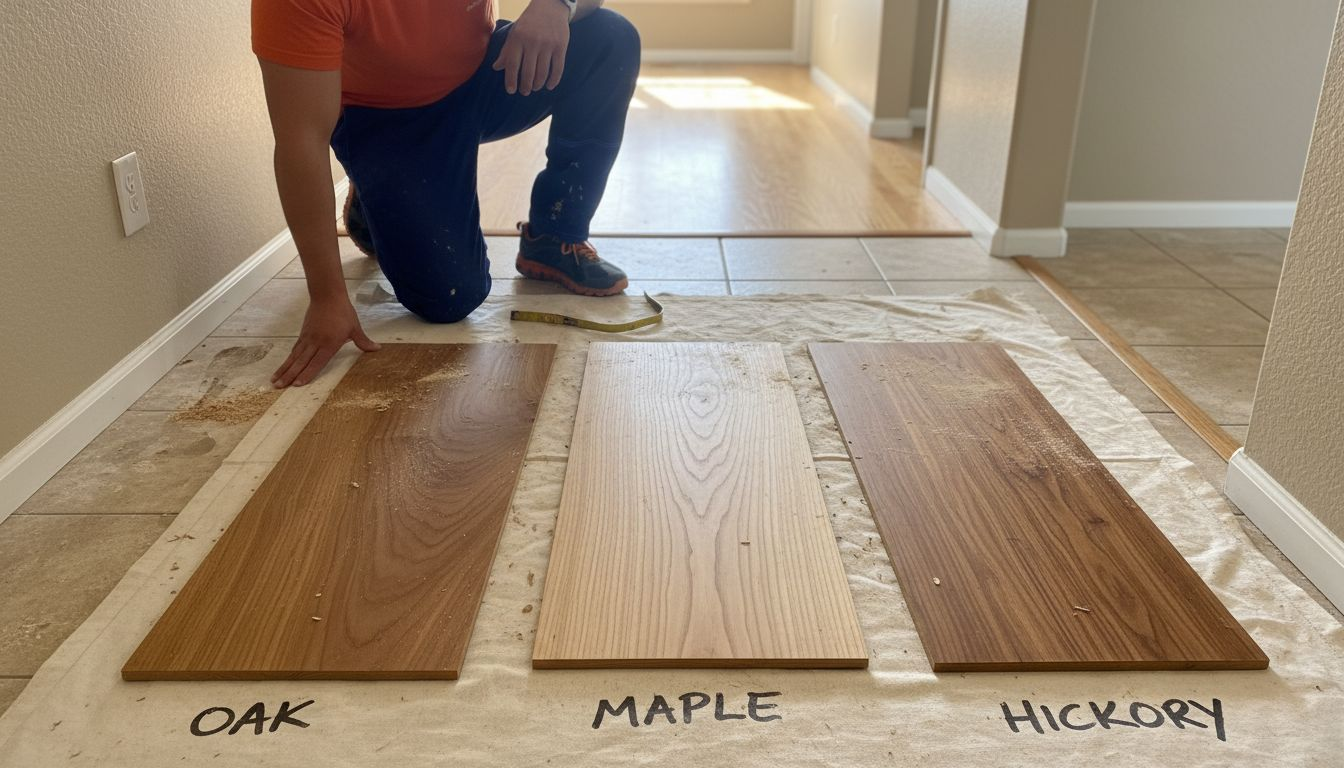
Pro tip: Request wood samples with different finishes to see how they look in your specific home lighting and alongside your existing decor.
Here’s a quick reference for popular hardwood species and their typical performance traits:
| Species | Typical Hardness | Grain Style | Suitability for High Traffic |
|---|---|---|---|
| Red Oak | Hard | Bold, distinctive | Good |
| Maple | Medium-hard | Subtle, smooth | Moderate |
| Hickory | Extremely hard | Varied, dramatic | Excellent |
| Walnut | Medium | Elegant, rich | Fair |
| Pine | Soft | Rustic, knotty | Poor |
Understanding Refinishing, Restoration, and Recoating
Hardwood floors are a significant investment for Denver homeowners, and understanding the nuanced processes of maintenance can dramatically extend their lifespan and beauty. Hardwood floor maintenance involves three primary approaches: refinishing, restoration, and recoating, each serving a unique purpose in preserving your floors.
Key differences between these processes include:
- Refinishing: Most comprehensive treatment
- Restoration: Targeted repair for specific damage
- Recoating: Minimal surface intervention
Refinishing is the most extensive process, involving:
- Complete sanding of the existing floor surface
- Removing all previous finishes
- Addressing deep scratches and structural imperfections
- Applying new stain and protective coating
Restoration focuses on addressing specific floor issues like:
- Water damage
- Deep gouges
- Warped or buckled boards
- Structural wood problems
Recoating is the least invasive method, providing a quick surface renewal by:
- Lightly screening the existing finish
- Applying a new protective layer
- Addressing minor surface wear
- Maintaining floor appearance without full sanding
Choosing the right approach depends on your floor’s condition, age, and specific wear patterns. Professional assessment can help determine the most appropriate method for your specific hardwood floors.
Pro tip: Schedule a professional floor assessment annually to catch potential issues before they require more extensive and expensive treatments.
Use this comparison to understand the maintenance options for hardwood floors:
| Process | Main Purpose | Level of Intervention | Best For |
|---|---|---|---|
| Refinishing | Full restoration | High | Severely worn floors |
| Restoration | Targeted repair | Medium | Specific damaged areas |
| Recoating | Surface refresh | Low | Regular upkeep |
Essential Grading, Wear, and Durability Terms
Understanding hardwood floor terminology is crucial for Denver homeowners making informed decisions about their flooring investments. Hardwood grading systems provide comprehensive insights into wood quality that directly impact floor performance and longevity.
Hardwood grading involves several key classification criteria:
- Clear Grade: Minimal knots, most uniform appearance
- Select Grade: Slight color variations, few small knots
- Number 1 Common: More natural character, color variations
- Number 2 Common: Rustic appearance, significant natural characteristics
Wood Hardness Categories range from softest to hardest:
- Pine (soft)
- Maple (medium-hard)
- Red Oak (hard)
- Hickory (extremely hard)
- Brazilian Walnut (exceptionally hard)
Wood hardness directly influences durability and wear resistance, which means different wood types perform differently in high-traffic areas. Key wear-related terms include:
- Janka Hardness Rating: Measures wood’s resistance to denting
- Wear Layer: Thickness of wood available for refinishing
- Coefficient of Friction: Indicates slip resistance
- Abrasion Class: Standard measuring surface durability
When evaluating hardwood floors, homeowners should consider how these grading and durability factors interact with their specific environmental conditions, traffic patterns, and maintenance capabilities.
Pro tip: Request a detailed wood sample that demonstrates wear characteristics in lighting similar to your home to accurately assess long-term performance.
Costs, Risks, and Common Hardwood Floor Mistakes
Hardwood floors represent a significant investment for Denver homeowners, and understanding potential pitfalls can save thousands in future repair costs. Common misconceptions about wood selection dramatically impact long-term flooring expenses, making educated choices critical for protecting your investment.
Most frequent hardwood floor mistakes include:
- Selecting inappropriate wood species for high-traffic areas
- Ignoring environmental humidity and temperature variations
- Failing to perform regular maintenance
- Choosing appearance over durability
- Improper installation techniques
Financial Risks Associated with Poor Choices:
- Premature floor replacement ($5,000 – $15,000 average cost)
- Extensive repair expenses
- Reduced home property value
- Higher long-term maintenance costs
Wood Selection Errors homeowners often make:
- Picking soft woods like pine for high-traffic zones
- Neglecting finish compatibility
- Underestimating Colorado’s unique climate challenges
- Misunderstanding wood hardness ratings that impact durability
Colorado’s unique climate presents specific challenges for hardwood floors, including dramatic temperature shifts and low humidity that can cause wood expansion, contraction, and potential cracking. Professional assessment becomes crucial in navigating these complex environmental factors.
Pro tip: Invest in a professional moisture assessment before installing hardwood floors to understand your specific environmental conditions and wood compatibility.
Take the Guesswork Out of Hardwood Floor Decisions for Denver Homeowners
Understanding hardwood floor terminology and the challenges surrounding wood type, finish, and maintenance is the first step toward creating lasting beauty in your home. If you feel overwhelmed by terms like grain pattern, Janka hardness, or refinishing options, you are not alone. These core concepts impact durability, appearance, and how your floors stand up to Denver’s unique climate.
Trust the experts at J.R. Hardwood Floor Refinishing & Cleaning to guide you through every stage of your floor’s life—from initial craftsmanship to ongoing preservation. Whether you need professional sanding and restoration or a simple screen and recoat, their team uses eco-friendly products and premium finishes to protect your investment while enhancing your home’s style.
Get personalized advice and a free over-the-phone quote today. Explore how to protect your floors with confidence by visiting the Uncategorized Archives where expert guidance and detailed service options await. Don’t let confusing hardwood terms delay your perfect floor. Act now to extend your floor’s life and elevate your living space with proven craftsmanship and reliable results.
Frequently Asked Questions
What is the difference between hardwood and softwood?
Hardwood comes from deciduous trees, while softwood originates from coniferous trees. This classification is based on botanical origin rather than physical hardness.
How can I choose the right hardwood floor for high-traffic areas?
Opt for hardwood species that are harder, such as hickory or red oak, as they are more wear-resistant. Also, consider the wood grade and finish type for added durability.
What maintenance options are available for hardwood floors?
The main options include refinishing, restoration, and recoating. Refinishing involves sanding and applying new finishes, restoration targets specific damages, and recoating refreshes the surface with minimal intervention.
How do I determine the hardness of different wood species?
Wood hardness is measured using the Janka Hardness Rating, which indicates the wood’s resistance to denting. Different species have varying ratings, impacting their durability and suitability for your specific needs.