 Skip to content
Over 90 percent of American homes built before 1970 feature hardwood floors that face inevitable wear over time. If you are a homeowner in the Denver Metro Area, you know how the Colorado climate and daily foot traffic can leave floors looking dull and tired. Restoring aging wood surfaces with craftsmanship and eco-friendly finishes means you can preserve both beauty and value. Discover how each careful step leads to a healthier, longer-lasting floor in your American home.
Table of Contents
- Step 1: Assess Hardwood Floor Condition And Needs
- Step 2: Prepare Space And Clear Flooring Surfaces
- Step 3: Sand And Remove Old Finish Or Imperfections
- Step 4: Apply Eco-Friendly Stains And Protective Coatings
- Step 5: Inspect Restored Floor And Ensure Consistent Quality
Quick Summary
| Key Insight | Explanation |
|---|---|
| 1. Assess floor condition before restoration | Conduct a thorough inspection to identify scratches, discoloration, or structural issues that dictate restoration needs. |
| 2. Prepare workspace thoroughly | Clear the area of furniture and cover immovable items to protect them from dust and damage during the restoration process. |
| 3. Use multiple sandpaper grits | Start sanding with coarse grit and gradually transition to finer grits for a smooth finish and to prevent surface damage. |
| 4. Apply eco-friendly stains and finishes | Choose low VOC stains and water-based polyurethane to protect the wood and support healthier indoor air quality. |
| 5. Conduct a final inspection for quality | Evaluate the floor under various lighting conditions to ensure even color, smoothness, and correct finish application. |
Step 1: Assess hardwood floor condition and needs
Before diving into hardwood floor restoration, understanding your floor’s current state is crucial. Your floor tells a story through its scratches, wear patterns, and underlying conditions – and knowing how to read those signals will determine the best restoration approach.
Start by conducting a thorough visual and tactile inspection. Walk across your hardwood floors methodically, examining each section for signs of damage. Look for surface-level issues like scratches, discoloration, and dull finish, as well as deeper structural concerns such as warping, buckling, or separation between planks. The industry standards from the National Wood Flooring Association recommend checking moisture content and assessing wood grade to determine restoration potential. Pay special attention to high-traffic areas where wear is most pronounced.
Your assessment should categorize floor conditions into three primary levels: minor surface restoration, moderate refinishing, or comprehensive replacement. Minor issues might require simple buffing and recoating, while more extensive damage could demand complete sanding and refinishing. Take detailed notes and photographs to help professionals understand the exact needs of your specific hardwood surfaces.
Here is a summary of common hardwood floor issues and the recommended restoration approach:
| Floor Condition | Visual Signs | Suggested Solution |
|---|---|---|
| Minor surface restoration | Small scratches, dull spots | Buffing and recoating |
| Moderate wear and tear | Discoloration, uneven sheen | Full sanding and refinishing |
| Major structural damage | Warping, plank separation | Comprehensive replacement |
Pro tip: Use natural light and a flashlight to reveal subtle imperfections that might be invisible under standard indoor lighting conditions.
Step 2: Prepare space and clear flooring surfaces
Restoring hardwood floors requires a strategic and thorough preparation process that sets the stage for a successful refinishing project. Your primary goal in this step is to create a clean, clear workspace that protects both your floors and surrounding areas during the restoration work.
Begin by completely clearing the room of all furniture, area rugs, and movable items. Careful floor preparation involves removing protruding nails and staples that could potentially damage sanding equipment or create uneven surfaces. Cover any immovable items like baseboards, wall edges, and built-in fixtures with painter’s tape and plastic sheeting to prevent dust and finish spray from settling on them. Sweep and vacuum the entire floor thoroughly, ensuring you remove every speck of dust, dirt, and debris. Pay extra attention to corners, edges, and areas beneath furniture that typically collect hidden grime.
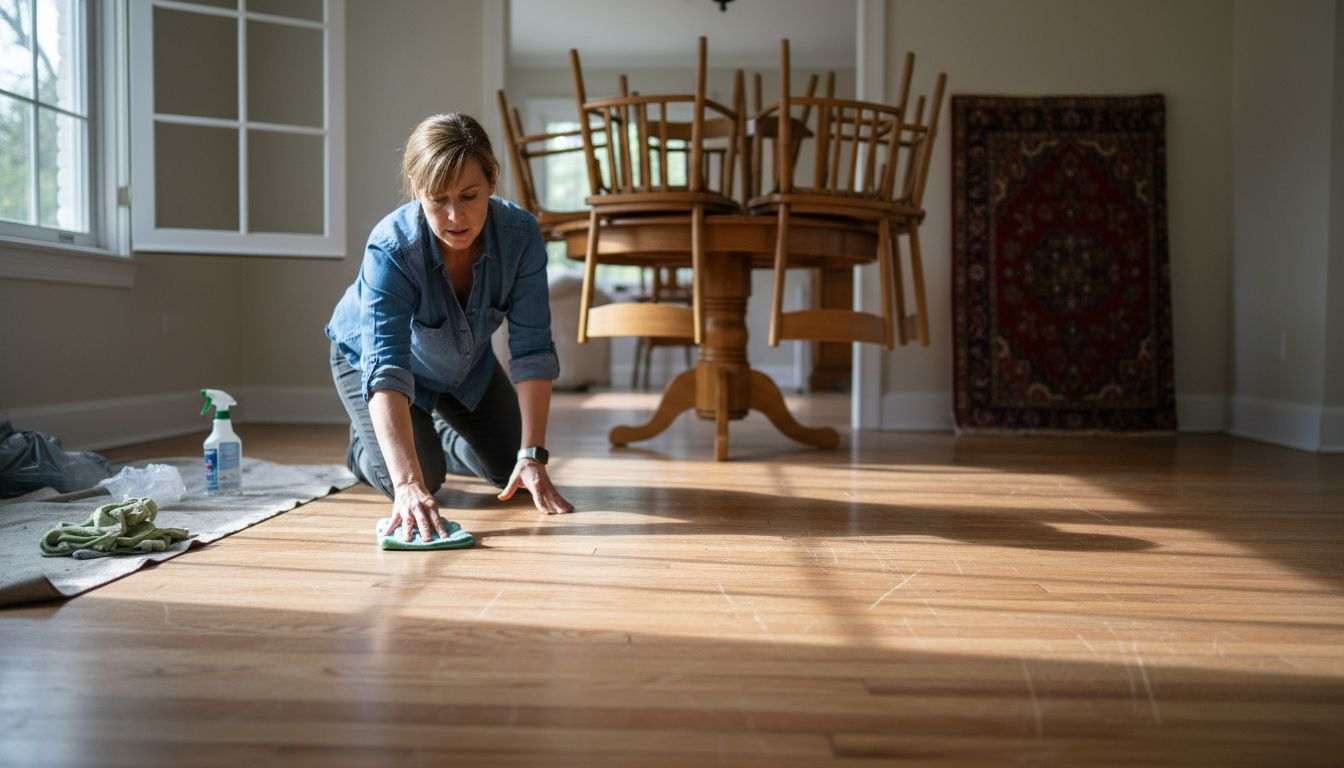
Plan your workflow strategically to minimize disruption. If possible, remove all items from the room and work in sections to ensure comprehensive coverage and protection. Consider using drop cloths or plastic sheeting to create dust barriers between your work area and other parts of your home. This prevents fine sanding dust from spreading to other rooms and helps maintain a clean environment during the restoration process.
Pro tip: Invest in a high-quality dust mask and use a shop vacuum with a HEPA filter to capture even the finest dust particles during your floor preparation.
Step 3: Sand and remove old finish or imperfections
Sanding is the transformative stage of hardwood floor restoration that strips away years of wear and prepares your floor for a stunning new finish. This critical process involves systematically removing the old surface layer to reveal the beautiful wood beneath and create a smooth canvas for refinishing.
Floor sanding uses mechanical sanders to methodically remove surface layers and old finishes, starting with coarse grit sandpaper and progressively moving to finer grits. Begin with a powerful belt sander using a coarse 36-grit sandpaper to remove the existing finish and level out major imperfections. Work methodically across the floor in the direction of the wood grain, maintaining consistent pressure and overlapping each pass slightly to ensure uniform removal. For edges and hard-to-reach areas, switch to an edge sander with similar grit sandpaper to maintain consistency. As you progress, transition to medium 60-grit and then fine 100-grit sandpapers, which smooth out the scratches left by the previous, coarser grits and prepare the surface for finishing.
Pay close attention to your technique to avoid common mistakes. Keep the sander moving constantly to prevent gouging or uneven surfaces, and maintain a steady, controlled pace. Use a handheld scraper for corners and areas the machine cannot reach, being careful not to dig too deeply into the wood. After completing the sanding process, thoroughly vacuum the entire surface and wipe it down with a tack cloth to remove all dust and debris, ensuring a clean base for your new finish.
Compare sanding equipment options and their best uses:
| Tool Type | Best For | Typical Grit Range |
|---|---|---|
| Belt Sander | Large open areas | Coarse (36-60 grit) |
| Edge Sander | Edges, corners, tight spots | Medium to fine (60-100 grit) |
| Hand Scraper | Detail work, corners | Manual, no sandpaper |
Pro tip: Rent professional-grade sanders and invest in multiple sandpaper grits from a local hardware store to ensure you have the right tools for each stage of the sanding process.
Step 4: Apply eco-friendly stains and protective coatings
Transforming your hardwood floors with eco-friendly stains and protective coatings is the final step in creating a stunning, sustainable surface that looks beautiful and supports a healthier indoor environment. This stage is where your careful preparation and hard work culminate in a professional quality finish that will protect and enhance your floors for years to come.
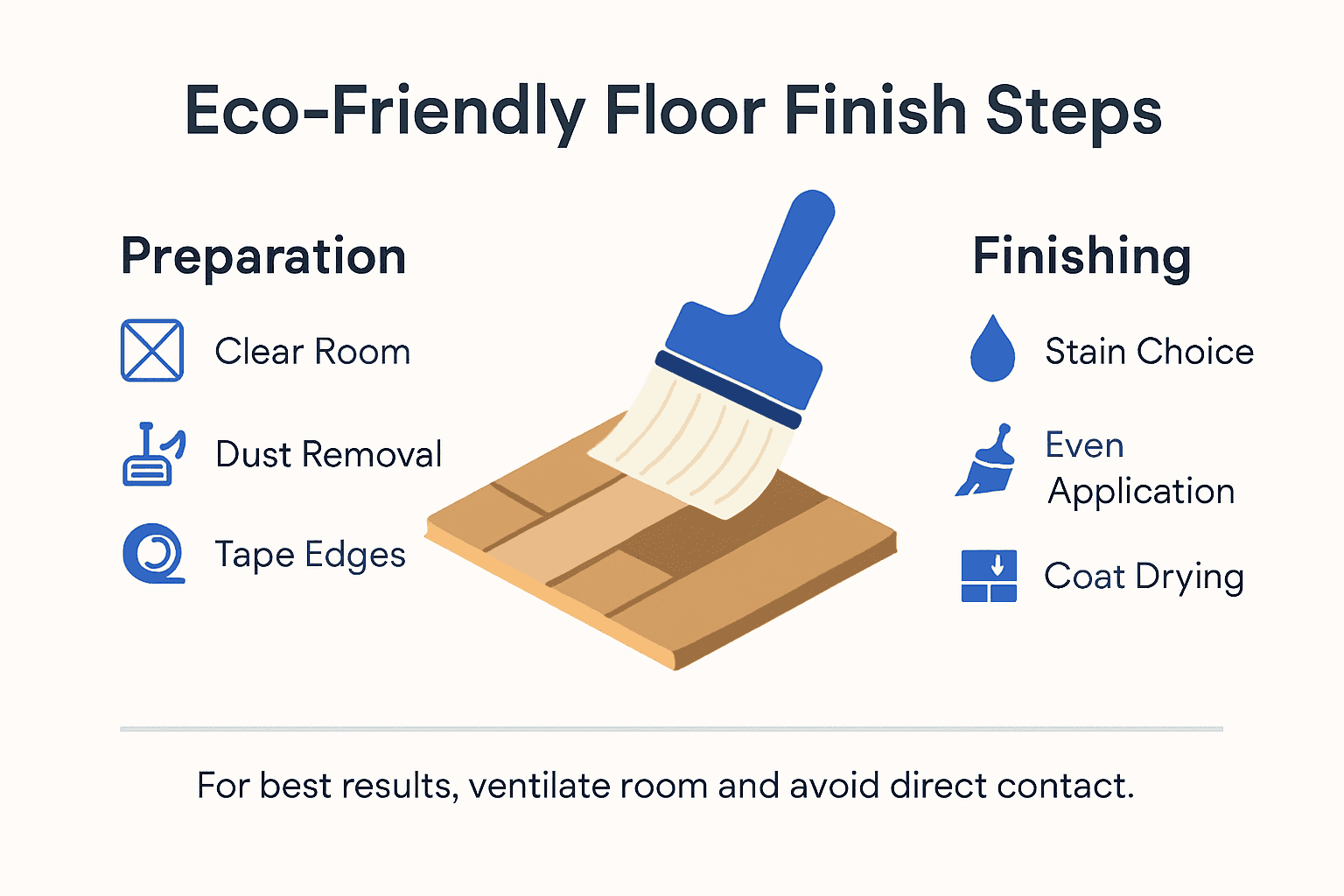
Eco-friendly stains offer low volatile organic compound options that minimize indoor air pollution while providing exceptional color and protection. Start by selecting water-based or naturally derived stains in your desired color tone. Before applying the stain, ensure the surface is completely clean and dust-free using a tack cloth. Apply the stain using a high-quality lambswool applicator or synthetic brush, working in thin even coats along the wood grain. Allow each coat to dry completely according to manufacturer instructions, typically 24 hours between applications. Sand lightly with fine grit sandpaper between coats to ensure smooth adhesion and remove any minor imperfections.
After staining, apply a protective water based polyurethane coating that complements your eco-friendly approach. Choose a finish with low or zero VOC content that provides durability and resistance to foot traffic. Apply the protective coating using a lamb’s wool applicator or high-quality synthetic brush, maintaining consistent strokes and avoiding pooling or uneven application. Allow sufficient drying time between each coat, typically 2-4 hours, and lightly sand with ultra fine grit sandpaper to ensure a silky smooth final surface.
Pro tip: Ventilate the room thoroughly during and after application and wear protective gear like a respirator mask to minimize exposure to any residual chemicals during the finishing process.
Step 5: Inspect restored floor and ensure consistent quality
After investing hours of meticulous work into restoring your hardwood floors, the final inspection is your moment to ensure every inch meets professional quality standards. This critical evaluation confirms that your restoration effort has transformed your floors into a stunning and durable surface.
Industry standards provide comprehensive guidelines for evaluating hardwood floor restoration quality that go beyond simple visual assessment. Begin by examining the floor in different lighting conditions natural and artificial to reveal any imperfections. Check for uniform stain color across the entire surface, looking for consistent tone and depth without blotchy or uneven patches. Run your hand gently across the floor to detect any rough spots or texture inconsistencies that might indicate improper sanding or finishing. Inspect the edges and corners with particular care, as these areas often reveal subtle flaws that could compromise the overall restoration.
Focus on key quality indicators such as surface smoothness, finish clarity, and structural integrity. Look for signs of bubbling, dust particles trapped in the finish, or slight unevenness that might suggest rushed application. Test the floor’s durability by performing a light scratch test in an inconspicuous area, ensuring the protective coating has properly adhered. Pay attention to how light reflects off the surface a high quality finish should provide a consistent sheen that highlights the wood’s natural beauty without appearing too glossy or dull.
Pro tip: Use a bright flashlight held at a low angle across the floor to reveal subtle imperfections that might be invisible under standard lighting conditions.
Bring Your Hardwood Floors Back to Life with Expert Restoration
If you have been worried about scratches, wear, or uneven finishes on your hardwood floors this detailed restoration guide has shown how critical proper assessment, careful sanding, and eco-friendly finishing are to achieving a like-new result. At J.R. Hardwood Floor Refinishing & Cleaning we understand the challenges of restoring your hardwood and focus on removing dirt, grime, and surface imperfections while protecting and enhancing your floors with premium eco-safe products. Our expert team serves the Denver Metro Area and surrounding Colorado communities with tailored solutions designed to meet the exact needs outlined in your floor’s condition.
Don’t let wear and damage diminish your home or business’s beauty. Explore our range of services including full sanding and restoration, screen and recoat, and wax removal on our Uncategorized Archives page. Visit J.R. Hardwood Floor Refinishing & Cleaning now for a free personalized quote and clear expert guidance to transform your floors with craftsmanship you can trust. Act now to extend your floor’s life and restore its original radiant charm.
Frequently Asked Questions
What is the first step in hardwood floor restoration?
Before beginning hardwood floor restoration, assess the condition of your floors. Conduct a thorough visual and tactile inspection, noting issues like scratches, discoloration, or structural damage. Take detailed notes to help you determine the appropriate restoration method.
How do I clear my space for hardwood floor restoration?
To prepare your space for hardwood floor restoration, remove all furniture and rugs from the room. Cover immovable items with painter’s tape and plastic sheeting, then sweep and vacuum the entire area to ensure it’s dust-free for effective sanding and finishing.
What sanding technique should I use for hardwood floors?
Use a systematic sanding technique, starting with coarse grit sandpaper and gradually moving to finer grits. Begin with a belt sander to remove the old finish, then transition to an edge sander for corners and hard-to-reach areas, maintaining consistent pressure and overlapping each pass.
How do I apply an eco-friendly stain to hardwood floors?
To apply an eco-friendly stain, ensure the hardwood surface is clean and dust-free, then use a high-quality applicator to apply the stain in thin coats along the wood grain. Allow each coat to dry completely before applying additional coats, generally waiting about 24 hours between applications.
What should I look for during the final inspection of my restored hardwood floor?
During the final inspection, examine the floor in different lighting to identify any imperfections. Check for uniform stain color, surface smoothness, and signs of improper application, such as bubbles or visible dust particles in the finish.
How long does the entire hardwood floor restoration process take?
The complete hardwood floor restoration process can take anywhere from a few days to a week, depending on the extent of the damage and the drying times of stains and finishes. Plan to allow sufficient time for each step, from assessment to final inspection, to achieve the best results.