 Skip to content
Most American homeowners in the Denver Metro Area with pets find that eco-friendly hardwood floor care can seem complicated, especially when daily life cannot pause for long. With active households and Colorado’s wild weather, dirt and paw prints quickly take their toll. Discover practical steps that address floor health, pet safety, and the need for minimal downtime so you can keep your wood floors looking their best without disrupting your routine.
Table of Contents
- Step 1: Assess Floor Condition And Prepare Area
- Step 2: Select Eco-Friendly Cleaning Methods
- Step 3: Remove Dirt And Surface Contaminants
- Step 4: Buff And Revitalize High-Traffic Zones
- Step 5: Apply Protective Finish For Lasting Shine
- Step 6: Inspect Results And Maintain Regularly
Quick Summary
| Key Point | Explanation |
|---|---|
| 1. Assess Floor Condition First | Inspect your hardwood floors for signs of wear and damage before cleaning to choose the right method and prevent further harm. |
| 2. Use Eco-Friendly Cleaning Solutions | Select plant-based, biodegradable cleaners to protect both your floors and family’s health from harsh chemicals and residues. |
| 3. Remove Dirt with Care | Use microfiber tools in the direction of the wood grain to avoid scratching while effectively removing dirt and debris. |
| 4. Revitalize High-Traffic Areas | Buff and apply polish to high-traffic zones to restore shine and protect against further wear and tear, ensuring a seamless look. |
| 5. Maintain Regular Inspections | Conduct visual inspections every few months to spot early signs of damage and develop a consistent cleaning and maintenance routine. |
Step 1: Assess Floor Condition and Prepare Area
Before diving into hardwood floor cleaning, understanding your floor’s current condition is crucial. This initial assessment helps prevent potential damage and ensures you apply the right cleaning techniques for your specific hardwood surface.
Start by conducting a thorough visual and tactile inspection of your hardwood floors. Walk slowly across the surface, paying close attention to areas with high foot traffic, near entryways, and under furniture. Look for signs of wear such as scratches, dullness, or discoloration. The National Wood Flooring Association standards recommend examining the floor’s finish integrity and identifying any potential repair needs before cleaning.
To prepare the area, begin by removing all movable furniture and area rugs. This allows you to access the entire floor surface and prevents potential scratching or cleaning solution damage to your belongings. Use a soft microfiber dust mop or vacuum with a hardwood floor attachment to remove loose dirt, pet hair, and debris. Avoid using standard vacuums with beater bars, which can potentially scratch your floor’s surface.
Pro tip: Keep a dedicated set of soft microfiber cleaning tools specifically for your hardwood floors to prevent cross contamination and potential surface damage.
Step 2: Select Eco-Friendly Cleaning Methods
Choosing the right cleaning solutions for your hardwood floors is more than just about appearance. It is about protecting your home environment and maintaining the long-term health of your beautiful wood surfaces.
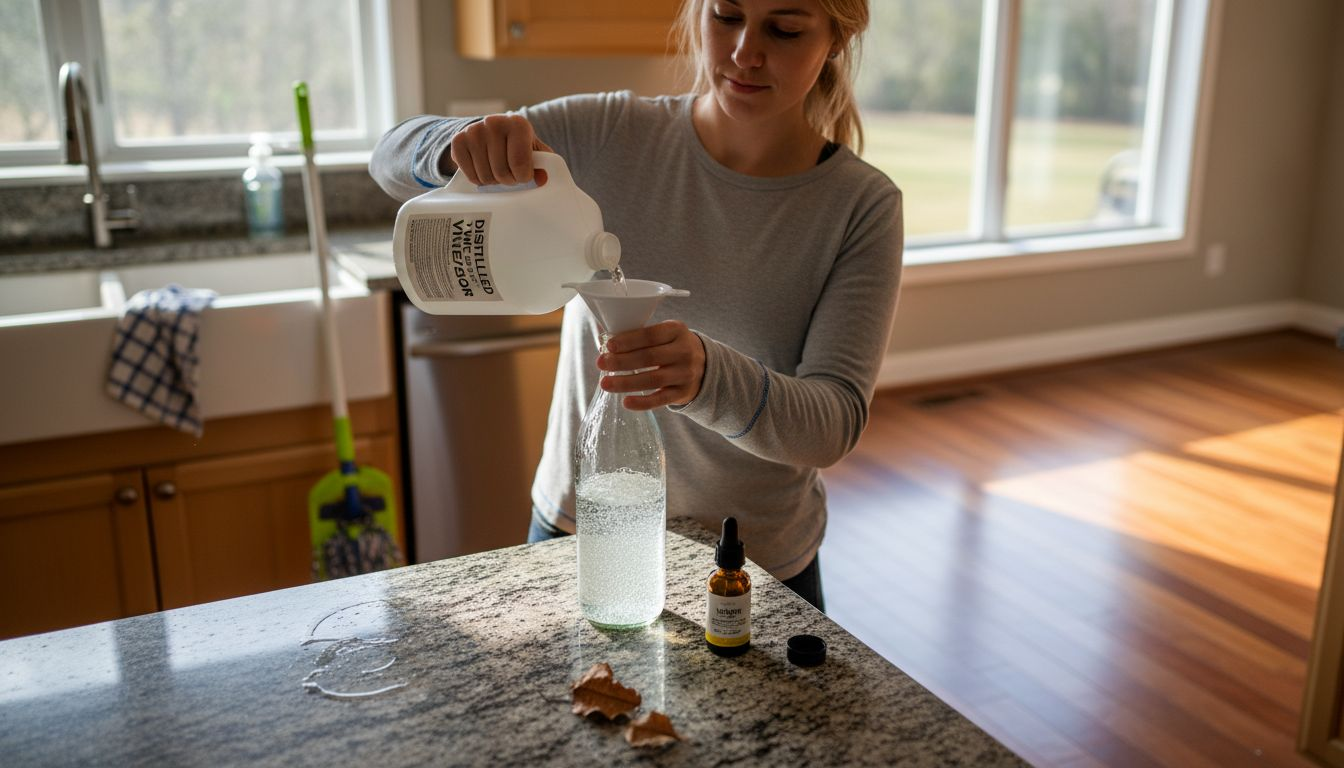
When selecting cleaning products, prioritize green cleaning methods that are safe for both your floors and your family. Look for cleaners certified by reputable environmental organizations that avoid harsh chemicals like phthalates and volatile organic compounds. The Environmental Working Group guidelines recommend using plant-based, biodegradable products specifically formulated for hardwood floors. These eco-friendly solutions effectively clean without leaving residue or causing long-term damage to the wood’s natural finish.
Consider creating your own natural cleaning solution using ingredients like white vinegar, warm water, and a few drops of mild dish soap. This approach not only reduces chemical exposure but also provides a cost-effective alternative to commercial cleaners. Always test any new cleaning method in a small, inconspicuous area first to ensure compatibility with your specific hardwood floor finish.
Pro tip: Invest in microfiber mops and reusable cleaning cloths to reduce waste and minimize your environmental impact while maintaining pristine hardwood floors.
Step 3: Remove Dirt and Surface Contaminants
Removing dirt and surface contaminants is a critical step in maintaining the beauty and longevity of your hardwood floors. By using the right techniques, you can effectively clean without causing damage to your precious wood surfaces.
Begin with effective floor cleaning methods that protect your floor’s finish while thoroughly removing debris. Use a microfiber dust mop or a soft-bristled attachment on your vacuum to capture fine particles without scratching the surface. Move the tool in the direction of the wood grain to prevent potential scratching and ensure comprehensive dirt removal. For more stubborn dirt, use a slightly damp microfiber mop with a pH-balanced wood floor cleaner, being careful to minimize moisture and avoid puddling.
Pay special attention to high traffic areas and spots near entryways where dirt tends to accumulate. Use gentle circular motions with a soft cloth for spot cleaning, focusing on removing embedded dirt without aggressive scrubbing. Floor cleaning techniques recommend using minimal liquid and ensuring your cleaning cloth is only slightly damp to prevent water damage to your hardwood floors.
Pro tip: Keep separate cleaning tools for different floor types to prevent cross-contamination and potential surface scratches.
Step 4: Buff and Revitalize High-Traffic Zones
Revitalizing high-traffic zones breathes new life into your hardwood floors, restoring their natural beauty and protecting them from further wear and tear. This critical maintenance step helps extend the life of your flooring while keeping it looking professionally maintained.
Begin by selecting appropriate buffing techniques that match your specific floor finish. Use a professional-grade floor buffer or orbital sander with the correct pad softness to gently smooth out surface scratches and dullness. Work systematically across high-traffic areas like entryways, hallways, and kitchen spaces, moving in smooth, consistent motions to ensure even restoration. Lightweight buffers with soft microfiber or wool pads work best for most residential hardwood floors, helping to restore shine without causing additional damage.
Apply a thin layer of wood floor polish or rejuvenating product after buffing to seal and protect the newly smoothed surface. Hardwood floor refinishing techniques recommend using products specifically designed for your floor’s finish type, whether it’s polyurethane, wax, or oil-based. Focus on blending the buffed areas seamlessly with the surrounding floor to create a uniform appearance that looks professionally restored.
Pro tip: Always test your buffing technique and polish in an inconspicuous area first to ensure compatibility with your specific hardwood floor finish.
Step 5: Apply Protective Finish for Lasting Shine
Applying a protective finish is the final transformation that will protect your hardwood floors and create a stunning, long-lasting shine. This crucial step seals your hard work and provides a barrier against daily wear and potential damage.
Begin by carefully selecting a finish that matches your specific wood type and existing surface condition. Hardwood floor maintenance standards recommend using either water-based or polyurethane coatings that provide robust protection against moisture and wear. Use a high-quality foam applicator or lambswool pad to apply thin, even layers, working methodically across the floor in the direction of the wood grain. Allow each coat to dry completely and lightly sand between applications to ensure a smooth, professional result.
Here’s a comparison of common hardwood floor finishes and their protective qualities:
| Finish Type | Durability Level | Moisture Protection | Shine Longevity |
|---|---|---|---|
| Polyurethane | Very high | Excellent | Long-lasting |
| Oil-based | High | Moderate | Medium-term |
| Wax | Moderate | Low | Needs frequent reapplication |
| Water-based | High | Good | Long-lasting |
Pay special attention to environmental conditions during application. National Wood Flooring Association technical standards emphasize the importance of maintaining consistent temperature and humidity levels during the finishing process. Ventilate the area well and avoid applying finish in direct sunlight or extremely humid conditions. Multiple thin coats will provide more durable protection than a single thick application, so patience is key to achieving that perfect, glossy finish.
Pro tip: Wear clean cotton socks while applying finish to prevent leaving footprints and ensure a pristine, smooth surface.
Step 6: Inspect Results and Maintain Regularly
Maintaining your hardwood floors is an ongoing process that requires consistent attention and care. This final step ensures the longevity and beauty of your freshly cleaned and refinished surfaces.
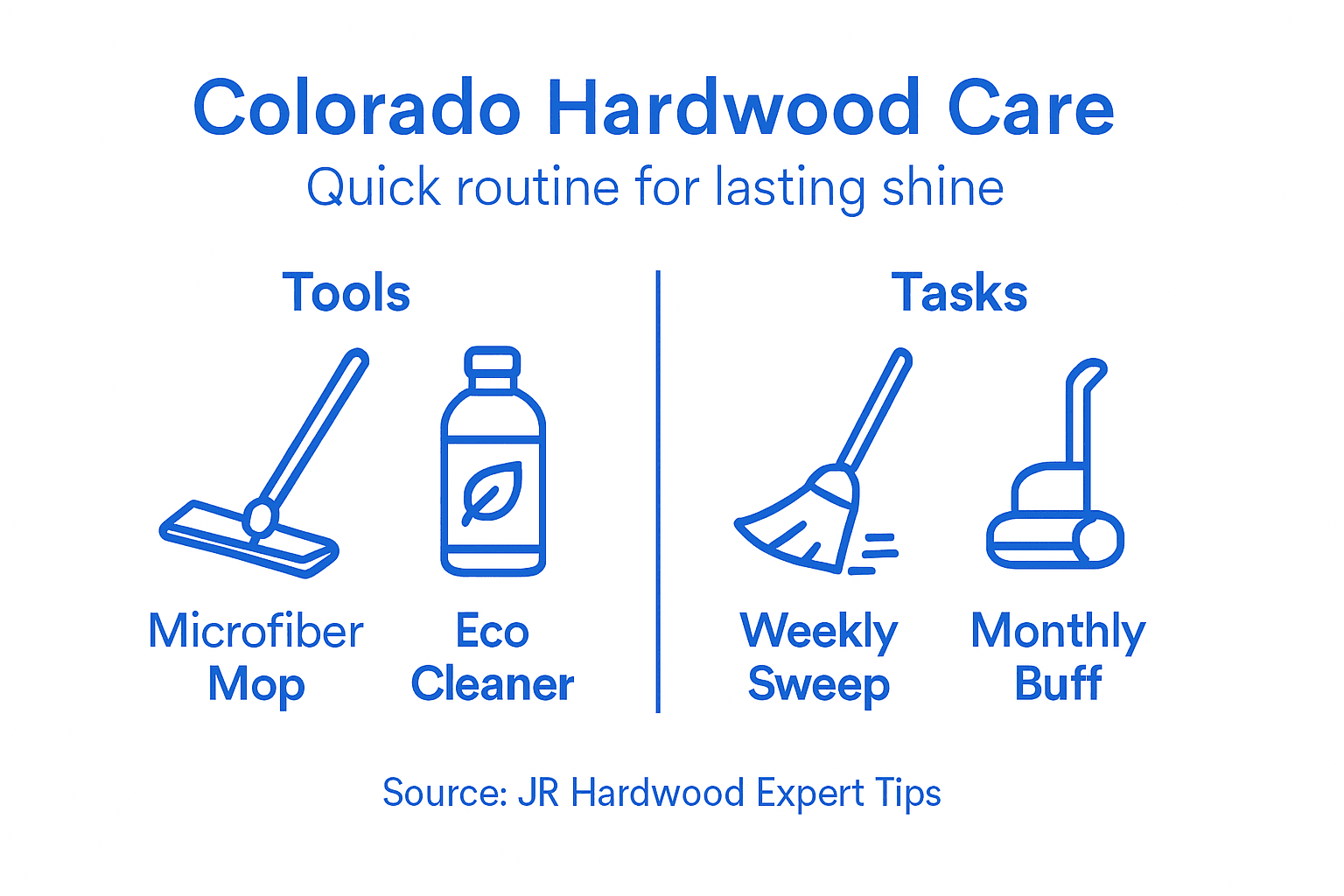
Hardwood floor maintenance guidelines recommend conducting thorough visual inspections every few months to catch potential issues early. Walk across the entire floor surface, examining for subtle signs of wear such as minor scratches, dull spots, or areas where the finish might be thinning. Use natural light to help highlight any imperfections that might be less visible under standard indoor lighting. Pay special attention to high traffic zones near entryways, kitchen areas, and hallways where wear tends to accumulate more quickly.
Develop a consistent maintenance routine that includes gentle weekly cleaning, immediate spill management, and periodic professional assessment. Wood floor maintenance practices suggest using soft microfiber tools for regular dusting, placing protective pads under furniture legs, and maintaining consistent indoor humidity levels to prevent wood expansion or contraction. Consider scheduling an annual professional inspection to address any developing issues before they become significant problems.
Use this summary of maintenance tasks to help keep your hardwood floors in peak condition year-round:
| Routine Task | Recommended Frequency | Main Benefit |
|---|---|---|
| Gentle dust mopping | Weekly | Removes dirt, prevents wear |
| Visual inspection | Every 2-3 months | Detects early damage |
| Professional assessment | Annually | Identifies hidden issues |
| Humidity level check | Monthly | Prevents wood deformation |
Pro tip: Create a maintenance log to track cleaning dates, products used, and any observations about your floor’s condition to help predict and prevent potential future issues.
Elevate Your Hardwood Floors with Expert Care from J.R. Hardwood Floor Refinishing & Cleaning
Maintaining pristine hardwood floors in Colorado’s unique climate takes more than just routine cleaning. As the guide highlights, addressing issues like dirt buildup, wear in high-traffic zones, and selecting the right eco-friendly finishes are essential for lasting beauty and protection. If you are looking to move beyond temporary surface cleaning to a truly lasting transformation that restores shine and durability, our specialized services are designed for you. From thorough refinishing to environmentally conscious cleaning methods and protective finishing, we tackle the exact challenges described in the Uncategorized Archives – J.R. Hardwood Floor Refinishing & Cleaning and bring your floors back to life.

Experience the difference that local expertise and premium craftsmanship make in revitalizing your hardwood floors. Don’t let wear, scratches, or lingering dirt diminish your home or commercial space. Visit us now at J.R. Hardwood Floor Refinishing & Cleaning to schedule a free consultation, get tailored advice based on your floor’s condition, and discover solutions that combine modern technology with trusted methods. Take the first step today towards floors that look as beautiful as the day they were installed and enjoy lasting protection that truly withstands Colorado living.
Frequently Asked Questions
How do I assess the condition of my hardwood floors before cleaning?
To assess the condition of your hardwood floors, visually inspect them and feel the surface for wear signs like scratches or dullness. Move furniture and check high-traffic areas, ensuring to spot any potential repair needs before you begin cleaning.
What eco-friendly cleaning methods can I use for my hardwood floors?
Use plant-based, biodegradable cleaning solutions that won’t harm your wood surfaces. Consider making a natural cleaner using white vinegar and warm water, and always test new methods in a small inconspicuous area first.
What are the best techniques for removing dirt and contaminants from hardwood floors?
Start by using a soft microfiber dust mop or a vacuum with a wood floor attachment to capture dirt without scratching. For deeper cleaning, lightly dampen a microfiber mop with a pH-balanced wood floor cleaner and work in the direction of the grain to avoid puddling.
How can I revitalize high-traffic zones in my hardwood flooring?
Use a professional-grade buffer with a soft pad to gently smooth out scratches in high-traffic areas. Apply a wood floor polish after buffing to protect the area and maintain consistency with the surrounding floor finish.
What should I do to maintain my hardwood floors regularly?
Create a regular maintenance routine that includes weekly dusting with a microfiber tool and visual inspections every few months. Taking immediate action on spills and scheduling an annual professional assessment can significantly prolong the life of your hardwood floors.