 Skip to content
Every year, millions of American homeowners invest in their hardwood floors, yet only a small percentage know the power of professional buffing for lasting results. Maintaining wood surfaces takes more than simple cleaning, especially with busy households or businesses. Understanding what hardwood buffing truly means helps protect your investment, reveal vibrant shine, and avoid premature wear that can turn an American classic into a costly project.
Table of Contents
- What Hardwood Buffing Really Means
- Buffing Methods For Hardwood Floors
- When To Choose Buffing Over Sanding
- Benefits For Homes And Businesses
- Common Mistakes And How To Avoid Them
Key Takeaways
| Point | Details |
|---|---|
| Importance of Buffing | Hardwood buffing is a less invasive technique than sanding, effectively restoring the floor’s shine and integrity. It is efficient and ideal for maintaining high-traffic areas. |
| Methods of Buffing | Three primary buffing methods are available: orbital buffing for light scratches, screen buffing for mild wear, and polishing for significant dullness. Matching the method to floor condition is crucial for optimal results. |
| When to Choose Buffing | Buffing is recommended for minor surface issues like light scratches, while sanding is necessary for deeper damage. Consult professionals to assess your floor’s specific needs. |
| Economic Benefits | Buffing is a cost-effective solution that minimizes downtime for homes and businesses, helping to extend the life of hardwood floors and prevent future damage. |
What Hardwood Buffing Really Means
Hardwood buffing is a specialized maintenance technique that restores and protects wooden floor surfaces without the intensive process of complete refinishing. At its core, buffing involves using a professional floor machine with a fine abrasive pad to gently remove surface-level wear and revive the floor’s original shine. Unlike full sanding, which removes significant wood material, buffing is a lighter, less invasive approach that maintains the wood’s integrity.
The buffing process typically involves three key stages. First, technicians carefully clean the hardwood surface to remove dust, dirt, and debris. Then, they use a specialized buffing machine with a rotating pad to lightly abrade the existing floor finish. This subtle abrasion creates microscopic texture that allows a new protective coating to adhere perfectly. The final step involves applying a fresh protective layer that seals and enhances the wood’s natural beauty.
Professional hardwood buffing offers significant advantages over DIY approaches. Trained specialists understand the precise pressure, pad selection, and technique required to restore floors without causing damage. They can address minor scratches, eliminate surface dullness, and extend the life of your hardwood floors. The process is remarkably efficient, often taking just a few hours compared to days required for full refinishing, making it an ideal solution for maintaining high-traffic areas and preserving your floor’s aesthetic appeal.
Pro Tip – Buffing Frequency: Schedule professional buffing every 3-5 years for residential spaces, or more frequently in commercial environments with heavy foot traffic to maintain optimal floor appearance and protection.
Buffing Methods for Hardwood Floors
Hardwood floor buffing encompasses several specialized techniques designed to restore and protect wooden surfaces. Professionals typically employ three primary methods: orbital buffing, screen buffing, and polishing. Each approach targets different levels of floor wear and delivers unique benefits for maintaining hardwood’s natural beauty. Homeowners can learn more about these techniques through a comprehensive guide to hardwood floor finishes.
Orbital buffing represents the gentlest approach, utilizing a random orbital machine that moves in small circular patterns to minimize potential surface damage. This method works exceptionally well for light surface scratches and minor wear. Screen buffing, by contrast, involves using a specialized screening pad to lightly abrade the existing finish, creating microscopic texture that allows new protective coatings to adhere perfectly. Professional technicians carefully select the appropriate pad grit to match the floor’s specific condition, ensuring optimal results without compromising wood integrity.
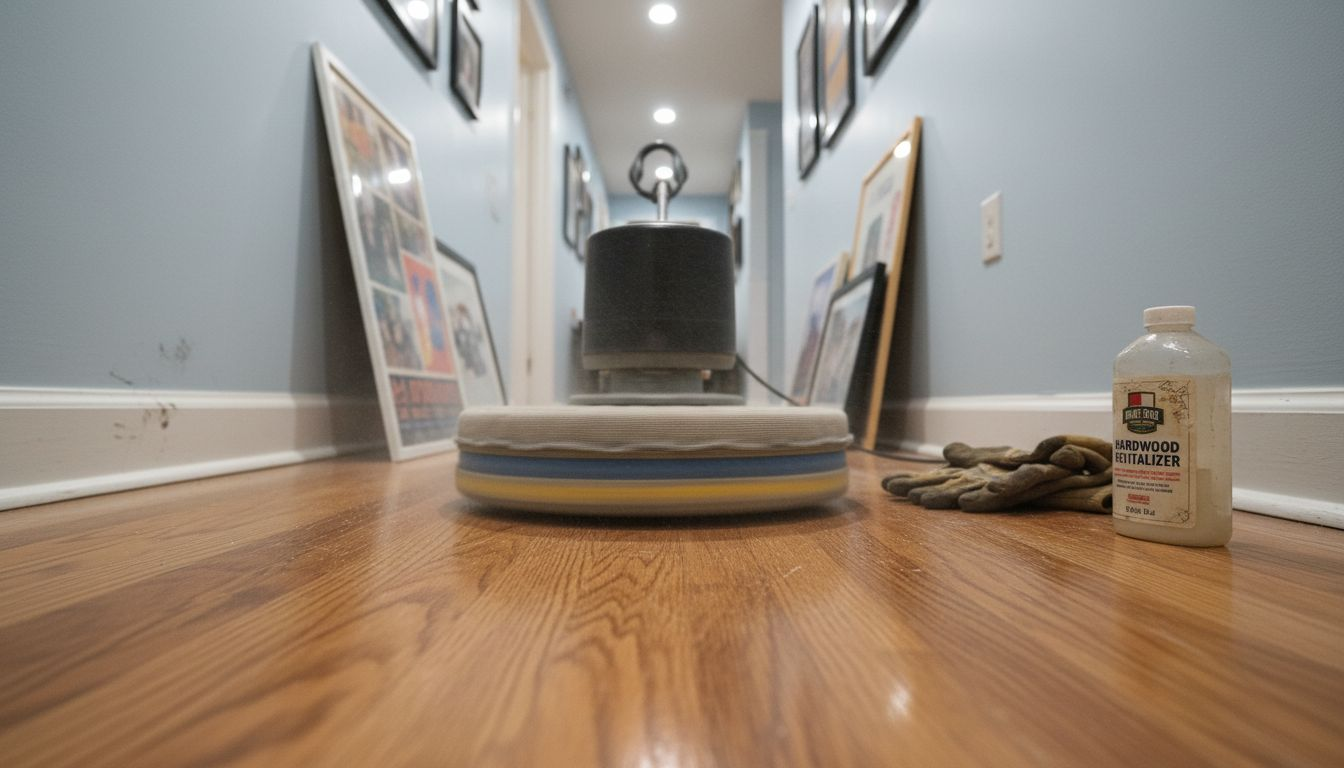
Polishing techniques represent the most intensive buffing method, typically reserved for floors with significant wear or dullness. During this process, professionals use progressively finer abrasive materials to smooth and refine the wood surface, ultimately creating a high-gloss finish that reflects light beautifully. The technique requires exceptional skill to avoid over-sanding or damaging the wood’s delicate surface. Different wood species and finish types demand unique approaches, making professional expertise crucial for achieving consistently excellent results.
Here’s a quick comparison of hardwood floor buffing methods and their ideal applications:
| Method | Floor Condition | Main Benefit | Professional Skill Needed |
|---|---|---|---|
| Orbital Buffing | Light scratches | Gentle surface renewal | Moderate |
| Screen Buffing | Mild surface wear | Enhances coating adhesion | Advanced |
| Polishing | Noticeable dullness | High-gloss finish achieved | Expert |
Pro Tip – Method Selection: Always match your buffing method to your floor’s specific condition, considering wood type, existing finish, and level of wear to prevent potential damage and achieve the best possible restoration.
When to Choose Buffing Over Sanding
Choosing between buffing and sanding depends critically on your hardwood floor’s current condition and damage level. Floor sanding involves aggressive removal of the top wood surface, which is typically necessary for floors with extensive damage, deep scratches, or significant unevenness. Buffing, by contrast, represents a gentler restoration technique ideal for floors with minimal wear and a desire to maintain the existing wood profile.
Several key indicators suggest buffing is the preferred approach. Floors with light surface scratches, minor scuff marks, and a dull finish are perfect candidates for buffing. This method works exceptionally well when the wood’s structural integrity remains strong and the existing finish is mostly intact. Professional technicians assess factors like finish thickness, wood species, and overall floor condition to determine whether buffing can effectively restore the floor’s appearance without more invasive interventions.
Financial and time considerations also make buffing attractive for many homeowners. Compared to full sanding, buffing is significantly less expensive and can be completed much faster. Most buffing projects take just a few hours, whereas complete sanding and refinishing might require multiple days of work. This efficiency, combined with the minimal disruption to living spaces, makes buffing an appealing option for those seeking quick floor restoration without extensive renovation.
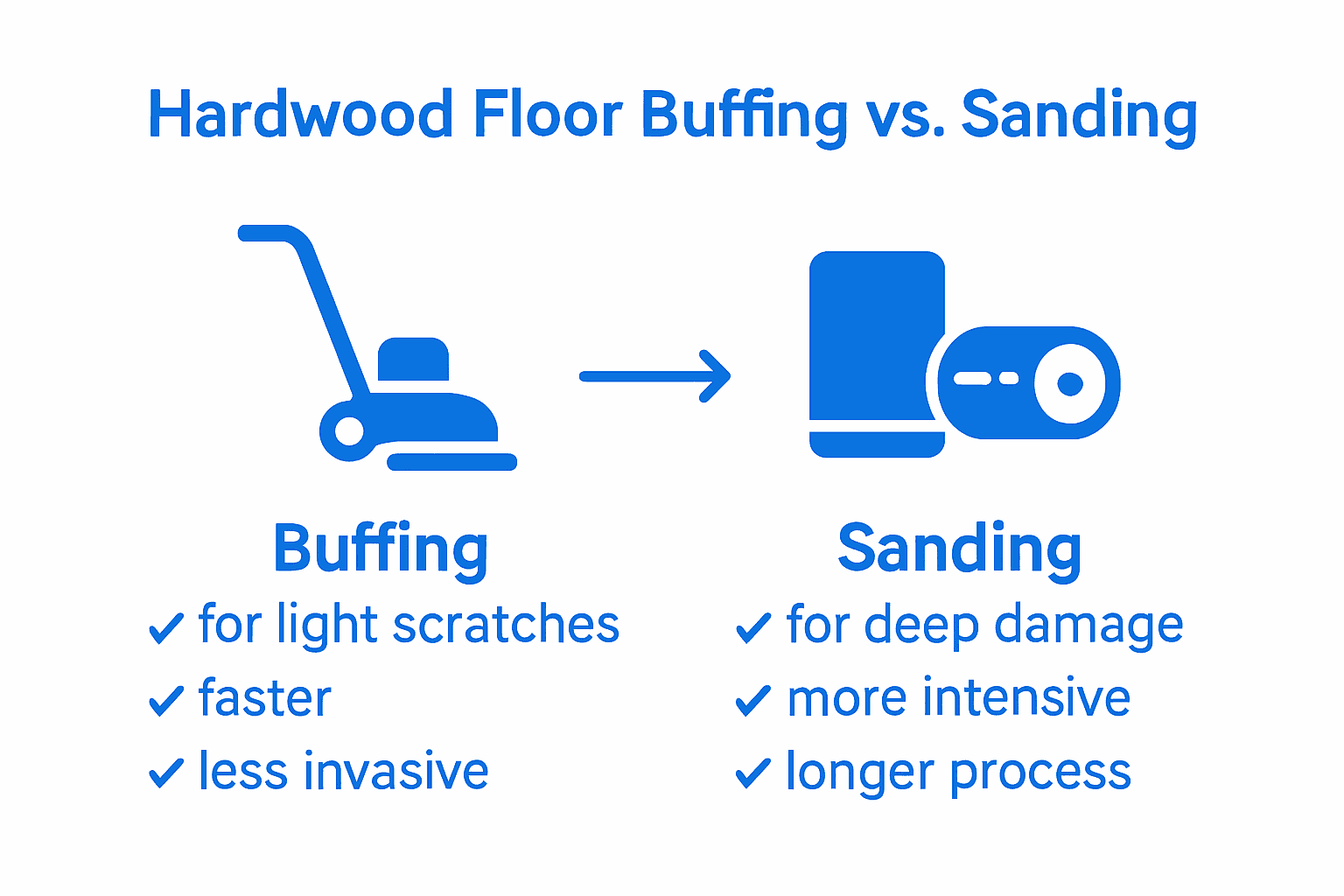
This summary highlights when buffing or sanding is the better choice for hardwood floors:
| Situation | Buffing Recommended | Sanding Recommended |
|---|---|---|
| Light surface scratches | Yes | No |
| Extensive deep gouges | No | Yes |
| Maintaining floor shine | Yes | No |
| Preparing for a color change | No | Yes |
Pro Tip – Damage Assessment: Always consult a professional hardwood floor specialist to evaluate your floor’s specific condition before deciding between buffing and sanding, as incorrect treatment can cause long-term damage.
Benefits for Homes and Businesses
Hardwood floor buffing delivers remarkable advantages for both residential and commercial environments, providing a cost-effective solution for maintaining beautiful, durable surfaces. Professional buffing enhances floor appearance and extends wood lifespan, making it an ideal maintenance strategy for spaces experiencing high foot traffic. Homeowners and business managers alike can appreciate the transformative power of this specialized restoration technique.
For residential settings, buffing offers multiple strategic benefits. Families with children and pets can quickly restore floors without extensive renovation, addressing minor scratches and wear marks that accumulate over time. The process protects wood surfaces from further damage, maintaining the floor’s structural integrity and aesthetic appeal. Commercial spaces such as offices, retail stores, and hospitality venues benefit equally, with buffing providing a quick, professional solution to maintain pristine flooring without significant business interruption.
Economic considerations make buffing particularly attractive for both homes and businesses. Compared to complete floor replacement or intensive refinishing, buffing represents a fraction of the cost while delivering impressive visual results. The process requires minimal downtime, allowing residential and commercial spaces to remain functional during maintenance. Professional buffing also helps prevent more expensive future repairs by addressing surface wear before it becomes structural damage, ultimately saving property owners significant money in long-term floor maintenance.
Pro Tip – Maintenance Scheduling: Develop a proactive buffing schedule based on your space’s traffic intensity, typically ranging from annually for residential areas to quarterly for high-use commercial environments.
Common Mistakes and How to Avoid Them
Hardwood floor buffing requires precision and careful technique, with several common mistakes that can potentially damage your valuable flooring. Homeowners and inexperienced technicians often make critical errors that can compromise the wood’s appearance and structural integrity. Learning to recognize and prevent these pitfalls is essential for successful floor restoration.
One of the most frequent mistakes involves using incorrect buffing equipment or inappropriate abrasive materials. Many DIY enthusiasts use standard household cleaning tools or rental equipment without understanding the specific requirements of their wood species and finish type. This can lead to uneven surfaces, excessive scratching, or complete removal of the protective coating. Professional technicians recommend selecting specialized buffing pads matched precisely to your floor’s specific condition, taking into account factors like wood hardness, existing finish thickness, and surface wear.
Another significant error is neglecting proper floor preparation before buffing. Homeowners frequently skip critical steps such as thorough cleaning, debris removal, and careful surface inspection. Attempting to buff a floor with embedded dirt, small rocks, or unaddressed structural damage can cause permanent scratches or gouges. Some individuals also make the mistake of applying too much pressure during buffing, believing that more force will produce better results. In reality, gentle, consistent movements are key to achieving a smooth, restored surface without causing additional damage.
Pro Tip – Preparation Matters: Always vacuum and professionally clean your hardwood floors thoroughly before buffing, removing all loose debris and inspecting for potential damage that might require professional intervention.
Restore Your Hardwood Floor Shine Fast with Expert Buffing
If your hardwood floors are showing light scratches or a dull finish but you want to avoid the hassle of full sanding, professional buffing is the solution you need. This article explains how hardwood buffing gently revives your wood’s natural beauty by removing surface wear and applying a fresh protective layer without damaging the floor. At J.R. Hardwood Floor Refinishing & Cleaning, we specialize in customized buffing services tailored to your floor’s specific condition using eco-friendly products and modern techniques.
Discover how our expert team can transform your home or commercial hardwood floors quickly, restoring shine and extending their life while minimizing disruption. Take the first step toward beautiful floors by visiting our Uncategorized Archives – J.R. Hardwood Floor Refinishing & Cleaning for insights and contact us today at J.R. Hardwood Floor Refinishing & Cleaning to schedule your free phone consultation based on your unique floor condition.
Frequently Asked Questions
What is hardwood buffing?
Hardwood buffing is a maintenance technique that restores and protects wooden floors by using a specialized machine to gently remove surface wear and revive the floor’s shine without extensive refinishing.
How often should I buff my hardwood floors?
It is recommended to schedule professional hardwood buffing every 3-5 years for residential spaces or more frequently in commercial environments with heavy foot traffic to maintain the floor’s appearance and protection.
When should I choose buffing over sanding for my hardwood floors?
Buffing is ideal for floors with light surface scratches and a desire to maintain the existing wood profile, while sanding is necessary for extensive damage, deep scratches, or significant unevenness.
What are the methods used for hardwood floor buffing?
The primary methods for hardwood floor buffing include orbital buffing, screen buffing, and polishing, each tailored to different levels of floor wear and delivering unique benefits for maintaining the wood’s appearance.