 Skip to content
A blood spot on the couch usually feels like one problem. In practice, it's often two. You need to lift the stain from upholstery without spreading moisture, cleaner, or peroxide onto the hardwood below.
That matters in Denver homes with open layouts, sectionals near wide-plank oak, and living rooms where a quick cleanup can turn into a floor issue fast. In a Highlands Ranch family room or a Washington Park bungalow, getting blood off couch fabric the wrong way can leave drip marks, dull finish, or swollen wood around the legs of the sofa. That same floor-first mindset is why Denver homeowners looking into Denver hardwood floor refinishing and a UV-Cure System also benefit from understanding how to handle accidents above the floor correctly.
A Couch Accident and Your Hardwood Floors
Blood stains are common household accidents, and they set up quickly. For Denver Metro homeowners, Colorado's dry climate can accelerate stain drying times by up to 30%, and blood stains affect approximately 68% of households annually, which makes quick, controlled action important for both upholstery and nearby furnishings, according to COIT's upholstery blood stain guide.
A common mistake involves going straight for the stain: grabbing the nearest cleaner, soaking a rag, and scrubbing. That often pushes blood deeper into the cushion and lets runoff drip onto the floor, especially if the couch sits over prefinished hardwood or along seams where boards can catch moisture.
From a floor care perspective, the order matters:
- Protect the floor first. Slip towels, a plastic trash bag, or a waterproof pad under the cushion edge before applying any liquid.
- Control the stain second. Blood is a protein stain, so heat and aggressive rubbing usually make the problem worse.
- Dry the area fully last. Upholstery and wood both suffer when moisture sits longer than it should.
Practical rule: If cleaner can run off the cushion, assume it can reach the floor.
This is the same logic used in finish maintenance. Surface care isn't just about removing the visible problem. It's about avoiding collateral damage while you do it. Homeowners dealing with pets, accidents, or repeated spot cleaning can also benefit from this floor-first advice in this guide on how to remove pet stains from hardwood floors.
Why the floor changes the cleaning approach
A couch sitting on hardwood creates a hidden risk zone. Liquid follows gravity into welt seams, under dust covers, through zipper edges, and onto the floor beneath. If you're cleaning near a rug, moisture can also get trapped between rug backing and wood.
That's why the safest approach is measured, not forceful. Think blotting, not soaking. Controlled application, not spraying broadly. Small loads of cold water, not repeated flooding. The goal is to save the couch and keep the floor finish from becoming the next repair job.
First Response Your Immediate Action Plan
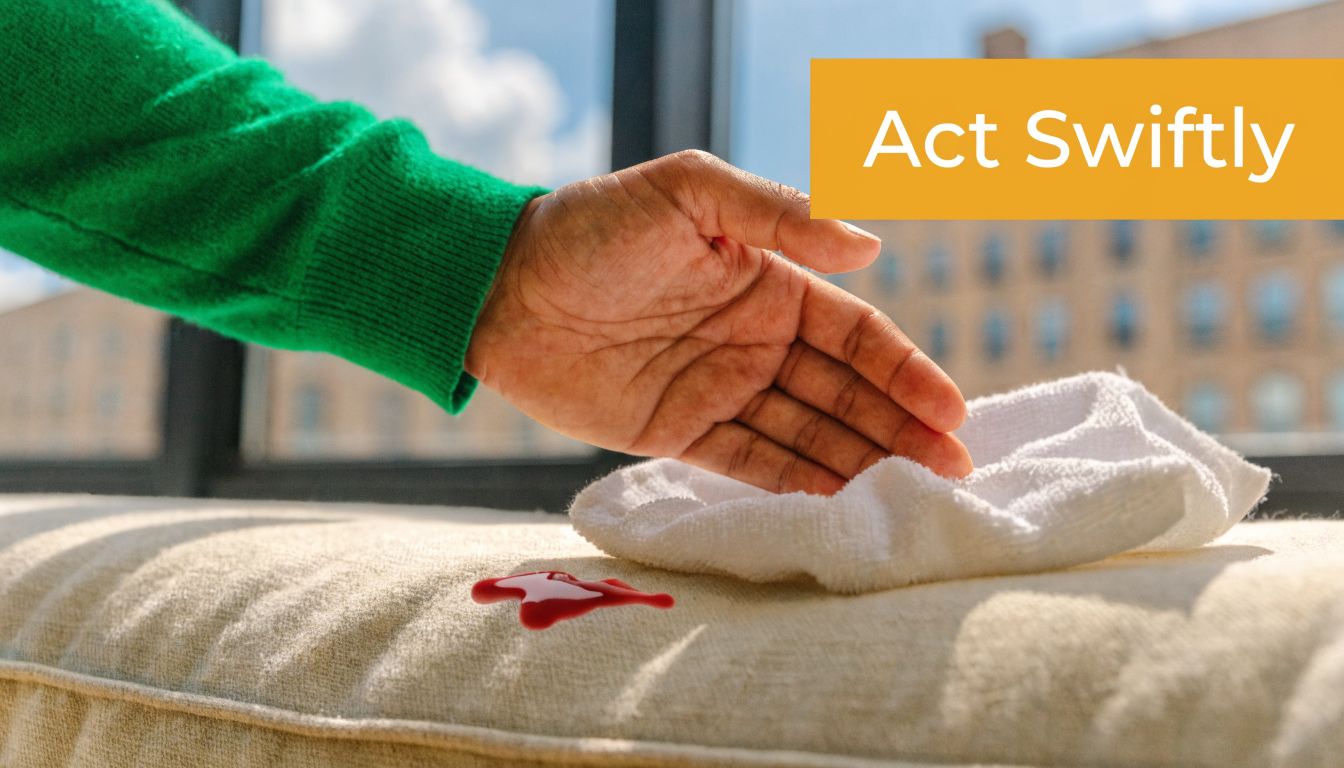
The first few minutes matter most. Stay calm, slow down, and set up the area before you touch the stain.
What to grab right away
Use clean, plain supplies. Skip scented wipes, colored towels, and random household sprays.
- White cotton cloths or paper towels. White lets you see transfer and avoids dye bleed.
- Cold water. Not cool-ish. Cold.
- A small bowl. Better control than pouring from a bottle.
- Mild dish soap. Just a small amount if needed.
- Dry bath towel or plastic barrier. This protects the hardwood under the cushion or along the sofa base.
- A flashlight. Useful for checking drips under the couch.
- Vacuum only if the stain is dry. Never vacuum wet blood.
The first five moves
Start with containment. Place a thick towel or a plastic layer under the affected area if the cushion can be lifted. If blood reached the floor, blot the wood immediately before it gets under edges or furniture feet.
Then do this:
- Check the care tag. Look for W, S, SW/WS, or X.
- Blot the blood gently. Lift, don't scrub.
- Use cold water sparingly. Dampen a cloth. Don't pour.
- Test any cleaner first. Use a hidden seam or underside panel.
- Keep moisture off the floor. Replace wet towels under the work area as needed.
If the accident involved a lot of liquid, not just a small stain, the cleanup starts to overlap with the same urgency as urgent water damage restoration. The concern isn't just the visible spot. It's what reached the sublayers and nearby surfaces.
A lot of homeowners also reach for vinegar because it's already in the pantry. That's risky around hardwood and not my first choice around upholstery either. Before using it anywhere near finished wood, read this guidance on whether you can use vinegar on hardwood floors.
How to Clean Fresh Blood Stains from Fabric
Fresh stains are the best-case scenario. If the blood is still recent, simple methods work surprisingly well when you use the right fabric-safe approach. According to Mooncup's upholstery stain guide, fresh blood stains under 1 hour old have a 95% removal success rate using simple household methods. The same source notes that fabrics coded W or SW have a 91% success rate with water-based methods, while X coded fabrics should only be vacuumed or professionally cleaned.
The cold-water method that works
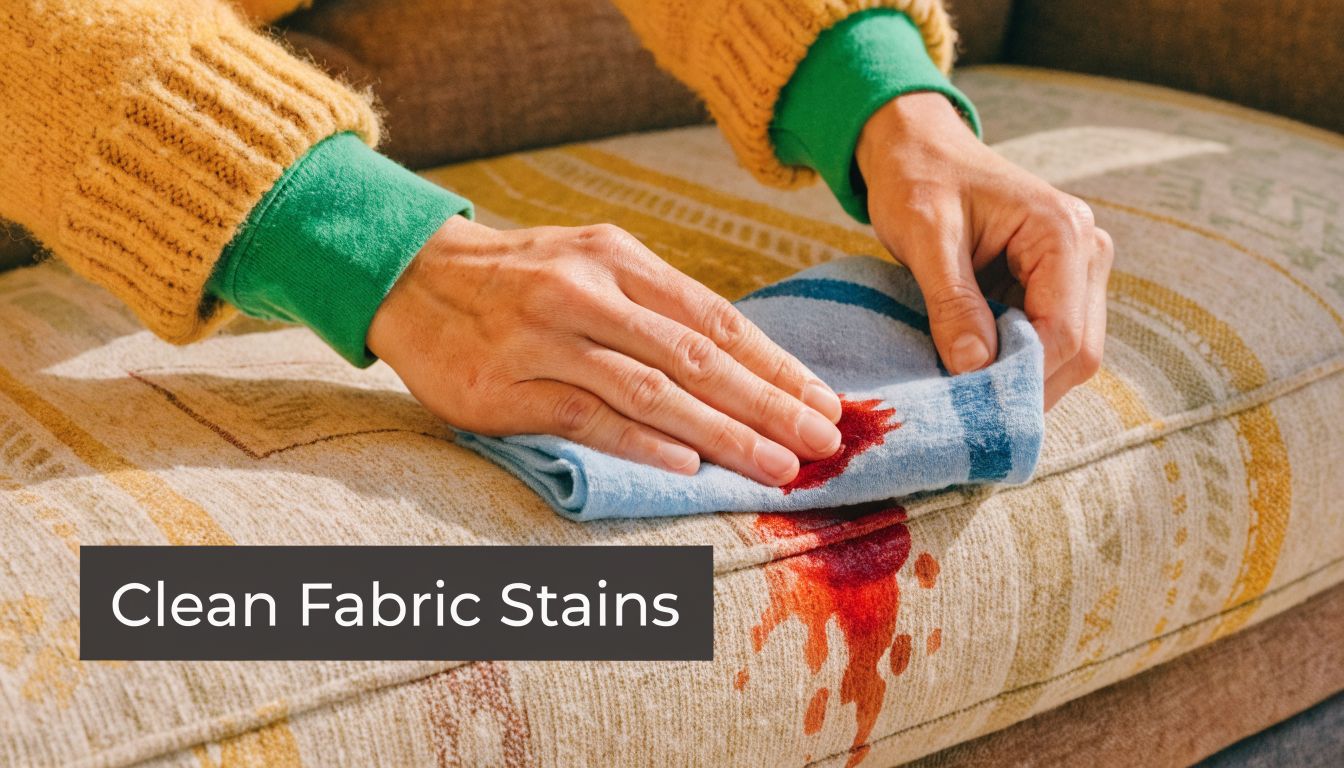
Blood is protein-based. Heat encourages it to bind more stubbornly to fibers, so cold water isn't a preference. It's the safe starting point.
Use this sequence on W or SW fabric:
- Blot dry first. Remove as much loose blood as possible with a dry white cloth.
- Dab with cold water. Wet a second cloth with cold water and press into the stain.
- Work from outside inward. That helps prevent spreading.
- Rotate to a clean part of the cloth often. Otherwise you redeposit what you lifted.
If the stain lightens but remains, add a drop or two of mild dish soap to cold water. Dampen a cloth with that mix and continue blotting. Keep the fabric damp, not saturated.
When to use hydrogen peroxide
On light-colored, water-safe fabric, 3% hydrogen peroxide can be the next move. Apply it to the cloth or use a small amount directly on the stained spot after spot-testing in a hidden area. You may see fizzing. That bubbling action is part of the stain breakdown.
A careful rhythm works best:
- Blot with cold water first
- Apply a small amount of peroxide
- Let it react briefly
- Blot, don't scrub
- Rinse by blotting with a clean cloth dampened in cold water
- Dry with pressure from a fresh towel
Here's a visual walkthrough for the process:
Use enough cleaner to treat the stain, not enough to soak the cushion core. The inside of the cushion is harder to dry than the face fabric.
Mistakes that make fresh stains worse
A few things cause more damage than the blood itself:
- Hot water
- Colored rags
- Firm scrubbing
- Spraying the entire cushion
- Ignoring the care code
- Leaving the area damp against hardwood
When people say they “tried everything,” they usually tried too much, too fast. Fresh stain removal is mostly restraint.
Tackling Dried Blood Stains Do's and Don'ts
Dried blood is different. It has already bonded more tightly to the fabric, so your job shifts from lifting surface soil to breaking down hardened protein. That's where stronger chemistry, patience, and careful moisture control matter.
What actually works on older stains
For dried spots, two options are usually worth trying on suitable upholstery: a baking soda paste for a gentler approach, or an enzyme cleaner for a more targeted one. Enzyme cleaners are the more professional-grade option when the stain is older and stiff.
According to Povison's guide to blood stain removal from sofas, enzyme-based cleaners targeting proteases can achieve an 85-95% removal success rate on dried blood stains, outperforming standard detergents by 40%, and they need a dwell time of 15-30 minutes to work effectively.
That dwell time is where many DIY attempts fail. People spray, wipe immediately, then decide the product “didn't work.” Enzymes need time to break the stain apart before blotting or extraction.
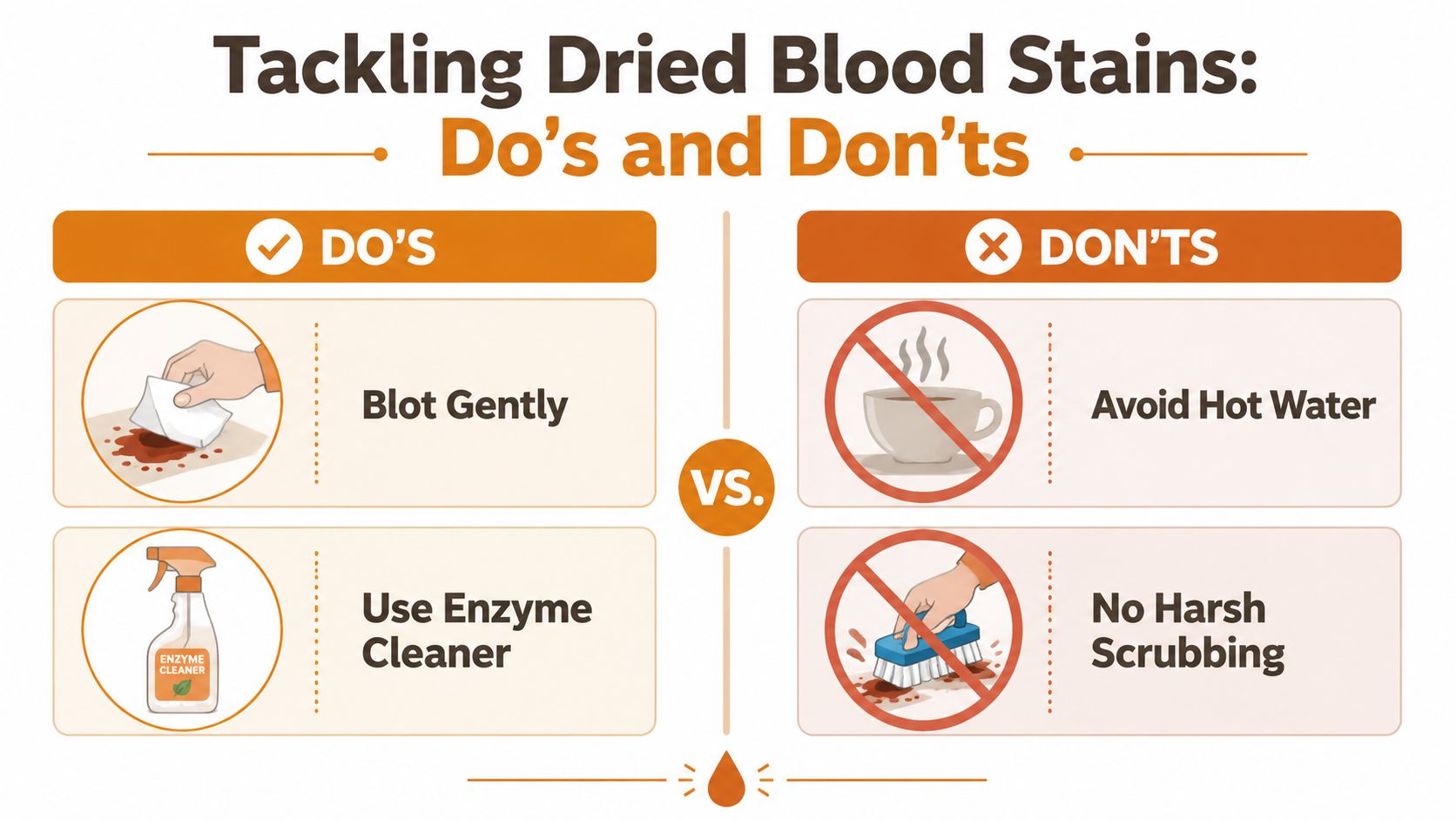
Blood Stain Removal Do's & Don'ts
| Do | Don't |
|---|---|
| Blot gently with a white cloth | Scrub aggressively |
| Use an upholstery-safe enzyme cleaner | Use hot water |
| Let the cleaner dwell before blotting | Rush the process |
| Spot-test in a hidden area | Assume all fabrics can handle peroxide |
| Protect the hardwood under the work zone | Let runoff drip to the floor |
A practical process for dried blood
Start by vacuuming any flaky residue if the stain is fully dry. After that, choose the method based on the fabric and the stain severity.
Baking soda paste
This is the lower-risk option for many fabrics.
- Mix baking soda with a small amount of cold water into a paste
- Apply only to the stained area
- Let it sit
- Blot and lift with a damp white cloth
- Repeat if the stain is improving
This method is slower, but it gives you more control and less chance of over-wetting.
Enzyme cleaner
Use an upholstery-safe enzyme product when the stain has darkened, stiffened, or spread into the weave.
- Test first in an unseen spot
- Apply lightly and evenly
- Let it sit for the full dwell time on the label
- Agitate very gently if the fabric allows
- Blot with a terry or cotton towel
- Rinse residue lightly if the product instructions call for it
- Dry with airflow
Dried blood rewards patience. If you keep re-wetting the same area without enough dwell time, you can create a larger ring without fully removing the original stain.
The floor connection most people miss
Dried-stain cleaners are more likely to create floor issues than fresh-stain methods because they often involve stronger ingredients, more repeated passes, and longer wet contact. If you have a durable modern finish on your wood, cleanup is usually more forgiving. Older or worn finishes are less tolerant of drips, puddles, and chemical contact.
That's one reason many homeowners prefer a UV-Cure System on nearby hardwood. Faster cure and stronger day-one protection can make normal living room accidents easier to manage. Even then, the best practice stays the same. Contain the work area, use small amounts, and wipe the floor immediately if anything gets through.
Special Cases Leather Microfiber and Velvet
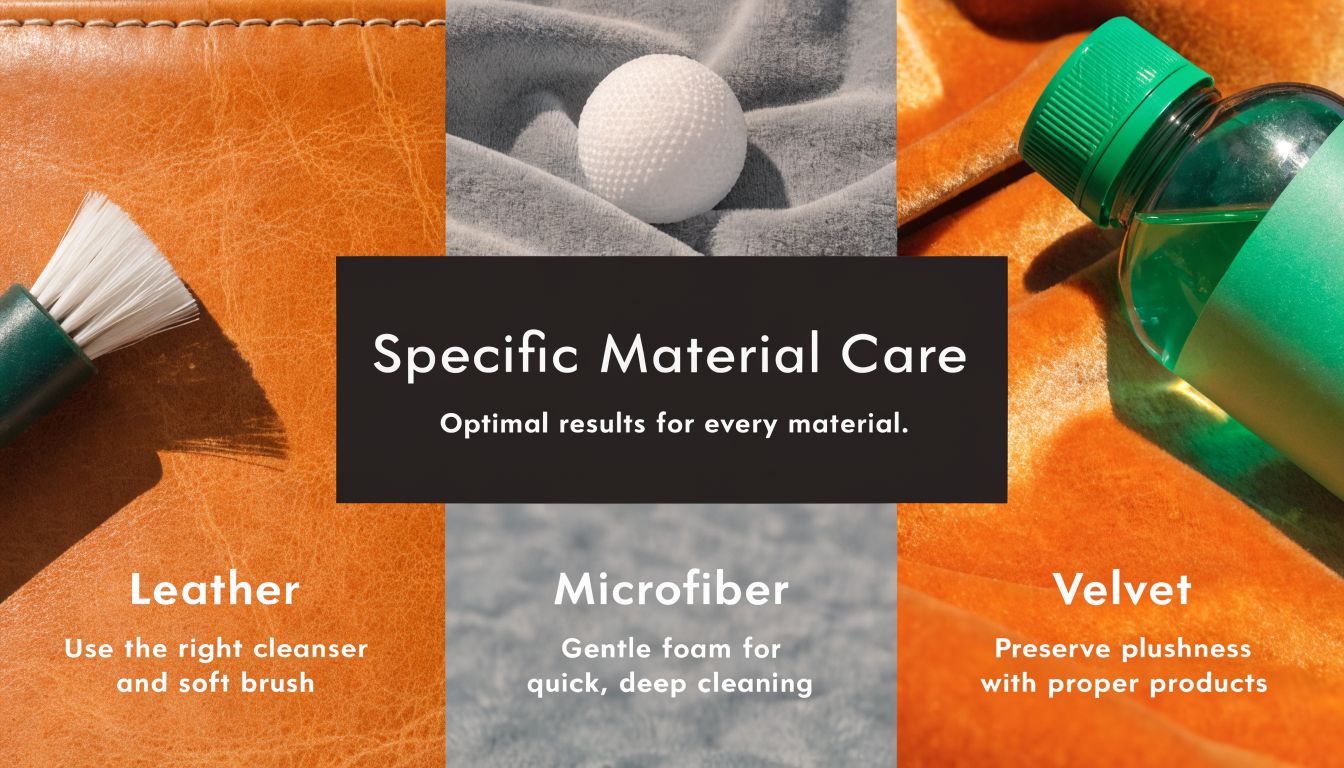
One-size-fits-all advice is where a lot of couch cleaning goes wrong. Fabric type changes the cleaner, the amount of moisture you can use, and the level of agitation that's safe.
Leather needs restraint
Leather doesn't respond well to the same chemistry used on fabric upholstery. The verified data is blunt here. This cited material reference states that hydrogen peroxide fails on 62% of leather attempts due to bleaching risk, while modern pet-safe enzyme sprays can outperform traditional oxidizers by 25% on dried stains, which is especially relevant for the 40% of Denver households with pets.
For leather:
- Use a lightly damp cloth first
- Blot, don't rub
- Use a leather-safe cleaner if plain water isn't enough
- Dry immediately
- Condition afterward if the manufacturer recommends it
If you have a light leather sectional and want a careful maintenance reference, this Shiny Go Clean Madison couch guide is a useful read.
Microfiber behaves differently
Microfiber often shows water marks, so technique matters as much as product choice. A small amount of solvent-safe cleaner may be appropriate if the code allows it. Keep your application even, avoid wet circles, and brush the nap back into place after drying.
Velvet is easy to distort
Velvet and similar pile fabrics don't forgive rough handling. Heavy rubbing can crush the texture even if the stain lightens. With velvet, use minimal moisture, gentle blotting, and a soft brush only after the area dries to lift the pile back up.
If the fabric has texture, pile, or a visible nap, stain removal and fabric restoration are two separate jobs.
For pet-heavy homes, enzyme products are often the smartest option because they target protein residue more gently than broad oxidizers. That matters when the couch is in the same room as hardwood floors you also want to keep clean, dry, and finish-safe.
When to Call a Professional for Your Couch or Your Floor
Some stains are still good DIY candidates. Some aren't. If the couch is X-coded, the stain is large, the blood has soaked through multiple cushion layers, or the fabric is leather, velvet, silk-like, or highly textured, professional upholstery cleaning is often the safer call.
If you want to compare what a local upholstery service typically handles, this page about how pros clean your furniture in Baltimore gives a decent overview of when homeowners hand the job off instead of risking the fabric.
Signs the floor may also need attention
The couch isn't always the only casualty. Watch for these floor warning signs after cleanup:
- Cloudy finish where cleaner dried on the wood
- Dark seams where liquid may have seeped between boards
- Raised grain or roughness near sofa legs
- Sticky residue from soap or spot remover
- Dull spots caused by chemical contact
If that happened, stop experimenting. Surface issues on hardwood are often easier to correct when they're addressed promptly. Professional maintenance is especially useful when the damage is limited to the top layer and doesn't require a full sand. For that kind of follow-up, it helps to understand what's included in professional hardwood floor cleaning services.
A smart homeowner doesn't treat every problem as a DIY test. Sometimes the best move is protecting the couch by calling an upholstery cleaner. Sometimes it's protecting the floor before a small spill becomes a finish repair.
For homeowners in Denver, Parker, Highlands Ranch, Littleton, Castle Rock, Aurora, and nearby communities, careful stain cleanup protects more than upholstery. It protects the hardwood investment underneath. If your floor picked up moisture, cleaner residue, scuffs from moving furniture, or finish wear during the cleanup, J.R. Hardwood Floor Refinishing & Cleaning can help with dust-free sanding, deep cleaning, screen and recoat, wax removal, floor installation, and advanced Instant UV-Curable Finish services for fast return to normal use. You can review more service options on their services page, see examples on their project gallery and videos, or reach out through the contact page.
Homeowners on Parker trust J.R. Hardwood Floor Refinishing & Cleaning to restore the natural beauty of their hardwood floors with our dust-free sanding system and advanced UV-curable finishes. Unlike traditional methods, our UV technology cures instantly, so you can move furniture back the same day with no lingering odor or downtime. Choose the perfect refinishing service to match your needs and home traffic. Our dust-free process ensures a clean, beautiful finish every time.
📞 Phone: 720-327-1127
🌐 Website: jrhardwoodfloorrefinishingandcleaning.com
📍 Service Area: Parker, Denver, Aurora, Castle Rock, Highlands Ranch, Littleton, and nearby towns
Subscribe on YouTube