 Skip to content
TL;DR:
- Flooring trends in 2025 emphasize durability, natural beauty, and sustainability. Rigid core luxury vinyl tile dominates for its resistance and quick installation, while warm wood tones replace gray for added warmth and flexibility. Proper installation and maintenance are essential to ensure long-lasting, eco-friendly floors.
Flooring trends in 2025 are defined by three forces: durability, natural aesthetics, and sustainability. Warm wood tones have replaced the cool grays that dominated the last decade, and materials like rigid core luxury vinyl tile and engineered hardwood are winning on both style and performance. The resilient flooring category generated $8.587 billion in 2025, up 2.5% from 2024. That growth tells you exactly where the market is heading. Whether you are renovating a home in Denver or planning a commercial buildout, understanding these shifts helps you spend smarter and choose floors that last.
What flooring materials and styles are leading in 2025?
Rigid core luxury vinyl tile is the undisputed leader in 2025 flooring styles. LVT holds 76.8% of the commercial resilient market, and its share in residential spaces remains strong too. The reasons are practical: rigid core products resist dents, handle moisture better than traditional vinyl, and install faster than hardwood. For property developers managing multiple units, that combination of speed and durability is hard to beat.
Hardwood is not fading, though. It is evolving. White oak remains the most requested species, but supply constraints have pushed manufacturers to get creative. Color-corrected red oak stains now mimic the white oak look at a lower material cost. That innovation gives homeowners the aesthetic they want without the premium price tag. Engineered hardwood is also gaining ground in humid climates where solid wood would cup or gap over time.
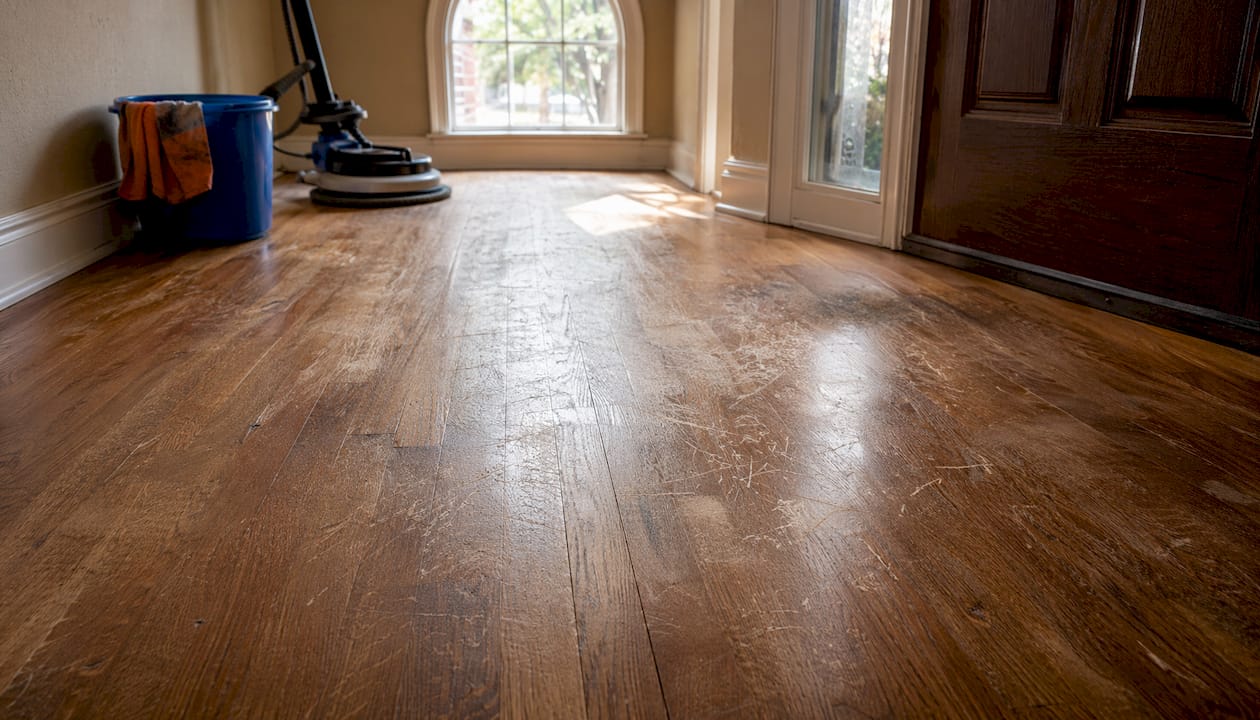
Bio-based and recycled materials are carving out a real niche. Bamboo and cork are no longer fringe choices. They now appear in mainstream residential projects, especially where homeowners want a story behind their floors, not just a surface.
Here is a quick breakdown of the top materials by use case:
| Material | Best for | Key advantage |
|---|---|---|
| Rigid core LVT | High-traffic residential and commercial | Moisture resistance, fast install |
| Engineered hardwood | Humid climates, basements | Dimensional stability |
| Solid hardwood | Dry climates, formal living spaces | Refinishable multiple times |
| Bamboo | Eco-conscious residential projects | Renewable, hard surface |
| Cork | Home offices, playrooms | Cushion underfoot, sound absorption |
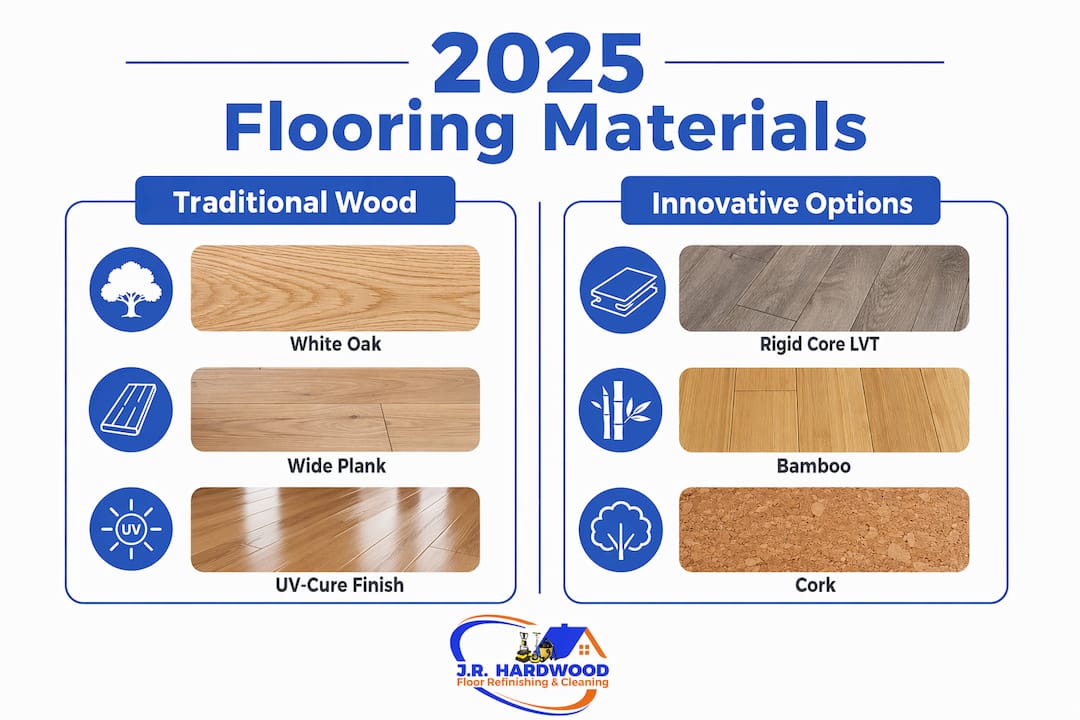
Popular finishes in 2025 lean toward matte and satin sheens. High-gloss is fading because it shows scratches and footprints too easily. Matte finishes hide daily wear and pair naturally with the warm, organic tones that define this year’s color palette.
How do installation methods and technical factors influence flooring choices?
Wide-plank hardwood is one of the biggest style statements of 2025, but it demands more from the installation process. Wide-plank floors require precise subfloor preparation and longer acclimation periods to prevent cupping and gapping. In Colorado’s dry climate, that acclimation window matters even more. Skipping it is the single most common reason wide-plank installations fail within the first year.
Subfloor moisture is the hidden villain in most flooring failures. Moisture barriers are critical even under “waterproof” LVT. Missing that barrier voids most manufacturer warranties and causes the planks to buckle or separate. Many homeowners assume the “waterproof” label means the floor handles everything beneath it. It does not. The barrier protects the subfloor, not just the surface.
Pro Tip: Before any installation, use a pin-type moisture meter to test your subfloor. Readings above 12% for wood subfloors signal you need a barrier or additional drying time, regardless of what flooring type you choose.
Dustless sanding and low-VOC finishes are changing the refinishing experience. Traditional sanding fills a home with fine dust for days. Dustless systems capture over 99% of particles at the source, and low-VOC waterborne finishes cure faster with far less odor. For families with children or pets, that difference is significant. Jrhardwoodfloorrefinishingandcleaning uses both approaches on every job in the Denver Metro Area.
Key installation factors that affect long-term performance:
- Subfloor flatness: Wide planks need a subfloor flat to within 3/16 inch over 10 feet.
- Acclimation time: Solid hardwood needs 3–7 days on-site before installation in most Colorado conditions.
- Moisture barrier type: Sheet barriers work for most LVT; self-leveling compounds address subfloor dips before hardwood goes down.
- Finish cure time: Low-VOC waterborne finishes typically reach full hardness in 7 days. Traffic too soon causes premature scratching.
What color palettes and finishes define the 2025 flooring aesthetic?
Gray floors had a long run, but 2025 marks their clear decline. Warm blondes and medium browns now lead color preferences, reflecting a broader design shift toward cozy, nature-inspired interiors. Think of it as your home exhaling after years of cool, industrial tones. Medium brown gives a room warmth without feeling heavy, and it pairs with almost any furniture style.
Warm wood tones also offer greater design flexibility than gray. Medium brown provides a neutral base that works with both modern and traditional furnishings. Gray, by contrast, locks you into a specific palette. That flexibility matters when you are renovating a home you plan to sell or rent.
Finish preferences in 2025 break down clearly:
- Matte finishes: The top choice for high-traffic areas. They hide scratches and dust between cleanings.
- Satin finishes: A slight sheen that reads as natural. Popular in living rooms and bedrooms.
- Hand-scraped textures: Add character and mask minor dents. Great for rustic or farmhouse aesthetics.
- Wire-brushed surfaces: Open the wood grain visually, giving floors an aged, organic look without actual aging.
Pro Tip: If you are refinishing existing hardwood, ask about color-corrected staining before committing to a full replacement. A skilled refinisher can shift your floor from dated gray to warm honey brown in a single day, saving thousands compared to new installation.
Low-VOC finishes are not just a health choice. They also support better indoor air quality long after the job is done. Waterborne polyurethane and UV-curable finishes both qualify, and both perform as well as oil-based options in durability testing.
How are sustainability and market factors shaping flooring trends in 2025?
Environmental accountability is now a purchasing criterion, not a bonus. Corporate carbon reduction goals drive demand for flooring with verified Environmental Product Declarations, or EPDs. An EPD is a standardized document that discloses a product’s environmental impact across its full life cycle. Commercial developers increasingly require them before specifying any flooring product.
Budget pressure is real and widespread. 50% of designers reported tighter budgets in 2025 compared to previous years. Only 14% reported budget increases, down from 35% in earlier years. That squeeze pushes designers toward materials that deliver both performance and sustainability credentials without the luxury price tag. Rigid core LVT fits that brief well.
The commercial and residential markets are moving in opposite directions right now:
- Commercial flooring is growing. Commercial resilient flooring generated $2.41 billion in 2025, a 40% increase since 2020. Corporate office refreshes and hospitality renovations are driving that volume.
- Residential demand softened. Elevated mortgage rates slowed remodeling activity. Residential resilient market share dipped below 72% in 2025, down from nearly 73% in 2024.
- Circular economy models are emerging. Some manufacturers now offer leasing and take-back programs for flooring, especially in commercial settings. The floor gets returned, recycled, and remanufactured at end of life.
- Bio-based materials are gaining regulatory support. Building codes in several states now incentivize or require recycled content in commercial construction.
Demand in commercial flooring is rising steadily, driven by corporate sustainability goals and building standards that require environmental product transparency. Developers who specify EPD-verified products today are ahead of regulations that will likely make them mandatory within the next few years.
For homeowners navigating budget-conscious project planning, understanding these market forces helps you time purchases and negotiate better with suppliers.
What practical tips help homeowners and developers choose and maintain 2025 flooring?
Choosing the right floor starts before you ever visit a showroom. The room’s function, moisture exposure, and foot traffic all narrow your options faster than any trend report. A kitchen and a bedroom have completely different demands, and the best flooring solutions in 2025 reflect that reality.
Here are the practical steps we recommend:
- Test moisture first. Use a moisture meter on your subfloor before selecting any material. High readings rule out solid hardwood and require a barrier under LVT.
- Match material to traffic. Rigid core LVT handles mudrooms, kitchens, and commercial lobbies. Solid hardwood belongs in bedrooms and formal spaces with controlled humidity.
- Layer materials strategically. Use LVT in wet zones and hardwood in dry zones. A consistent color palette ties them together visually.
- Choose low-VOC finishes. They protect your family’s air quality and the floor equally well. Jrhardwoodfloorrefinishingandcleaning applies waterborne and UV-curable finishes on every refinishing job.
- Plan for maintenance from day one. Proper floor care extends hardwood life by years. Use pH-neutral cleaners, felt pads under furniture, and area rugs in high-traffic zones.
Pro Tip: Think of your floor’s finish like sunscreen. Reapplying a screen and recoat every 3–5 years keeps the protective layer intact and delays the need for a full sand-and-refinish by a decade or more.
For commercial spaces, commercial floor maintenance follows a different schedule. High-traffic areas need more frequent buffing and cleaning to prevent finish breakdown. Catching wear early costs far less than a full restoration.
Key Takeaways
The most effective approach to 2025 flooring is matching material, finish, and maintenance plan to the specific demands of each space before making any purchase.
| Point | Details |
|---|---|
| Rigid core LVT leads the market | LVT holds 76.8% of commercial resilient market share and dominates residential installs for durability. |
| Warm tones replaced gray | Medium browns and warm blondes now define popular flooring designs, offering greater design flexibility. |
| Moisture barriers are non-negotiable | Even waterproof LVT requires a subfloor moisture barrier to maintain warranty and prevent failure. |
| Sustainability drives commercial specs | EPD-verified and recycled-content products are now standard requirements in commercial flooring projects. |
| Matte finishes win on practicality | Matte and satin sheens hide daily wear better than gloss and align with 2025’s natural aesthetic. |
What I have learned from watching these trends up close
After years of working on floors across the Denver Metro Area, I can tell you that trends look different on the ground than they do in trade publications. The shift to warm wood tones is real, and homeowners are genuinely excited about it. But the part that does not get enough attention is how much installation quality determines whether a trend holds up or falls apart within two years.
Wide-plank floors look stunning in photos. They also punish any shortcut in subfloor prep. I have seen beautiful wide-plank installations buckle within a season because the acclimation step was rushed. The floor was not the problem. The process was. That is the uncomfortable truth about following trends: the aesthetic is the easy part. The craft behind it is what makes it last.
The sustainability conversation is also more nuanced than most articles admit. A floor with an EPD is not automatically better for your home than a well-maintained solid hardwood floor that gets refinished every decade instead of replaced. Refinishing is one of the most genuinely circular things you can do with a floor. You extend its life, skip the manufacturing footprint of a new product, and end up with a surface that looks brand new. That story does not always make it into the trend reports, but it should.
My honest advice: do not chase a trend without understanding the maintenance commitment behind it. The best floor for your home is the one you will care for consistently, not the one that photographs best.
— J.R.
Ready to bring your floors in line with 2025’s best looks?
At Jrhardwoodfloorrefinishingandcleaning, we help homeowners and property developers across Denver, Parker, Castle Rock, and the surrounding Colorado communities get floors that reflect today’s best styles without cutting corners on quality.
Whether you want to shift your hardwood from dated gray to warm honey brown, or you need a full professional refinishing assessment before deciding between DIY and professional service, we are here to help. We use dustless sanding, low-VOC waterborne finishes, and UV-curable options that cure fast and protect long. Call us for a free over-the-phone quote. We will ask the right questions, look at your photos, and give you a straight answer about what your floors actually need.
FAQ
What is the most popular flooring material in 2025?
Rigid core luxury vinyl tile is the most popular flooring material in 2025, holding 76.8% of the commercial resilient market and leading residential installs for its durability and moisture resistance.
Are gray floors still in style in 2025?
Gray floors have declined significantly. Warm blondes and medium brown tones now lead popular flooring designs in 2025, offering more design flexibility for both traditional and modern interiors.
Do I need a moisture barrier under waterproof LVT?
Yes. Even waterproof LVT requires a properly installed subfloor moisture barrier. Skipping it causes most resilient flooring failures and voids the manufacturer warranty.
What finish is best for hardwood floors in 2025?
Matte and satin finishes are the top choices in 2025. They hide scratches and daily wear better than high-gloss options and complement the warm, natural tones that define this year’s flooring aesthetic.
How does refinishing compare to replacing floors for sustainability?
Refinishing existing hardwood is one of the most sustainable flooring choices available. It extends the floor’s life by a decade or more, avoids the manufacturing footprint of new materials, and costs significantly less than full replacement.