 Skip to content
TL;DR:
- Pets cause scratches stains and odors that can damage wood and laminate floors.
- Consistent cleaning and prompt stain removal help maintain floor integrity with pets.
- Professional restoration may be necessary for deep damage or widespread scratches.
If you share your Colorado home with a dog or cat, you already know the daily battle: paw prints across freshly mopped floors, mysterious scratches appearing overnight, and that stubborn pet odor that just won’t quit. Colorado’s outdoor lifestyle makes things even trickier, with muddy trails, snow melt chemicals, and dry air all adding to the wear your floors take every season. The good news? You don’t have to choose between your pets and beautiful floors. With the right habits, products, and a little know-how, you can keep your wood and laminate surfaces looking great for years to come.
Table of Contents
- The biggest threats pets pose to your floors
- Daily and weekly cleaning routines for pet-friendly floors
- The best cleaners and pet-safe products for wood and laminate
- Fixing and preventing pet stains, scratches, and odors
- Surface upgrades and extra protections for pet owners
- Our take: What really keeps floors beautiful with pets long-term
- Get professional help for the toughest pet floor issues
- Frequently asked questions
Key Takeaways
| Point | Details |
|---|---|
| Pet damage is preventable | Daily maintenance and smart routines help keep floors safe from scratches and stains. |
| Choose cleaners wisely | Pet-safe, effective products protect both your animals and your flooring investment. |
| Act quickly on accidents | Immediate cleanup is key to preventing permanent stains and odors. |
| Upgrades make a difference | Scratch-resistant surfaces and professional treatments can add years to your floors. |
The biggest threats pets pose to your floors
Before you can protect your floors, it helps to know exactly what you’re up against. Pets are wonderful, but they’re also surprisingly hard on your surfaces. Pets frequently cause scratches, stains, and odors on hardwood and laminate floors, and in Colorado, a few extra factors pile on top of that.
Here are the most common types of pet-related floor damage:
- Scratches: Dog nails are the number one culprit. Every sprint to the door or excited spin leaves tiny gouges in your finish.
- Stains and odors: Urine, vomit, and wet fur can soak into wood grain and laminate seams if not cleaned up fast.
- Water marks: Splashing around the water bowl or tracking in wet paws creates moisture damage over time.
- Mud and grit: Colorado trails are beautiful, but they send a lot of dirt through your front door. That grit acts like sandpaper underfoot.
- Snow melt chemicals: Salt and chemical ice melters tracked in from driveways and sidewalks can dull and pit your floor’s finish.
Colorado’s low humidity in winter is another hidden threat. Dry air causes wood to contract and can open small gaps between planks, making it easier for pet accidents to seep in and cause lasting damage. You can explore examples of flooring damage to see how quickly small issues can escalate.
“The biggest mistake pet owners make is waiting too long to address minor damage. A small scratch or stain that gets ignored for a few weeks can turn into a repair that costs ten times more.”
The key takeaway here is that early action and consistent floor protection methods are your best friends. Now that you know why keeping your floors pristine can be so tough with pets, let’s walk through daily care routines that actually protect your surfaces.
Daily and weekly cleaning routines for pet-friendly floors
Consistency is everything when you have pets. Think of your floor care routine like brushing your teeth: skip it a few days and problems start to build up fast. Regular cleaning reduces the risk of scratches and stains on both wood and laminate, and it doesn’t have to take a lot of time.
Here’s a simple routine that works:
- Wipe paws at the door. Keep a towel or pet-specific paw wiper near every entrance. This one habit alone cuts down on mud, grit, and moisture dramatically.
- Dry-sweep or vacuum daily. A microfiber dust mop or a vacuum with a hard floor setting picks up pet hair and debris before it scratches the surface.
- Spot clean accidents immediately. Don’t let spills or accidents sit. Blot, don’t rub, and follow up with a pet-safe cleaner.
- Damp mop weekly. Use a lightly damp mop (not soaking wet) with a floor-safe cleaner. Refer to our cleaning tips for pet homes for product recommendations.
- Check water bowl areas. Wipe up splashes around your pet’s water station every day to prevent moisture from sitting on the floor.
Pro Tip: Rotate your entry mats and rugs every few weeks. Grit hides under the edges and corners, and rotating them lets you catch debris that would otherwise grind into your floor’s finish.
| Cleaning tool | Best use case |
|---|---|
| Microfiber dust mop | Daily dry sweeping for hair and debris |
| Soft-bristle vacuum | Pet hair removal without scratching |
| Damp mop with wrung cloth | Weekly cleaning on wood or laminate |
| Enzymatic spray cleaner | Spot treating urine or odor areas |
For stubborn odor spots, check out our guide on the cleaners for pet urine that are safe for your floors. Understanding routines is critical, but not all cleaning products or methods are safe or effective for pet-exposed wood and laminate. Next, let’s find out what works best.
The best cleaners and pet-safe products for wood and laminate
Not every cleaner you find at the store is safe for your floors or your pets. Some products leave behind a residue that dulls your finish, while others contain harsh chemicals that can irritate your dog’s paws or your cat’s sensitive skin.
Certain floor cleaners break down pet odors while staying completely safe for animals. Here’s how to choose wisely:
Ingredients to avoid:
- Ammonia (smells similar to urine and can encourage repeat accidents)
- Bleach (damages finish and is toxic to pets)
- Wax-based cleaners on laminate (causes buildup and slipping)
- Vinegar in high concentrations (can strip wood finish over time)
What to look for:
- pH-neutral formulas
- Enzymatic cleaners for urine and odor
- Plant-based surfactants
- No artificial fragrances
| Product type | Best for | Odor removal | Pet safe |
|---|---|---|---|
| Enzymatic cleaner | Urine, organic stains | Excellent | Yes |
| pH-neutral wood cleaner | Routine wood mopping | Moderate | Yes |
| Laminate-specific cleaner | Laminate weekly clean | Moderate | Yes |
| Homemade diluted dish soap | Light spot cleaning | Low | Usually |
Pro Tip: Mix a few drops of dish soap with warm water in a spray bottle for a quick, budget-friendly spot cleaner. Spray, blot with a cloth, and dry the area right away. It won’t replace a proper enzymatic cleaner for urine, but it works great for muddy paw prints.
For a curated list of our favorite options, see our picks for the best pet-safe cleaners and our local recommendations for the best pet cleaners in Parker. With the right products in hand, it’s important to act fast when accidents happen. Here’s how to handle pet stains and scratches before they become permanent.
Fixing and preventing pet stains, scratches, and odors
Even the most diligent pet owner deals with accidents and damage. The difference between a minor inconvenience and a costly repair often comes down to how quickly and correctly you respond.
Prompt cleaning of pet stains prevents permanent damage to your wood or laminate. Here’s a step-by-step approach:
- Blot fresh accidents immediately. Use paper towels or a clean cloth to absorb as much liquid as possible. Press down firmly, don’t rub.
- Apply an enzymatic cleaner. Spray directly on the stain, let it sit for 5 to 10 minutes, then blot clean.
- Dry the area thoroughly. Use a dry cloth and then let the spot air dry completely. Never let moisture sit.
- For tough stains, use a wood-safe stain remover. Follow the product directions carefully and test in a hidden spot first.
- For light scratches, use a repair kit. These kits include fill sticks and touch-up markers that blend into your floor color. Check our scratch removal guide for detailed steps.
“We always tell homeowners: think of your floors like a car’s paint job. A small chip ignored today becomes rust tomorrow. Catch it early and the fix is simple.”
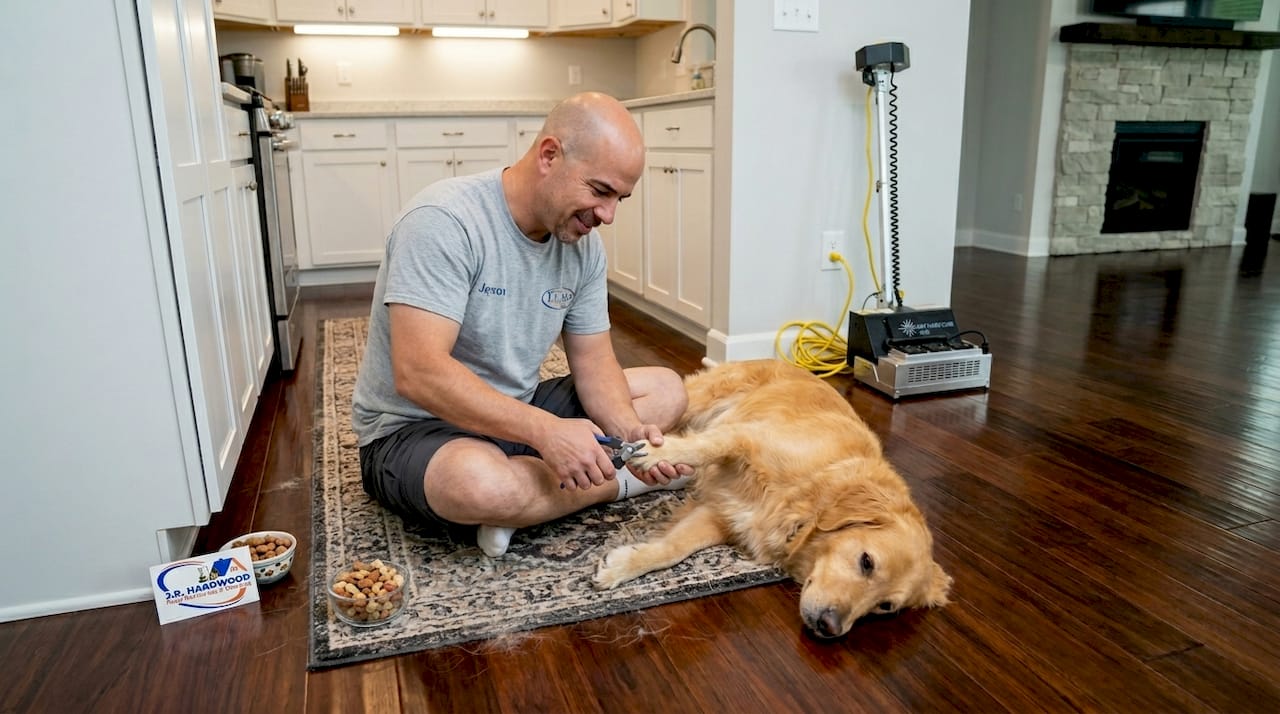
For long-term prevention, trim your pet’s nails regularly. It’s one of the most effective and overlooked strategies. Place washable runners in high-traffic zones like hallways and near the back door. And when damage goes beyond surface level, it’s time to call in a pro. You can remove pet stains yourself in many cases, but widespread discoloration or deep gouges need professional attention. These strategies go a long way, but you can further protect your floors with the right surfaces, finishes, and protections tailored for households with pets.
Surface upgrades and extra protections for pet owners
Sometimes good habits aren’t enough on their own, especially if you have large, active dogs or multiple pets. That’s where surface upgrades and extra protective layers come in. Think of these as putting sunscreen on your floors before they head out into the sun.
Scratch-resistant flooring and pet-safe finishes extend the life and beauty of wood surfaces significantly. Here’s what to consider:
- Aluminum oxide finishes: These are baked into the top layer of many hardwood and laminate products and offer excellent scratch resistance.
- Water-based polyurethane: A durable, low-odor finish that holds up well against moisture and pet traffic.
- Oil-modified polyurethane: Offers a warm amber tone and great durability, though it takes longer to cure.
- Hardwax oil finishes: Penetrate the wood rather than sitting on top, making spot repairs easier when scratches do appear.
| Finish or upgrade | Approximate cost | Key benefit |
|---|---|---|
| Aluminum oxide coating | Included in floor cost | High scratch resistance |
| Water-based polyurethane | $2 to $4 per sq ft | Low odor, fast dry, pet safe |
| Hardwax oil | $3 to $5 per sq ft | Easy spot repair, natural look |
| Area rugs and runners | Varies | Immediate protection for high-traffic zones |
Strategic rugs and runners in hallways, near doors, and under pet feeding stations add a practical layer of protection without any renovation required. Explore our full breakdown of scratch resistant flooring options and learn more about pet-friendly finishes designed for Colorado homes. Now you’ve seen practical daily steps and advanced upgrades. But what approach actually works best in the real world? Here’s our honest perspective as floor experts.
Our take: What really keeps floors beautiful with pets long-term
Here’s something we see all the time: homeowners invest in the most expensive scratch-resistant flooring on the market, skip the basic maintenance, and end up with floors that look worse than their neighbor’s budget option that gets swept every day. The truth is, no floor is truly scratch-proof. That label is more marketing than reality.
What actually works is consistency. A daily sweep, trimmed nails, and quick accident response will outperform any exotic finish every single time. We also encourage you to shift your mindset a little. A few small marks on your floor aren’t a failure. They’re signs of a life well lived with animals you love. The goal isn’t perfection. It’s preventing the kind of damage that becomes expensive.
When scratches and stains do accumulate over the years, professional deep cleaning or a screen and recoat can give your floors a genuine reset without the cost of full replacement. That’s the smart investment.
Get professional help for the toughest pet floor issues
Sometimes pet damage goes beyond what a mop and a repair kit can handle. Deep stains, widespread scratches, or floors that have lost their finish entirely need more than a DIY fix.
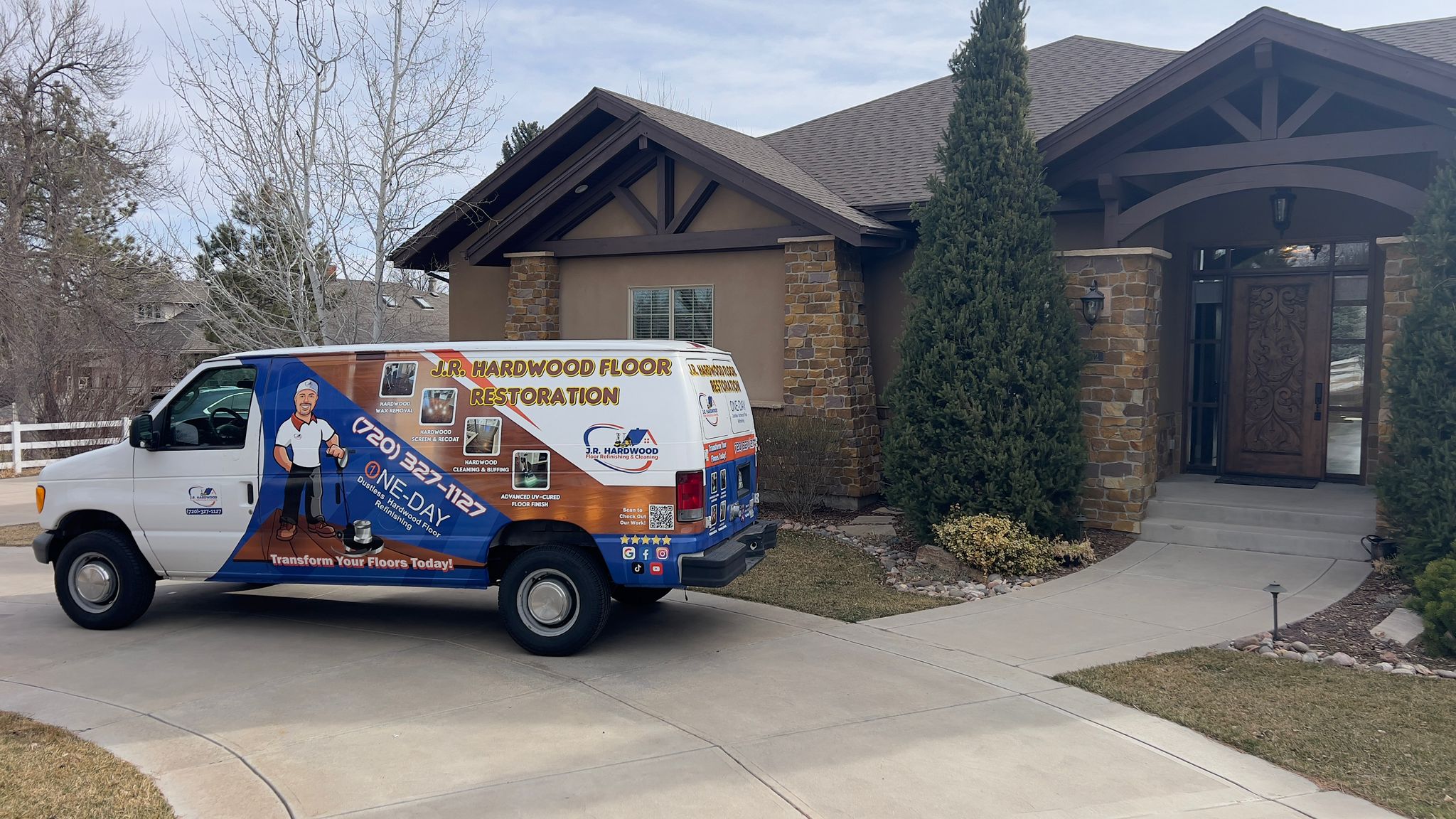
At J.R. Hardwood Floor Refinishing & Cleaning, we serve Colorado homeowners from Denver and Parker to Castle Rock and Boulder with expert refinishing, restoration, and deep cleaning services. Whether you’re weighing the DIY vs. pro refinishing decision or ready to schedule a full restoration, we make the process simple. Use our refinishing guide to understand your options, or grab our floor cleaning checklist to stay on track between professional visits. Contact us today for a free over-the-phone quote.
Frequently asked questions
What floor finish is safest for pets in Colorado homes?
Water-based polyurethane finishes are generally safest for pets and perform well in Colorado’s dry climate, curing quickly and releasing fewer fumes than oil-based alternatives.
How often should I mop wood floors if I have pets?
A damp mop once or twice a week is ideal for pet households. Regular damp mopping is recommended, but avoid soaking the floor since excess moisture can cause warping and damage over time.
What’s the best way to get rid of pet urine odor from hardwood floors?
Enzymatic cleaners work best for eliminating pet urine odors because they break down the organic compounds causing the smell rather than just masking it.
Can I repair pet scratches myself or do I need a pro?
Light surface scratches can be fixed with a repair kit at home. DIY kits work for minor scratches, but deep gouges or widespread damage across large areas really do need professional restoration to look right again.