 Skip to content
TL;DR:
- Choosing durable floor coatings in Colorado is essential due to harsh winter freeze-thaw cycles, UV exposure, and heavy traffic that cause coatings to crack, peel, or yellow. High-build epoxy systems, elastomeric urethane, and polyaspartic coatings offer long-lasting protection tailored to specific environments, with proper application ensuring optimal performance. Verifying system specifications, ASTM test data, and installer expertise is crucial for ensuring floors meet durability expectations over their lifespan.
Choosing a floor coating that actually lasts in Colorado is harder than it looks. Between icy winters, heavy foot traffic, vehicle loads, and sunlit garages that bake in summer, your floors face a full gauntlet of abuse year-round. The wrong coating peels, yellows, or cracks within a season or two, costing you time, money, and headaches. The right one? It protects your investment for years. This guide walks you through the best examples of durable floor coatings available today, from industrial epoxies to flexible polyaspartic systems, so you can make a confident, informed choice.
Table of Contents
- Key durability criteria for floor coatings in high-traffic Colorado areas
- High-build epoxy coating systems for industrial and commercial durability
- Elastomeric urethane flooring systems for flexibility and waterproofing
- Decorative double-broadcast quartz epoxy systems for industrial and commercial aesthetics
- Polyaspartic and polyurea coatings: fast curing, UV stable, and abrasion-resistant
- Comparing top durable floor coatings: performance, cost, and lifespan
- Why system specification matters more than coating type alone
- Explore professional floor refinishing and coating solutions in Denver
- Frequently asked questions
Key Takeaways
| Point | Details |
|---|---|
| System specification | The durability of floor coatings relies heavily on full system specifications, not just coating type. |
| Coating options | High-build epoxy, urethane, decorative quartz epoxy, and polyaspartic systems each offer unique durability features for high-traffic areas. |
| Climate suitability | Flexible coatings like urethane and polyaspartic excel in Colorado’s freeze-thaw environment and UV exposure. |
| Cost vs lifespan | More expensive coatings like polyaspartic/polyurea generally offer longer lifespans and better performance. |
| Professional installation | Proper application and curing are critical to ensure the coating’s long-term durability and warranty coverage. |
Key durability criteria for floor coatings in high-traffic Colorado areas
Before we dig into specific coating systems, it helps to understand what makes a coating truly durable. Not all coatings are built the same, and what works in a mild climate may fall apart here in Colorado.
The performance factors that matter most:
- Thickness and layer count. Thin coatings wear fast. System durability depends on a full specification including primer, build coats, and correct topcoat thickness, not just the coating type. Think of it like a sandwich: each layer serves a purpose.
- Abrasion resistance. High-traffic areas grind down coatings fast. Look for systems tested to ASTM D4060 (Taber abrasion) standards.
- Chemical resistance. Oil spills, de-icing salts, and cleaning agents can degrade weaker coatings quickly.
- Flexibility. Concrete expands and contracts. A coating that cannot flex will crack. This is especially critical in Colorado where freeze-thaw cycles stress concrete almost every winter.
- UV stability. Colorado gets about 300 days of sunshine per year. Coatings without UV protection yellow and break down faster in garages with natural light or sunlit commercial spaces.
The conditions that typically shorten coating life:
- Poor surface preparation before application
- Applying coatings outside of recommended temperature and humidity windows
- Skipping the primer or basecoat layers to cut costs
- Using a residential-grade product in a commercial environment
Pro Tip: Ask any coating supplier or installer for ASTM test data, not just marketing language. Numbers like Taber abrasion loss in milligrams or tensile strength in psi tell you far more than words like “ultra-durable.”
High-build epoxy coating systems for industrial and commercial durability
High-build epoxy is one of the most well-known examples of durable floor coatings for good reason. It is tough, chemical-resistant, and creates a seamless surface that is easy to clean.
What makes high-build epoxy stand out:
- Thickness you can count on. High-build epoxy systems use 25 to 50 mil thickness, providing superior abrasion resistance and chemical protection compared to thin epoxy paints. That extra thickness fills surface imperfections and creates a real protective barrier.
- Chemical resistance. It holds up well against oils, solvents, and cleaning agents, making it a solid pick for auto shops, warehouses, and manufacturing floors.
- Seamless finish. No grout lines or seams means fewer places for bacteria, grease, and grime to hide. Cleaning is straightforward.
- Affordability. Among long-lasting floor finishes, high-build epoxy sits at a competitive price point for commercial installations.
“A floor coating is only as strong as its full system specification. Skipping layers is like leaving out the foundation of a building.” — Industry application guidance
Watch out for these limitations:
- Epoxy yellows under UV exposure over time, so it is better suited for interior spaces without direct sunlight.
- It has less flexibility than urethane or polyaspartic coatings, which means it can crack under severe freeze-thaw stress if the concrete moves significantly.
- Longer cure times can mean more downtime for commercial operations.
For businesses that want a real-world look at what commercial flooring durability looks like in practice, high-build epoxy delivers proven performance in demanding settings. You can also see impressive durable colored quartz flooring examples in commercial applications that combine aesthetics with industrial-grade toughness.
Pro Tip: If your space gets any natural light, consider a polyaspartic or urethane topcoat over your epoxy basecoat to prevent yellowing while keeping the core chemical resistance of epoxy.
Elastomeric urethane flooring systems for flexibility and waterproofing
Colorado’s freeze-thaw cycles are relentless. Water seeps into concrete, freezes, and expands, putting enormous stress on any coating bonded to that surface. That is exactly the problem elastomeric urethane systems were designed to solve.
How elastomeric urethane systems work:
- A penetrating primer bonds to the concrete substrate.
- A flexible urethane basecoat absorbs structural movement, almost like a shock absorber for your floor.
- Intermediate coats build thickness and waterproofing.
- A polyurea topcoat adds abrasion resistance and UV stability.
Elastomeric urethane systems combine a primer, flexible basecoat, and polyurea topcoats to resist cracking, chemicals, abrasion, and freeze-thaw cycles. That multi-layer approach is what sets them apart from single-coat solutions.
Where elastomeric urethane systems shine:
- Commercial and residential concrete decks
- Parking structures and elevated walkways
- Balconies and exterior high-traffic surfaces
- Any area where waterproofing is a must
Additional benefits worth knowing:
- Broadcast aggregates (sand or rubber granules) can be added to the topcoat surface for enhanced slip resistance, which is valuable in wet or icy conditions.
- The polyurea topcoat layer is UV-stable, so the finish holds its color better than standard epoxy in sunny spaces.
- The system accommodates minor cracks and structural movement without failing.
For a deeper look at how urethane floor systems compare to other long-lasting floor finishes in Colorado, the flexibility factor alone often makes them the smarter call for exterior and semi-exterior applications.
Pro Tip: For outdoor concrete decks in Colorado, always specify a system rated for freeze-thaw cycling, not just waterproofing. A coating that is waterproof but rigid will still crack when the concrete moves in winter.
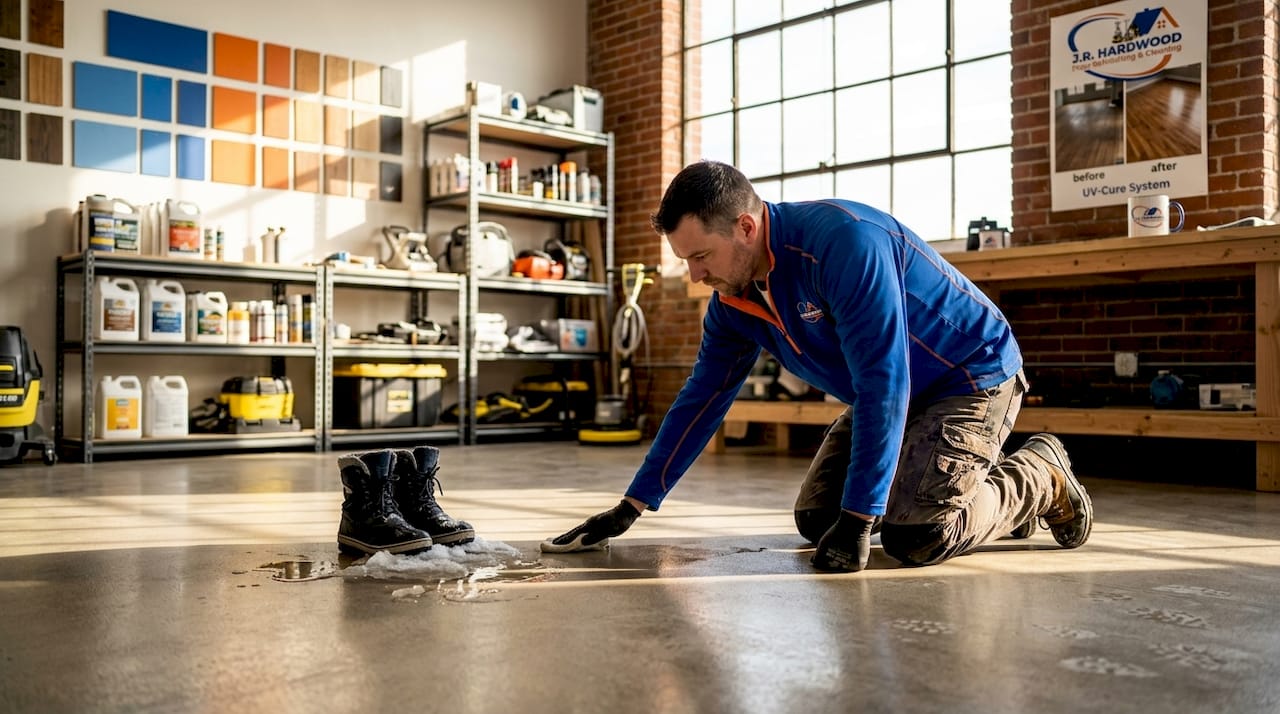
Decorative double-broadcast quartz epoxy systems for industrial and commercial aesthetics
Durability and good looks do not have to be a trade-off. Decorative double-broadcast quartz epoxy systems prove that point beautifully. They use uniformly sized quartz aggregate (small, hard particles) broadcast into a wet epoxy base in two passes, creating a consistent texture that is both attractive and highly functional.
Performance numbers that matter:
Double-broadcast quartz epoxy systems provide high abrasion resistance with only 5.1 mg Taber loss, excellent slip resistance, and chemical protection. For context, a lower Taber loss number means less material is worn away under friction, which translates directly to a longer-lasting surface.
Best applications for quartz epoxy systems:
- Commercial kitchens and food processing plants where hygiene and chemical resistance are non-negotiable
- Healthcare facilities requiring easy-to-sanitize, seamless floors
- Schools and retail environments that need a professional appearance under heavy foot traffic
- Locker rooms and wet areas where slip resistance is a safety requirement
Why property managers love this system:
- The seamless, non-porous surface makes daily cleaning fast and thorough.
- The quartz aggregate maintains texture even as the surface wears, unlike smooth coatings that become slippery over time.
- A wide range of color options gives you control over the look of your space without sacrificing performance.
- Reduced downtime for maintenance compared to floors that require frequent stripping and reapplication.
These commercial flooring options are a go-to recommendation for businesses that cannot afford either a safety incident or a floor that looks worn out within a year.
Polyaspartic and polyurea coatings: fast curing, UV stable, and abrasion-resistant
If high-build epoxy is the reliable workhorse of durable flooring options, polyaspartic and polyurea coatings are the high-performance sports car. They cure faster, resist UV better, and flex more than standard epoxy, making them an increasingly popular choice for both residential garages and commercial spaces across Colorado.
Comparison: polyaspartic vs. epoxy
| Feature | High-build epoxy | Polyaspartic/polyurea |
|---|---|---|
| Cure time to foot traffic | 24 to 48 hours | 4 to 6 hours |
| UV stability | Yellows over time | Color-stable long term |
| Abrasion resistance | Good | Excellent (4x epoxy) |
| Flexibility in freeze-thaw | Moderate | High |
| Temperature application range | 50°F to 90°F | Down to -20°F |
| Typical lifespan (commercial) | 5 to 10 years | 10 to 20+ years |
Polyaspartic coatings cure in wide temperatures down to -20°F, are four times more abrasion-resistant than epoxy, and provide lifetime warranties with UV stability. That combination makes them one of the most compelling long-lasting floor finishes available for Colorado’s conditions.
Key benefits of polyaspartic systems:
- Three-coat systems chemically bond each layer for lasting adhesion, not just mechanical bonding.
- Fast return to service is a huge deal for commercial spaces that cannot afford extended closures.
- UV stability means your garage or showroom floor holds its color and sheen for years.
- The flexibility of the coating absorbs freeze-thaw movement without cracking.
For a closer look at how fast-cure systems tie into broader floor restoration benefits, polyaspartic is often the system that surprises people most with how much durability you get for the investment.
Pro Tip: Polyaspartic coatings are more sensitive to moisture during application than epoxy. Make sure your installer checks concrete moisture levels before starting, especially in Colorado where temperature swings can bring unexpected humidity changes.
Comparing top durable floor coatings: performance, cost, and lifespan
Here is a clear side-by-side look at how these coating systems stack up for Colorado homeowners and property managers.
| Coating system | Best use | Estimated lifespan | Relative cost | UV stable | Freeze-thaw flexible |
|---|---|---|---|---|---|
| High-build epoxy | Warehouses, garages, plants | 5 to 10 years | Moderate | No | Moderate |
| Elastomeric urethane | Decks, walkways, exterior | 10 to 15 years | Moderate to high | Yes (polyurea top) | Yes |
| Decorative quartz epoxy | Kitchens, healthcare, retail | 7 to 12 years | Moderate to high | No | Moderate |
| Polyaspartic/polyurea | Garages, showrooms, commercial | 15 to 20+ years | High | Yes | Yes |
Typical lifespan and installed cost ranges vary by system type, with polyurea and polyaspartic offering longest lifespans but higher upfront costs.
How to choose floor coatings using this comparison:
- Match the system to your traffic type. Vehicular traffic needs thicker, more impact-resistant coatings.
- Factor in your UV exposure. Sunlit garages and outdoor decks need UV-stable finishes.
- Weigh upfront cost against recoating cycles. A cheaper coating that needs replacement in five years often costs more over a decade than a premium system installed once.
- Consider downtime. Faster-curing systems cost more but save money in lost productivity for commercial spaces.
For more practical durable flooring tips tailored to property managers, matching the right system to your specific conditions is the single biggest factor in long-term performance.
Why system specification matters more than coating type alone
Here is something we have seen time and again in the field: property managers and homeowners spend hours researching the best floor coatings, pick a great product, and then watch it fail within two years. The product was not the problem. The system specification and application were.
Durability claims often lack ASTM referenced numeric specifications, making independent verification essential to avoid marketing exaggerations. That is not a minor detail. It means a coating marketed as “lifetime durable” might have zero published test data behind that claim. Always ask for the actual spec sheet, not just the brochure.
The uncomfortable truth is this: a mediocre coating applied perfectly will outperform a premium coating applied poorly every single time. Cure temperatures, humidity windows, substrate moisture levels, and proper layer sequencing all determine whether your floor lasts five years or twenty. We have seen beautiful polyaspartic systems delaminate because the concrete was too wet on installation day.
Our advice? Verify installer expertise the same way you would verify the coating itself. Ask about their floor maintenance insights, their process for surface preparation, and how they handle Colorado’s seasonal application challenges. A knowledgeable installer will talk about moisture vapor emission rates and concrete pH before they ever open a product container. If they skip straight to picking colors, keep looking.
Explore professional floor refinishing and coating solutions in Denver
Ready to take the next step toward floors that actually hold up to Colorado life?
At J.R. Hardwood Floor Refinishing & Cleaning, we bring local expertise and eco-friendly premium finishes to homeowners and commercial property managers across the Denver Metro Area, from Parker and Castle Rock to Boulder and Colorado Springs. Whether you need professional floor refinishing services for aging hardwood or want to explore the full range of floor restoration options in Denver, our team guides you through the right solution for your specific space and traffic demands. Our hardwood floor refinishing guide is a great place to start learning what a full professional restoration looks like. Call us for a free over-the-phone quote and let us help you build floors that last.
Frequently asked questions
What floor coating is best for Colorado’s freeze-thaw climate?
Elastomeric urethane and polyaspartic systems perform best because they flex with concrete and resist cracking caused by freeze-thaw cycles. Elastomeric urethane systems resist cracking and handle freeze-thaw cycles effectively.
How quickly can I use a floor after polyaspartic coating?
Polyaspartic coatings cure rapidly and can be ready for vehicle use within about 24 hours, much faster than many epoxies. Vehicle use readiness within 24 hours after the final coat is a key advantage for minimizing downtime.
Are decorative quartz epoxy floors suitable for commercial kitchens?
Yes, they offer excellent chemical resistance, slip resistance, and a seamless surface that meets hygiene standards for commercial kitchens. Double-broadcast quartz epoxy systems provide chemical-resistant, slip-resistant seamless floors ideal for food service environments.
What should I consider regarding floor coating warranties?
Verify that the warranty covers adhesion and performance for your intended use, and confirm that proper installation and maintenance are required to keep it valid. Polyaspartic systems offer residential lifetime warranties covering adhesion and performance under normal use conditions.
How do I maintain a high-build epoxy floor in a commercial setting?
Regular cleaning, avoiding harsh chemicals that degrade the finish, and prompt spill cleanup extend the lifespan and appearance of your floor. High-build epoxy floors provide a seamless, easy-to-clean surface that resists stains and abrasion in industrial settings, making maintenance straightforward when done consistently.