 Skip to content
Many business owners believe professional hardwood floor care means shutting down for days and spending thousands. This misconception keeps commercial spaces running on worn, dull floors that hurt first impressions. Modern techniques like screen and recoat deliver stunning results in under 24 hours with minimal disruption. Denver’s high traffic commercial properties need specialized care that balances durability with operational efficiency. This guide reveals proven methods, optimal wood species, and maintenance timing to keep your floors looking sharp while protecting your investment for decades.
Table of Contents
- Key takeaways
- Why commercial hardwood floor care matters
- Top hardwood types for commercial spaces in Denver
- Screen and recoat vs full sanding: which is right for your business?
- Additional factors for durable hardwood floor care
- Professional hardwood floor care services in Denver
- Frequently asked questions about commercial hardwood floor care
Key Takeaways
| Point | Details |
|---|---|
| Screen and recoat benefits | Screen and recoat extends wood life by refreshing the protective finish with minimal disruption to daily operations. |
| One day service | Screen and recoat can be completed in about one day, enabling weekend or overnight service and fast turnover. |
| Moisture and acclimation | Controlling moisture and properly acclimating wood are critical to floor durability and long term performance. |
| Hardwood hardness matters | Using high Janka hardness woods such as Hickory and Hard Maple improves durability under heavy commercial traffic. |
| Documentation and upkeep | Regularly documenting floor condition with dated photos helps schedule maintenance before wear becomes severe and protects asset value. |
Why commercial hardwood floor care matters
Commercial floors face relentless punishment. Every customer, employee, and delivery person leaves microscopic scratches that accumulate into visible wear. Within months, high traffic zones near entrances and checkout counters show dullness that broadcasts neglect. Your flooring represents a significant capital investment, and proper maintenance protects that asset while projecting professionalism.
Regular care prevents the need for complete refinishing. Screen and recoat extends floor life by refreshing the protective layer before damage reaches the wood itself. This proactive approach costs a fraction of full restoration and keeps your business operational. Waiting until floors look terrible forces expensive emergency work that disrupts revenue.
The difference between maintained and neglected floors affects customer perception immediately. Gleaming hardwood signals quality and attention to detail. Scratched, cloudy surfaces suggest declining standards across your entire operation. First impressions form in seconds, and flooring occupies the largest visual field in any commercial space.
Commercial properties benefit from maintenance flexibility. Screen and recoat takes one day versus three to seven for full sanding, letting you schedule work around business cycles. Weekend or overnight service means Monday morning customers see refreshed floors without knowing work happened. This operational continuity makes regular maintenance feasible even for businesses that cannot afford multi-day closures.
Pro Tip: Document your floor’s condition with dated photos every six months. This visual timeline helps you spot wear patterns early and schedule maintenance before damage becomes severe.
Key advantages of proper commercial floor care:
- Extends wood lifespan by decades through protective finish layers
- Reduces total ownership cost by preventing deep damage
- Maintains consistent appearance across all traffic zones
- Supports health and safety by eliminating splinters and uneven surfaces
- Preserves property value for future sale or lease negotiations
Consider how your hardwood floor maintenance guide approach affects insurance and liability. Damaged floors create trip hazards that expose you to claims. Regular professional care documents your commitment to safe conditions, potentially reducing premiums and protecting against litigation.
Top hardwood types for commercial spaces in Denver
Not all wood species handle commercial abuse equally. The Janka Hardness Scale measures resistance to denting and wear by testing the force needed to embed a steel ball into wood. Higher numbers mean tougher surfaces that maintain appearance under punishment. For commercial applications, hardness above 1300 lbf provides adequate durability for moderate to heavy traffic.
| Wood Species | Janka Rating (lbf) | Traffic Suitability | Maintenance Notes |
|---|---|---|---|
| Hickory | 1820 | Heavy commercial | Extremely durable, resists denting |
| Hard Maple | 1450 | Heavy commercial | Consistent grain, handles rolling loads |
| White Oak | 1360 | Moderate to heavy | Closed grain resists moisture |
| Brazilian Cherry | 2350 | Heavy commercial | Premium durability, darkens with age |
| Ipe | 3680 | Extreme traffic | Hardest common option, requires specialized tools |
Hickory leads domestic options with impressive toughness. Its 1820 rating handles restaurant traffic, retail floors, and office corridors without showing premature wear. The pronounced grain pattern hides minor scratches better than uniform species. Hickory costs more upfront but reduces replacement frequency, lowering lifetime expenses.
Hard maple delivers commercial performance with a cleaner aesthetic. Its tight, consistent grain appeals to modern design preferences while the 1450 rating withstands daily punishment. Maple accepts stains well, letting you match existing decor or create custom looks. Many Denver commercial properties choose maple for reception areas where appearance and durability both matter.

Brazilian cherry and ipe represent premium exotic options. These tropical hardwoods exceed domestic species in every durability metric but require specialized installation knowledge. Their density challenges standard tools and fasteners. However, for ultimate longevity in extreme conditions like hotel lobbies or convention centers, the investment pays off through decades of service.
Factors beyond hardness rating:
- Grain pattern affects scratch visibility and aesthetic appeal
- Color stability determines whether floors darken or fade over time
- Dimensional stability influences response to Denver’s dry climate
- Availability impacts replacement cost if sections need repair
Denver’s low humidity creates unique challenges. Woods with good dimensional stability resist the cupping and gapping that plague poor choices in arid climates. White oak’s closed grain structure makes it particularly suitable for Colorado’s environment. The wood moves less than red oak as humidity fluctuates between summer and winter.
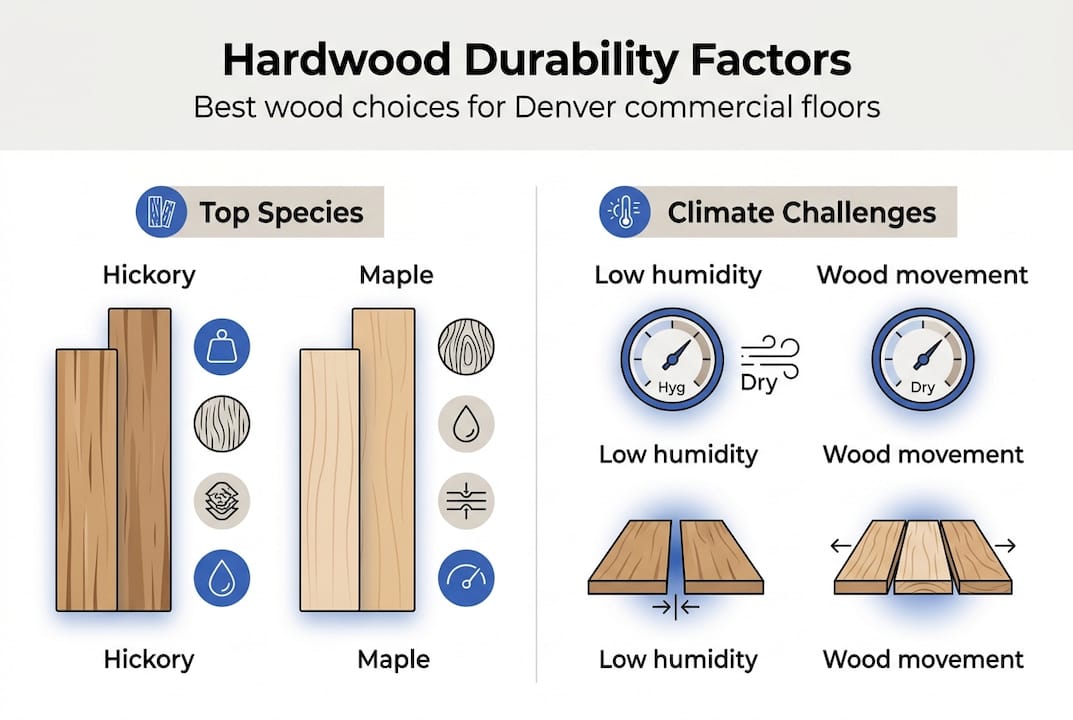
Choosing appropriate species simplifies maintenance throughout the floor’s life. Softer woods like pine or fir require refinishing every few years in commercial settings. Harder species stretch that interval to five or seven years, reducing cumulative maintenance costs. Your initial wood selection determines whether you face constant upkeep or enjoy years of low maintenance operation. Proper floor care for Denver hardwoods starts with species that match your traffic patterns.
Screen and recoat vs full sanding: which is right for your business?
Two primary methods refresh commercial hardwood floors. Understanding their differences helps you schedule appropriate service at optimal intervals. Screen and recoat addresses surface wear before it penetrates the finish. Full sanding strips everything down to bare wood for complete restoration. Each serves distinct purposes based on floor condition and damage severity.
| Factor | Screen and Recoat | Full Sanding |
|---|---|---|
| Time required | 1 day | 3-7 days |
| Dust generation | Minimal with modern equipment | Significant even with containment |
| Cost | $1.50-$3.00 per sq ft | $4.00-$8.00 per sq ft |
| Frequency | Every 3-5 years | Every 7-10 years |
| Finish removal | Top layer only | Complete removal to bare wood |
| Best for | Surface scratches, dullness | Deep gouges, stains, uneven wear |
Screen and recoat works like preventive medicine. Technicians use a buffer with abrasive screens to scuff the existing finish without cutting through to wood. This creates texture for the new polyurethane coat to bond. The process removes surface scratches and restores gloss in high traffic lanes. Most commercial spaces reopen within 24 hours, making it ideal for businesses that cannot afford extended closures.
The technique preserves your existing finish thickness. Each full sanding removes 1/32 to 1/16 inch of wood. Floors can only handle eight to ten sandings before boards become too thin. Screen and recoat adds protective layers without consuming wood thickness, extending total floor lifespan. This matters especially for engineered hardwood with thin wear layers.
Full sanding becomes necessary when damage penetrates the finish. Deep scratches that expose bare wood, water stains that discolor the grain, or uneven wear that creates valleys all require complete refinishing. The process removes all existing finish and levels the wood surface. Technicians use progressively finer sandpaper grits to create a smooth foundation for new finish.
When to choose screen and recoat:
- Finish shows surface scratches but no exposed wood
- Floors look dull or hazy from traffic wear
- High gloss areas have worn to matte in traffic lanes
- You want to maintain consistent appearance across the space
- Budget or schedule constraints limit downtime
When full sanding is unavoidable:
- Wood shows through finish in multiple locations
- Previous finish was wax or oil that prevents recoat adhesion
- Boards have cupped or crowned from moisture damage
- Color variation from sun exposure needs correction
- You want to change stain color completely
Cost differences add up over decades. Spending $3,000 on screen and recoat every four years costs $15,000 over 20 years. Waiting for full refinishing at $8,000 every ten years totals $16,000 for the same period. The screen and recoat approach provides better appearance throughout while costing slightly less. More importantly, it avoids the operational disruption of week-long closures.
Pro Tip: Schedule your screen and recoat workflow during your slowest business period. Many Denver commercial properties choose January or February when foot traffic drops and weather keeps customers away. This timing minimizes revenue impact while refreshing floors before spring busy season.
Modern equipment reduces the disruption traditionally associated with floor work. Low-dust screening systems capture 95% of particles, preventing the fine powder that once coated every surface. Water-based polyurethanes cure faster than oil-based formulas, shortening the time before floors can handle traffic. These advances make frequent maintenance practical even for businesses operating six or seven days weekly.
Additional factors for durable hardwood floor care
Environmental conditions affect floor performance as much as maintenance frequency. Denver’s semi-arid climate creates challenges that humid regions never face. Understanding these factors helps you prevent damage before it starts and choose finishes that match your operational reality.
Humidity control protects wood from dimensional changes. Maintain 35-55% relative humidity year-round to prevent cupping in summer or gapping in winter. Commercial HVAC systems should monitor and adjust humidity automatically. Gaps between boards allow dirt infiltration that accelerates wear. Cupped boards create uneven surfaces that look terrible and present trip hazards.
New flooring requires acclimation before installation. Allow wood 5-10 days in the space where it will be installed. This lets boards adjust to local humidity and temperature, reducing post-installation movement. Skipping acclimation leads to gaps or buckling within months as wood reaches equilibrium with its environment. The delay seems inconvenient but prevents expensive callbacks.
Finish selection determines maintenance requirements and appearance. Oil finishes penetrate wood fibers instead of forming a surface film. They create natural matte looks that appeal to certain aesthetics. Oil finishes need refreshing every one to three years but allow easy spot repairs. Damaged areas can be sanded and re-oiled without visible patch marks.
Polyurethane finishes form protective films over wood. They resist water, chemicals, and abrasion better than oil. Modern water-based polyurethanes provide durability without the amber tint of oil-based versions. These finishes last longer between services, making them cost effective for high traffic commercial spaces. However, damaged areas require full recoating since spot repairs show.
Comparing finish characteristics:
- Oil finishes highlight natural wood grain and texture
- Polyurethane offers adjustable sheen from matte to high gloss
- Oil requires more frequent maintenance but simpler repairs
- Polyurethane provides superior protection in wet areas
- Oil finishes suit low traffic spaces or boutique aesthetics
- Polyurethane handles heavy commercial traffic better
Pre-recoat preparation affects finish adhesion. Never use wax-based cleaners or oil soaps on floors you plan to recoat. These products leave residues that prevent new polyurethane from bonding. The finish may look good initially but peels within months. Professional cleaning before recoating removes these contaminants and ensures proper adhesion.
Damage severity determines repair approach. Surface scratches that do not penetrate finish respond to screen and recoat. Deep gouges that expose wood require localized sanding and refinishing or complete floor restoration. Assess damage honestly to choose appropriate service. Attempting screen and recoat over deep damage wastes money since the new finish cannot hide structural problems.
Pro Tip: Choose your finish type based on maintenance capacity, not just initial appearance. A restaurant with daily spills needs polyurethane’s water resistance. A law office with light traffic might prefer oil’s natural look and accept more frequent refreshing. Match the finish to your operational reality for best long-term results.
Denver’s altitude and climate create unique expansion considerations. Wood moves more dramatically in our dry air than in coastal humidity. Leave appropriate expansion gaps around room perimeters and use transition strips between rooms. These details prevent buckling when seasonal humidity fluctuates. Your installer should understand local conditions and adjust techniques accordingly.
Regular hardwood maintenance best practices include daily dust mopping and weekly damp cleaning with pH-neutral products. Avoid excessive water that can penetrate finish and damage wood. Place mats at entrances to capture dirt and moisture before they reach flooring. These simple habits extend time between professional services and keep floors looking sharp.
Professional hardwood floor care services in Denver
Maintaining commercial hardwood floors requires specialized knowledge and equipment. Professional services assess your floor’s exact condition and recommend appropriate treatments. Experienced technicians spot early warning signs that untrained eyes miss. They understand how Denver’s climate affects wood and adjust techniques accordingly.
Professional care minimizes business disruption through efficient scheduling and execution. Crews work quickly without sacrificing quality, often completing screen and recoat overnight. This lets you maintain normal operations while refreshing your floors. The expertise prevents common mistakes that extend projects or damage wood.
Specialists help you avoid pitfalls that cost money and time. They know which finishes work in your specific application and which create problems. Their experience with different wood species guides realistic expectations about durability and maintenance intervals. This knowledge protects your investment and prevents expensive corrections.
Comparing DIY versus professional service reveals the value of expertise. Professionals complete in hours what takes amateurs days. Their equipment produces superior results with less mess. The cost difference shrinks when you factor in tool rental, wasted materials, and time value. For commercial spaces where appearance directly affects revenue, professional results justify the investment.
Comprehensive screen and recoat services include surface preparation, finish application, and cleanup. Technicians protect adjacent areas and ensure proper ventilation during curing. They guarantee their work, providing recourse if problems develop. This accountability matters more in commercial settings where floor failures disrupt business.
Explore the complete guide to hardwood floor refinishing to understand all available options. Knowledge helps you make informed decisions about timing, methods, and finishes. Well-maintained floors enhance your property value while creating environments that customers and employees appreciate.
Frequently asked questions about commercial hardwood floor care
What maintenance schedule is ideal for commercial hardwood floors?
Screen and recoat every three to five years maintains optimal appearance in moderate traffic areas. High traffic spaces like retail stores or restaurants may need service every two to three years. Inspect floors twice yearly to catch problems early and adjust your schedule based on actual wear patterns.
Can screen and recoat be done without closing the business?
Yes, with proper planning. Most screen and recoat projects finish in 24 hours, allowing overnight or weekend scheduling. Water-based finishes cure faster than oil-based options, reducing downtime further. Coordinate with your service provider to minimize operational impact.
How to choose between oil and polyurethane finishes?
Polyurethane suits high traffic commercial spaces needing maximum durability and water resistance. Oil finishes work better for low traffic areas where natural appearance matters more than longevity. Consider your maintenance capacity since oil requires more frequent refreshing but enables easier spot repairs.
What factors affect hardwood floor durability in Denver?
Denver’s low humidity causes wood movement that stresses finishes. Proper acclimation before installation and maintaining 35-55% humidity prevent most problems. Choose wood species with Janka ratings above 1300 for commercial durability. Regular maintenance protects against accelerated wear from our intense sun and dry air.
When is a full sanding unavoidable for commercial flooring?
Full sanding becomes necessary when damage penetrates through finish to bare wood in multiple locations. Deep gouges, water stains that discolor grain, or previous wax finishes that prevent recoat adhesion all require complete refinishing. If more than 20% of your floor shows exposed wood, full sanding provides better value than attempting screen and recoat.
How does wood hardness rating translate to real-world performance?
Janka ratings above 1300 lbf resist denting from dropped objects and rolling carts. Hickory at 1820 handles restaurant traffic without premature wear. Softer woods below 1000 show damage quickly in commercial settings. The rating predicts how long floors maintain appearance under your specific traffic patterns, helping you budget maintenance intervals accurately.