 Skip to content
TL;DR:
- Eco-friendly floor finishes reduce VOC emissions and chemical waste while protecting indoor air quality. They offer health, environmental, and cost benefits, making them a smart choice for sustainability and long-term savings. Proper maintenance and certification verification ensure product safety and durability.
Eco-friendly floor finishes are specialized coatings formulated to minimize volatile organic compound (VOC) emissions, reduce chemical waste, and protect indoor air quality without sacrificing durability. The benefits of eco-friendly floor finishes go well beyond the feel-good factor. They deliver real, measurable gains for your health, your wallet, and the planet. Whether you own a home in Parker, Colorado, or manage a commercial space in Denver, switching to green floor finish options is one of the most practical sustainability moves you can make in 2026.
What are the key health and environmental benefits of eco-friendly floor finishes?
Eco-friendly floor finishes protect the air inside your home, and that matters more than most people realize. Low-VOC finishes significantly reduce symptoms like headaches and respiratory irritation, especially for children, seniors, and anyone with asthma. Traditional solvent-based finishes off-gas for days after application. Low-VOC alternatives stop that cycle almost immediately.
The environmental gains are just as real. Cork flooring, for example, can achieve a net-negative carbon footprint when biogenic carbon storage is included, making it one of the few building materials that actually pulls carbon from the atmosphere. That qualifies it for LEED, BREEAM, and WELL certification projects. For homeowners and business owners who care about their environmental footprint, that is a meaningful distinction.
Here is a quick look at the core health and environmental advantages:
- Fewer airborne toxins. Low-VOC and zero-VOC finishes release minimal fumes during and after application, keeping your indoor air cleaner from day one.
- Reduced chemical runoff. Eco-friendly floor care products break down more safely, reducing the chemical load entering local waterways.
- Sustainable raw materials. Finishes derived from natural oils, plant resins, or recycled content reduce dependence on petroleum-based chemicals.
- Allergy and asthma support. Cleaner finishes mean fewer airborne irritants settling into your living space over time.
- Certifications you can trust. GREENGUARD Gold certification represents the strictest standard for off-gassing and is the label worth prioritizing over vague “natural” claims.
Younger consumers and commercial tenants increasingly notice and value responsible flooring choices. That makes green floor finish options a smart story to tell, whether you are selling a home or attracting quality tenants to a commercial property.
How do eco-friendly floor finishes save you money over time?
Sustainable floor finishes are not just good for the environment. They are good for your budget. Businesses can save over $1,200 annually on combined utility and maintenance costs by investing in sustainable flooring and eco-friendly maintenance. That is a real number, not a marketing estimate.
Here is how those savings stack up:
- Longer finish lifespan. Durable eco-friendly coatings like waterborne polyurethane resist wear longer, meaning fewer full refinishing cycles over the life of your floor.
- Lower cleaning costs. Eco-friendly floors resist stains and scratches, which simplifies your maintenance routine and cuts back on expensive specialty cleaners.
- Better insulation. Natural flooring materials like cork provide thermal insulation that reduces heating and cooling loads, trimming your utility bills month after month.
- Fewer harsh chemical purchases. Green floor care products are gentler and often more concentrated, so you buy less product to cover the same area.
- Higher resale value. Homes and commercial spaces with certified sustainable finishes attract buyers and tenants who are willing to pay a premium for healthier environments.
“Sustainable flooring innovations now prioritize circular economy principles, including reclaiming, recycling, and designing for end-of-life, to maximize long-term value for building owners.” — Lodging Magazine
Think of eco-friendly floor care like buying a quality winter coat instead of a cheap one every season. The upfront investment pays for itself, and then some.
Which eco-friendly floor finish options are most popular?
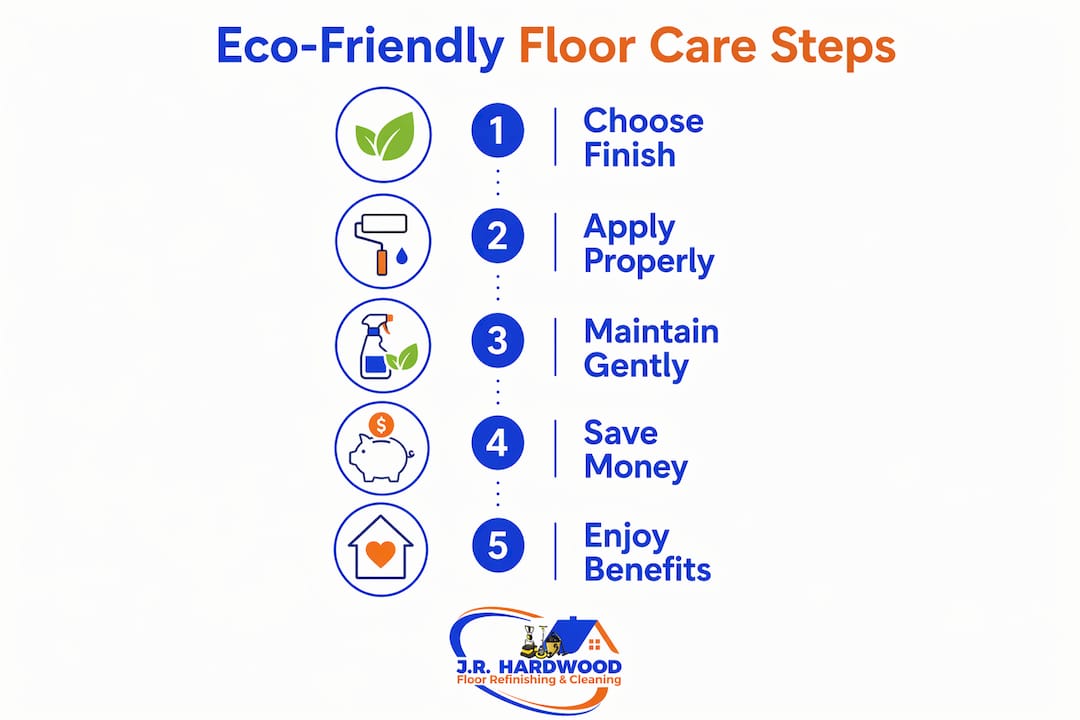
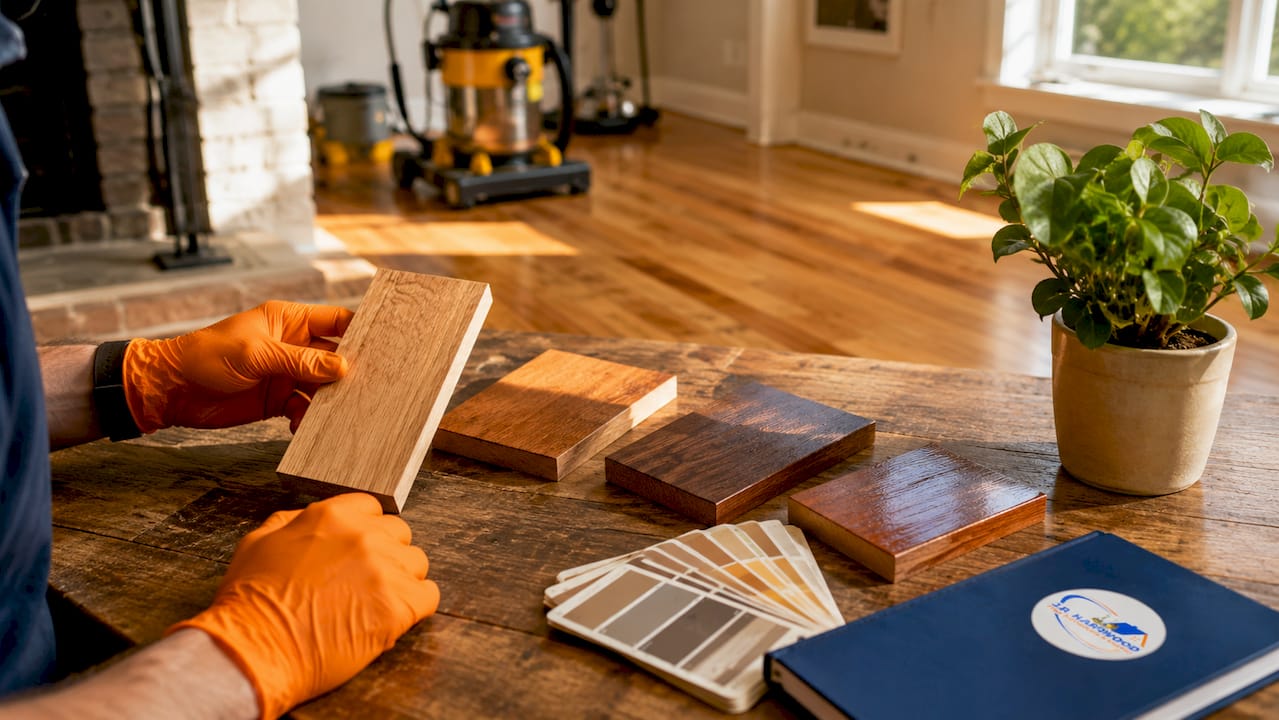
Not all green floor finishes are created equal. The right choice depends on your traffic level, aesthetic goals, and how much maintenance you want to do. Here is a comparison of the four most popular options in 2026.
| Finish Type | VOC Level | Durability | Maintenance | Best For |
|---|---|---|---|---|
| Waterborne polyurethane | Low | High | Low | High-traffic residential and commercial |
| UV-curable finish | Near zero | Very high | Very low | Fast-turnaround projects, commercial |
| Natural oil finish | Very low | Medium | Medium | Spot repair, natural wood aesthetics |
| Plant-based wax | Near zero | Low to medium | Higher | Low-traffic areas, antique floors |
Waterborne polyurethane ranks among the best eco-friendly hardwood floor finish options because it combines low odor, low VOCs, and strong durability in one product. It cures faster than oil-based alternatives and holds up well in kitchens, hallways, and commercial entryways.
UV-curable finishes cure instantly under ultraviolet light, which means zero off-gassing time and floors you can walk on the same day. You can explore how UV-curable hardwood floor finish works and why it is gaining popularity for both homes and businesses.
Natural oil finishes penetrate the wood grain rather than sitting on top, giving floors a warm, matte look that many homeowners love. The trade-off is that they need more frequent reapplication and are better suited to lower-traffic spaces.
When choosing any finish, look beyond the label. Separating sustainability claims into embodied carbon, indoor environmental quality, end-of-life pathways, and supply chain transparency is the best way to avoid greenwashing. A product that says “natural” on the label is not automatically safe or sustainable.
Pro Tip: When comparing finishes, ask your contractor for the product’s Safety Data Sheet (SDS). The SDS lists the actual VOC content in grams per liter, which is far more reliable than marketing language like “eco” or “green.”
What are the best practices for maintaining eco-friendly floor finishes?
Eco-friendly finishes need a little extra care to stay in top shape. Think of it like caring for a good leather jacket. The right routine keeps it looking great for years. The wrong one ruins it fast.
Here are the habits that protect your investment:
- Use pH-neutral cleaners. Harsh detergents strip protective coatings and dull the finish over time. Stick to cleaners specifically labeled safe for hardwood or your finish type.
- Avoid vinegar. Vinegar is acidic and can damage or dull certain eco-friendly finishes and natural stone surfaces if used repeatedly. It feels natural, but it is not always safe for your floors.
- Control moisture. Wipe up spills immediately. Standing water is the number one enemy of wood floor finishes, eco-friendly or otherwise.
- Use microfiber mops. They pick up dust and debris without scratching the surface or pushing moisture into the wood grain.
- Avoid steam mops. The heat and moisture from steam mops can break down natural oil and wax finishes faster than normal wear.
Eco-friendly finishes require gentle cleaning routines to maintain their integrity and longevity. Skipping this step is the most common reason homeowners end up needing a full refinish sooner than expected.
Pro Tip: For green floor care products, look for the EPA Safer Choice label or GREENGUARD certification. These marks confirm the product meets strict chemical safety standards, not just marketing claims.
Choosing eco-friendly wood floor cleaning products that are compatible with your specific finish type is the single best thing you can do to extend the life of your floors between professional maintenance visits.
Key Takeaways
Eco-friendly floor finishes deliver the strongest results when you pair certified low-VOC coatings with gentle, compatible cleaning routines and professional application.
| Point | Details |
|---|---|
| Health protection is real | Low-VOC finishes reduce headaches and respiratory irritation, especially for sensitive household members. |
| Cost savings add up | Businesses save over $1,200 annually through reduced maintenance and utility costs with sustainable flooring. |
| Certifications matter most | GREENGUARD Gold is the strictest off-gassing standard and beats vague “natural” or “eco” labels every time. |
| Finish type affects performance | Waterborne polyurethane and UV-curable finishes offer the best combination of low VOCs and high durability. |
| Maintenance protects your investment | Avoid vinegar and steam mops. Use pH-neutral cleaners and microfiber tools to preserve finish integrity. |
What I have learned after years of finishing floors the green way
Here is something I do not hear talked about enough: most homeowners focus on the finish itself and completely overlook the sanding step. Dustless sanding combined with low-VOC finishes reduces airborne dust and allergens during the refinishing process. That means the air quality benefit starts before the first coat even goes down. If you hire someone who uses a traditional open-drum sander and then applies a “green” finish, you have only solved half the problem.
The other thing I want you to watch out for is greenwashing. I have seen products labeled “natural” that still contain concerning chemical compounds. The word “natural” has no regulatory definition in the flooring industry. GREENGUARD Gold does. LEED does. Those certifications require third-party testing, not just a marketing team’s approval. When a product cannot point to a real certification, that tells you something.
My honest advice: do not treat eco-friendly finishing as an all-or-nothing decision. Even switching from a high-VOC oil-based finish to a waterborne polyurethane is a meaningful step. You get cleaner air, faster cure times, and a finish that holds up just as well. You can always go deeper from there, exploring natural oils or UV-curable options as your floors need attention again. Start with the best eco-friendly wood floor finishes available for your situation, and build your knowledge from there.
— J.R.
How Jrhardwoodfloorrefinishingandcleaning brings eco-friendly finishing to Denver homes
At Jrhardwoodfloorrefinishingandcleaning, we use low-VOC and UV-curable finishes on every project where they are the right fit for your floor and your family. We serve homeowners and businesses across the Denver Metro Area, from Parker and Castle Rock to Boulder and Colorado Springs.
Whether you are weighing your options or ready to book, we offer free over-the-phone quotes based on your floor’s condition and photos you send us. Not sure if you should tackle this yourself or call a pro? Our guide on DIY vs. professional refinishing walks you through exactly what each path involves, so you can make the right call for your home and budget. Reach out today and let us help you get floors that look great and breathe easy.
FAQ
What makes a floor finish “eco-friendly”?
An eco-friendly floor finish contains low or zero VOCs, uses sustainably sourced or recycled materials, and meets recognized certifications like GREENGUARD Gold or LEED standards. These products minimize off-gassing and reduce chemical impact on indoor air and the environment.
Are eco-friendly floor finishes as durable as traditional ones?
Yes. Waterborne polyurethane and UV-curable finishes match or exceed the durability of traditional oil-based finishes while producing far fewer VOC emissions. UV-curable options cure almost instantly and hold up well in high-traffic commercial and residential spaces.
Can I use vinegar to clean my eco-friendly hardwood floors?
No. Vinegar is acidic and can dull or damage eco-friendly finishes and natural stone surfaces over time. Use a pH-neutral cleaner labeled safe for hardwood floors instead.
How do I know if a finish is genuinely eco-friendly?
Look for third-party certifications like GREENGUARD Gold, which tests for actual off-gassing levels. Vague terms like “natural” or “green” on a label carry no regulatory weight and should not be trusted on their own.
Do eco-friendly finishes cost more upfront?
Some eco-friendly finishes carry a slightly higher upfront cost, but businesses and homeowners typically recover that through reduced maintenance expenses and lower utility bills over time.