 Skip to content
Wide plank flooring earns its popularity with fewer seams, a bolder grain display, and a look that makes rooms feel more open, but those wider boards also move more with the seasons and demand stricter humidity control. We think it’s worth it for homeowners with stable indoor climates and larger rooms, especially when installation follows National Wood Flooring Association and Forest Products Laboratory guidance, and refinishing keeps the investment looking fresh for years.
TL;DR:
- The NWFA defines wide plank as boards over 5 inches; 6 to 8 inch boards suit open rooms better than narrow hallways.
- Keep indoor humidity between 30 and 50 percent and temperatures between 60 and 80°F, and delay installation if subfloor moisture readings fall outside recommended ranges.
- Quartersawn boards move less across their width than flatsawn boards, while engineered wide planks handle moisture swings better than solid wood.
- Wide boards usually cost more in materials and labor, and they may allow fewer full sandings; screen and recoat services preserve thickness between refinishes.
- Winter gaps that close by summer are normal, but year round gaps or cupping that persists beyond one season warrant a professional moisture assessment.
Table of Contents
- 1. Pros that make wide planks worth considering
- 2. Cons and trade-offs to plan for before buying wide plank
- 3. Styles, species and finishes that change performance
- 4. Installation and moisture-control essentials every buyer must know
- 5. Cost, value and lifespan: what to budget and why refinishing matters
- 6. Maintenance and repairs: everyday care plus when to call a pro
- 7. A floor specialist’s view: when we recommend wide plank
- How J.R. Hardwood supports your wide plank floors from day one
- FAQ
- Sources
1. Pros that make wide planks worth considering
Wide planks give wood grain room to breathe. Each board shows more of its natural character, from mineral streaks to cathedral grain patterns, which is why so many homeowners describe the look as warmer and more like a cozy hug than standard strip flooring ever manages.
Fewer seams mean fewer visual interruptions, and that continuity can make a modest room feel noticeably more open. The NWFA notes that wide plank, generally defined as boards wider than 5 inches, is now a leading flooring trend in the market. That trend holds across rustic farmhouse interiors and sleek, low-gloss modern spaces alike.
Wide plank advantages worth noting:
- Larger surface area per board showcases grain, knots, and natural variation more dramatically.
- Fewer seams create a cleaner sightline that can make small to mid-sized rooms feel larger.
- Versatile styling works equally well in traditional, transitional, and contemporary interiors.
- Well-installed wide plank floors tend to appeal to buyers browsing listing photos, which can support resale value.
Plank width should still match the room. A narrow hallway can feel overwhelmed by 7-inch boards, while an open-concept living and dining area is often where wide plank makes the strongest visual case.
2. Cons and trade-offs to plan for before buying wide plank
Wood expands and contracts with humidity no matter the width, but wider boards show a bigger absolute change because there’s simply more wood moving across that width. Research measuring dimensional change coefficients across species like hickory, red oak, and Acacia confirms that wider boards experience larger width swings between humidity extremes, which is exactly why gapping in winter and cupping in humid months show up more visibly on wide plank floors than on narrow strip flooring.
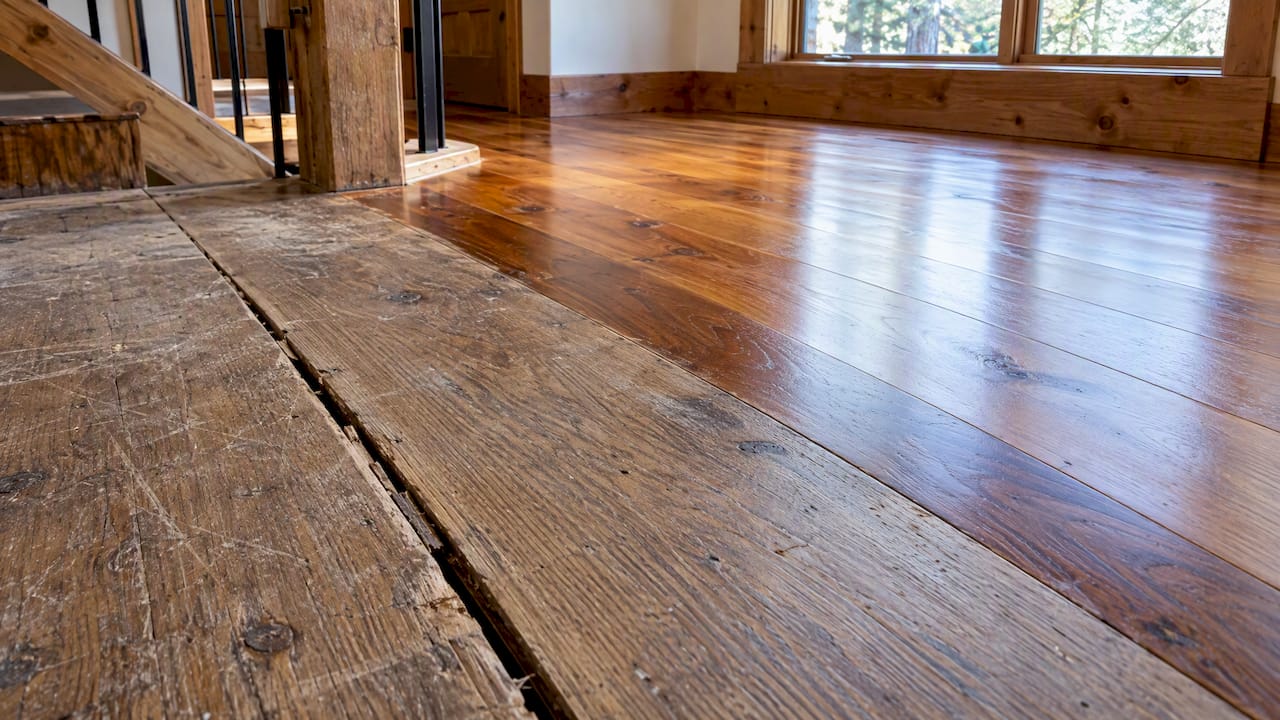
Budget is the other real trade-off. Wide plank boards typically cost more per square foot than standard widths, and the milling, grading, and sometimes longer lead times for wider stock add to the price. Installation can also take longer, since subfloor flatness and moisture conditions matter more when there’s less flexibility built into each board.
Things to weigh before committing:
- Gapping and cupping are more visible on wide boards during seasonal humidity swings.
- Material and labor costs run higher than narrow plank installations.
- Repairing a single damaged wide board is more noticeable and sometimes means replacing a larger visible area rather than a simple patch.
- Basements, crawl spaces, and homes without consistent HVAC control are riskier environments for wide plank.
Pro Tip: If your home doesn’t have reliable year-round humidity control, ask about engineered wide plank options, which handle moisture swings better than solid wood.
3. Styles, species and finishes that change performance
The NWFA defines wide plank as any board wider than 5 inches, with 6, 7, and occasionally 8-inch widths common in homes today. Species choice matters as much as width. Oak is a popular, stable choice, while hickory brings dramatic grain variation but can show more movement. How a board is cut from the log matters too: quartersawn boards move less across their width than flatsawn boards, which makes them a smart pick when you want maximum width with minimum seasonal drama.
Finish choice changes both looks and durability:
- Oil-based finishes deepen the wood’s natural tone and age gracefully, though they take longer to cure.
- Water-based polyurethane dries faster and keeps a clearer, more neutral color.
- UV-cured finishes cure almost instantly, often allowing walking on the floor the same day.
Board length and milling quality also affect how seamlessly planks lay flat during installation, which matters even more as width increases.
4. Installation and moisture-control essentials every buyer must know
Wide plank success is won or lost before the first board ever touches the floor. The Forest Products Laboratory stresses that wood needs careful drying at the mill, protected storage, and genuine jobsite moisture control, since installing on a damp site or skipping acclimation invites shrinkage, swelling, and finish failures down the road.
A few days of simply opening boxes on site often isn’t enough for wide boards. We recommend:
- Acclimate flooring in the actual installation room, not a garage or basement, for the full period your installer specifies.
- Maintain indoor relative humidity between 30 and 50 percent and temperatures between 60 and 80°F, guidance the NWFA ties directly to minimizing seasonal gapping and cupping.
- Test subfloor and concrete moisture levels before delivery, and run HVAC systems to stabilize conditions ahead of installation day.
- Delay installation if humidity or subfloor moisture readings fall outside recommended ranges, even if it pushes the schedule.
Keeping whole-home humidity between 30 and 50 percent through that first seasonal cycle after installation does more to prevent callbacks than any amount of extra installation tolerance.
5. Cost, value and lifespan: what to budget and why refinishing matters
Wide plank pricing depends on species, whether the floor is solid or engineered, board width, and finish type. Hickory and exotic species generally cost more than oak, and wider boards carry a premium over standard widths due to milling and grading requirements.
Labor costs follow a similar pattern. Expect higher prep costs when subfloors need leveling, longer acclimation windows, and sometimes glue-assist installation methods instead of standard nailing, all of which affect the final bill.
What affects your long-term value:
- Species and width drive material cost more than any other factor.
- Site prep, acclimation time, and installation method drive labor cost.
- Wide planks may tolerate fewer full sandings over their lifetime since each pass removes wood thickness, but screen and recoat services extend years between full refinishes.
- Resale appeal often offsets the upfront premium in homes where buyers expect an upgraded look.
6. Maintenance and repairs: everyday care plus when to call a pro
Daily care for wide plank floors isn’t much different from standard hardwood: sweep or vacuum regularly, wipe spills promptly, and avoid wet mopping. The bigger job is seasonal, keeping indoor humidity steady so boards aren’t constantly expanding and contracting.
Small, even gaps that appear in winter and close up by summer are normal seasonal movement. Gaps that stay open year round, or boards that cup and don’t flatten back out, point to a moisture problem that needs attention rather than patience.
- Clean with a hardwood-safe cleaner and a microfiber mop, never a steam mop or excess water.
- Run a humidifier in winter and a dehumidifier in humid months to hold that 30 to 50 percent range.
- Watch for cupping, which often signals moisture coming from below rather than from the air.
- Schedule a professional assessment if gaps or cupping persist across more than one season.
Pro Tip: A quick screen and recoat between full sandings keeps the finish fresh without removing extra wood thickness, which matters more on wide boards than narrow ones.
7. A floor specialist’s view: when we recommend wide plank
We lean toward recommending wide plank for homeowners with stable HVAC systems, larger open rooms, and a genuine appreciation for grain character. Before any installation, we check subfloor moisture, confirm acclimation conditions, and walk through humidity expectations so there are no surprises that first winter.
Our services cover moisture testing, acclimation guidance, fast turnaround finishing options, and ongoing refinishing care. Getting started is simple: you can send a description and photos of your space to receive a free quote over the phone, without an in-person visit required to begin.
— J.R.
How J.R. Hardwood supports your wide plank floors from day one
We handle wide plank flooring from first measurement to last coat of finish, and we prioritize honest guidance to ensure floor durability. You benefit from direct communication with the technician performing the sanding.

Our team covers the full lifecycle of a wide plank floor:
- Hardwood floor installation with proper acclimation and subfloor prep built into every job.
- Full sanding and refinishing when it’s time for a true reset.
- Instant UV-Curable Finish for homeowners who need same-day walk-on results.
- Moisture testing and humidity guidance woven into every installation and maintenance visit.
For interior details that complement a wide plank room, solid wood doors are worth a look, and if you’re managing humidity in other parts of your home, humidity control systems offer useful background on keeping conditions steady.
Ready to see what wide plank would look like in your space? Request your free phone and photo quote today and we’ll walk you through the right fit for your home.
FAQ
Are wider planks better for flooring?
Wider planks aren’t inherently better, they’re a different trade-off: bigger grain display and fewer seams against more visible seasonal movement. The right choice depends on your room size, your home’s humidity stability, and whether you prioritize aesthetics or minimal maintenance.
What is the healthiest flooring to have in your home?
Solid or engineered hardwood finished with a low-VOC or water-based polyurethane tends to support better indoor air quality than flooring that traps moisture or off-gasses longer. Keeping humidity in the 30 to 50 percent range recommended by the NWFA also helps prevent the mold and dust issues that come with unstable moisture conditions.
Do wide plank floors make a room look bigger?
Fewer seams across a wide plank floor create a cleaner, more continuous sightline, which often makes mid-sized and larger rooms feel more open. In small, narrow spaces, however, very wide boards can have the opposite effect and make the room feel cramped.
What flooring choices do homeowners most regret?
Homeowners most often regret skipping proper acclimation and humidity control before installation, which leads to gapping, cupping, or finish problems within the first year. Choosing a width or species poorly matched to the home’s climate control, rather than the flooring material itself, tends to be the real source of regret.
Sources
- Problem Prevention | National Wood Flooring Association | NWFA
- Finishing and maintaining wood floors
- Dimensional change / DCC research (USFS)