 Skip to content
You usually don’t have to fully move out. Most homeowners just avoid the treated rooms, with walk-on access returning anywhere from the same day to about a week later depending on the finish. Water-based and oil-based polyurethanes follow different clocks, so your first move is confirming finish type with your contractor, something we always nail down before scheduling.
TL;DR:
- Socks are usually safe after 8 to 24 hours, light furniture around day three, but rugs and heavy pieces must wait 2 to 4 weeks.
- Water based finishes dry faster than oil based polyurethane; UV cured options can allow same day access, but confirm walk on and cure timing with your contractor.
- People with asthma, young children, pregnant occupants, and pets should leave during sanding and the first coat, especially when home ventilation is limited.
- Screen and recoat starts at $2.50 per square foot for lighter wear, compared with $4.20 to $5.50 for full sanding and refinishing.
- Apartment residents should get building work hours in writing, notify neighbors early, and check hallway protection rules before sanding begins.
Table of Contents
- The Floor Refinishing Timeline, Step by Step
- Furniture: Move It, Store It, or Protect It in Place
- Special Considerations for Renters and Apartments
- Ventilation, Dust Control, and Air Quality During the Job
- How We Handle Occupant Logistics on Every Job
- How We Can Help You Plan Your Refinishing Project
- FAQ
- Sources
The Floor Refinishing Timeline, Step by Step
Refinishing happens in stages, and each one carries its own waiting period. Knowing the order helps you plan furniture, pets, and your own schedule around the work instead of guessing.
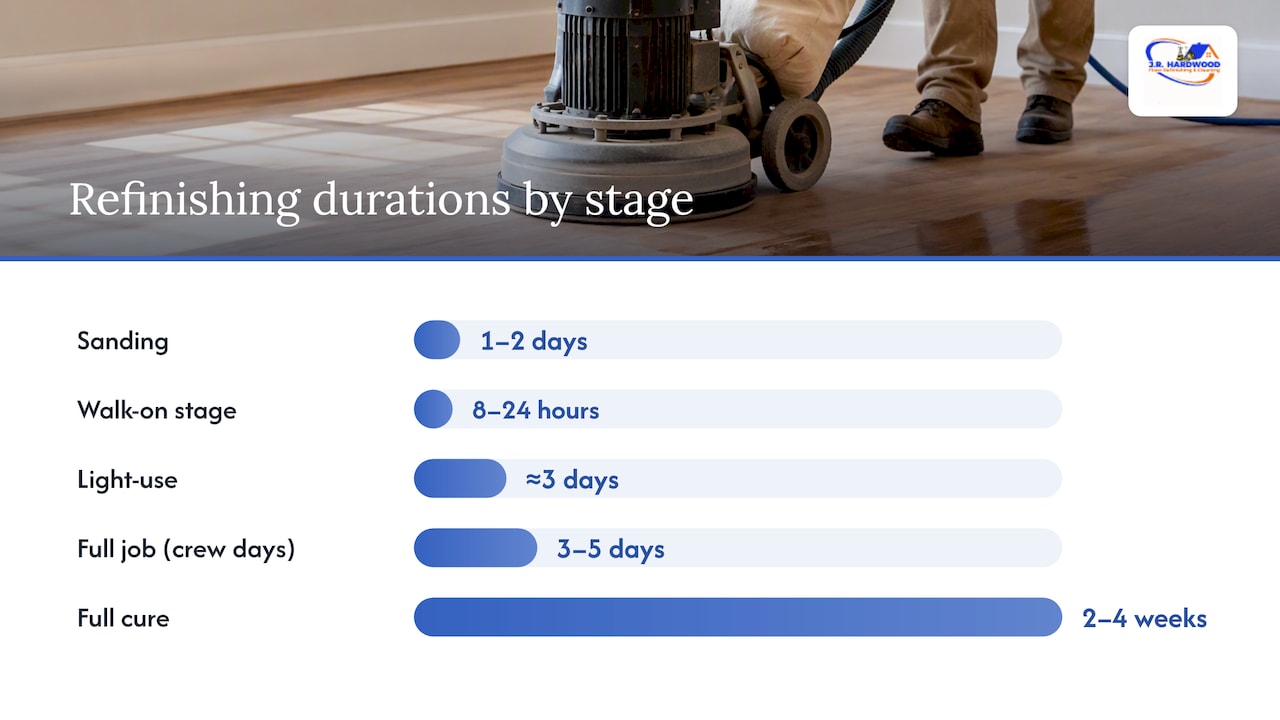
- Sanding (1 to 2 days): Dust is heaviest here, so rooms should stay closed off and ideally unoccupied during active sanding.
- Staining, if chosen (a few hours to overnight): Stain needs to soak in and dry before the finish coat goes on.
- Finish application (1 to 3 coats, each needing dry time): This is where the timeline splits, water-based finishes dry fast, oil-based polyurethane takes longer.
- Walk-on stage (often 8 to 24 hours after the last coat): Socks only, no shoes, no furniture yet.
- Light-use stage (around 3 days): Light furniture can often go back, but rugs and heavy items still wait.
- Full cure (2 to 4 weeks depending on finish): This is when the floor reaches full hardness and can handle normal traffic without babying.
A full job typically runs 3 to 5 crew days, though room count and the number of coats can stretch that. Water-based finishes tend to be the fastest route back to normal, while traditional oil-based polyurethane asks for more patience. UV-cured finishes are the outlier: they cure instantly under light, which is why same-day walk-on is possible with that process.
Before work begins, ask your contractor three things: which finish they’re using and why, what the expected walk-on and full-cure windows are for your specific rooms, and how humidity or temperature in your home might change those numbers. A contractor who can’t answer clearly is worth a second look.
Furniture: Move It, Store It, or Protect It in Place
Furniture logistics usually cause more stress than the sanding itself, but you have more options than an all-or-nothing move.
- Shift to an unaffected room: Works well for smaller jobs or single-room refinishes, and it’s the cheapest option by far.
- Garage storage: Convenient, but watch humidity swings that can warp wood furniture or loosen veneer.
- Short-term storage unit or portable container: Worth it for whole-house jobs where every room is in play at once.
- Hire movers for heavy pieces: Saves your back and your floors from drag marks, especially for pianos, china cabinets, and large sectionals.
Not everything needs to leave the house. Electronics, antiques, and framed art should come out of the work zone entirely, while rugs, floor lamps, and smaller décor can often be protected in place with plastic sheeting taped at the edges. Wall-mounted items usually just need a few feet of clearance from the sanding path.
Label boxes by room before movers arrive, pad furniture corners, and confirm whether your storage facility requires proof of insurance for higher-value items. If you’re coordinating a move-out cleaning alongside the project, a service like Lemon Maids’ move-in and move-out cleaning can handle the turnover so you’re not doing double duty.
Pro Tip: Photograph each room before the crew arrives so you have a clear record of furniture placement and floor condition going in.
Special Considerations for Renters and Apartments
Apartment refinishing adds a layer that single-family homes don’t have: shared hallways, elevators, and neighbors who didn’t sign up for the noise or dust. Building management may require specific work hours, protective floor coverings in common areas, or advance notice to neighboring units.
- Request a written schedule from your landlord or property manager before work starts, including expected daily hours.
- Ask about cost-sharing for building protection measures like hallway runners or elevator pads.
- Notify neighbors early, especially if sanding will happen during typical work-from-home hours.
- Document pre-job conditions with photos of hallways, elevators, and your unit’s floors in case of disputes later.
Full temporary relocation is more common in multi-unit buildings than in single-family homes, mostly because shared ventilation and thinner walls make dust and odor harder to contain.
Ventilation, Dust Control, and Air Quality During the Job
Sanding and finishing release dust and VOCs, and how well a crew manages airflow affects both your timeline and your comfort. The EPA’s renovation and indoor air quality guidance recommends isolating work areas and ventilating as close to the source as possible to limit exposure to dust and finish fumes during projects like this one.
- Seal the work zone with plastic sheeting to keep dust from drifting into living spaces.
- Require negative-pressure exhaust that pulls air and dust outside rather than recirculating it.
- Ask about HEPA filtration on sanding equipment to cut airborne particles at the source.
- Plan for post-job airing, since fresh windows and run time on exhaust fans help clear lingering odor faster.
Pregnant occupants, young children, people with asthma, and pets tend to do better away from the home during active sanding and the first finish coat, then can return once ventilation has had time to clear the air. If your home has limited window ventilation, build in extra wait time before moving back in fully.
How We Handle Occupant Logistics on Every Job
We built our process around keeping your household moving, not just your floors. Our sanding systems capture roughly 90 percent of dust at the source, and we use eco-friendly finishes that cut down on harsh odors lingering in your home. Scheduling and communication run through the owner directly to ensure clear timelines and prompt responses. Use the checklist above when you call for your quote, it helps us tailor the plan to your home from day one.
— J.R.
How We Can Help You Plan Your Refinishing Project
Once you know your timeline and furniture plan, the next step is matching the right finish to your schedule. Our services include full sanding and refinishing, instant UV-curable finish options for quick walk-on times, and screen and recoat treatments for faster refreshes when a full sand isn’t needed.

When you call for a free over-the-phone quote, come ready to share your finish preference, how many rooms are involved, and whether anyone in the house needs extra ventilation time. We’ll walk you through dust control, expected walk-on windows, and full-cure timing before a single tool touches your floor.
| Service | Best for | Typical price |
|---|---|---|
| Full Sanding & Refinishing | Full restoration with stain and finish options | 4.20 to 5.50 dollars per square foot |
| Instant UV-Curable Finish | Same-day walk-on priority | Available on request |
Ready to get a date on the calendar? Reach out for your free quote on refinishing and our Instant UV-Curable Finish and we’ll build a schedule around your household, not the other way around.
FAQ
How long do refinished floors take to cure?
Most finishes reach full cure in 2 to 4 weeks, though you can usually walk on floors in socks within 8 to 24 hours after the final coat. Light furniture often returns around day three, while rugs and heavy pieces should wait for full cure.
How much does it cost to refinish wood floors?
Full sanding and refinishing typically runs 4.20 to 5.50 dollars per square foot, while lighter options like screen and recoat start from 2.50 dollars per square foot. The exact price depends on room size, finish type, and the current condition of your floors.
Do you need to move out to refinish hardwood floors?
You generally don’t need to move out completely, though staying out of the treated rooms during sanding and the first finish coat is a good idea. Sensitive occupants, including young children or anyone with respiratory concerns, may benefit from leaving the home until ventilation has cleared the air.
Can you pull up hardwood floors and reuse them?
Solid hardwood boards can sometimes be removed and reinstalled, but success depends heavily on the wood’s condition, fasteners used, and how carefully the boards are pulled up. A contractor who inspects the floor in person can tell you whether reuse is realistic for your specific flooring.