 Skip to content
Most Denver restaurant owners pay somewhere between $150 and $600 per piece to refinish booths, chairs, and tables, which usually lands at a fraction of what new furniture costs. A full dining room refresh often runs in the low thousands rather than the tens of thousands that replacement demands. The smartest next step is sending clear photos and a quantity count to a local refinisher for a written quote before you commit to either path.
TL;DR:
- Refinishing most Denver restaurant furniture typically costs 10% to 20% of full replacement, with booths and banquettes being the most labor-intensive.
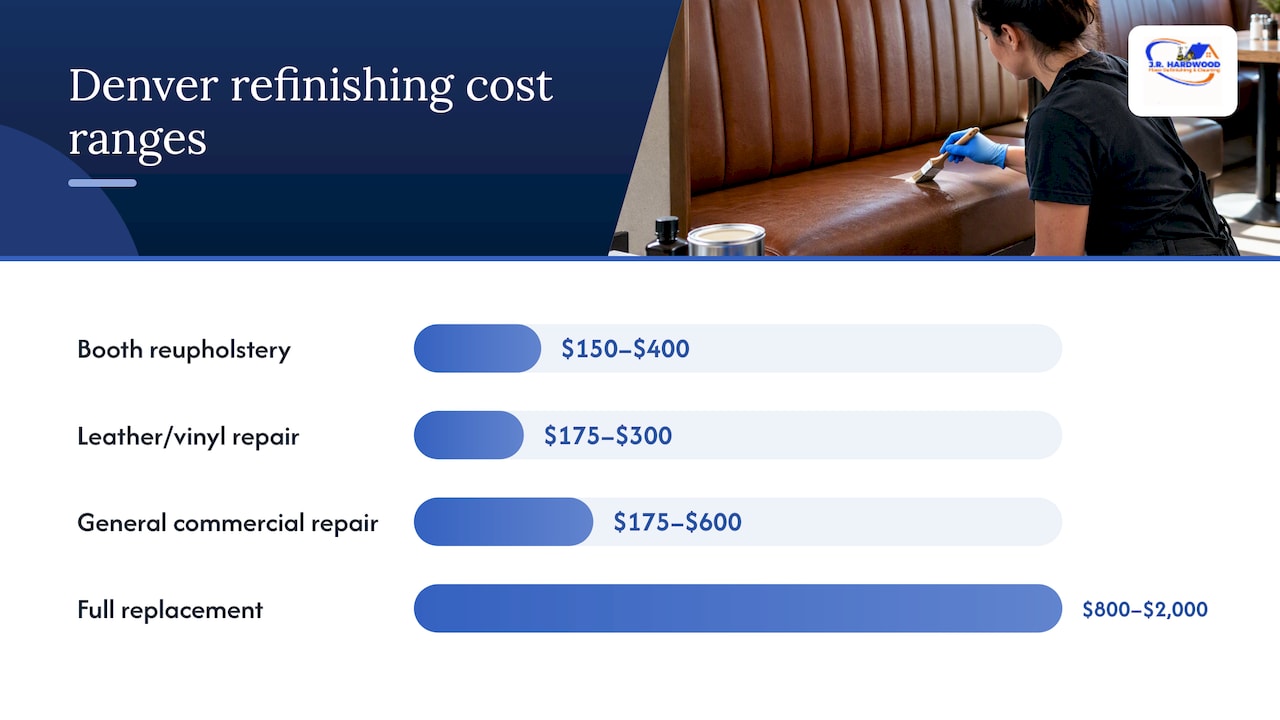
- Single booth reupholstery usually ranges from $150 to $400 per piece, while full booth replacement can exceed $800, depending on fabric and damage.
- Volume discounts are common when refinishing multiple pieces, significantly lowering per-unit costs versus single-piece quotes.
- Turnaround times generally span one to five days for surface work, with full dining room projects phased overnight to minimize revenue loss.
- Accurate quoting depends on clear photos, detailed itemization, and understanding factors that influence cost, such as material choice and damage severity.
Table of Contents
- Denver-Area Price Ranges for Booths, Chairs, and Tables
- Three Budget Scenarios: Table, Booth, and Full Dining Room
- What Raises or Lowers Your Refinishing Quote
- How Long a Refinishing Project Actually Takes
- How to Get an Accurate, Apples-to-Apples Quote
- From Quote to Finished Project: What the Timeline Looks Like
- Denver Rules That Can Affect a Commercial Refinishing Job
- Local Denver Providers and What They Typically Charge
- When to Repair, When to Replace: A Practical Rule
- Request a Free Photo Quote for Your Restaurant’s Floors
- FAQ
- Sources
Denver-Area Price Ranges for Booths, Chairs, and Tables
Refinishing pricing in Denver follows a few predictable patterns once you’ve seen a handful of quotes. Booth and banquette seating typically costs the most to redo because of the labor involved in stripping old material and fitting new upholstery around fixed frames. Table tops tend to be cheaper, since the work is mostly surface-level sanding, staining, and a protective topcoat.
Here’s what you’ll commonly see quoted around the metro area:
- Single booth seat reupholstery: $150 to $400 depending on fabric grade and seat size, according to 5280 Upholstery’s commercial pricing page.
- Single-booth leather or vinyl repair: $175 to $300, with full booth replacement running $800 to $2,000 or more, per Den Leather Repair’s commercial pricing.
- General commercial repair jobs: $175 to $600 or more per piece, covering a mix of seating types and damage levels, also from Den Leather Repair.
- Table top refinishing: priced per table rather than per square foot, with cost driven by surface condition and whether the base needs attention too.
Repair commonly costs roughly 10% to 20% of full replacement for restaurant seating, based on the booth repair and replacement figures from Den Leather Repair. That gap is the heart of the decision every restaurant manager faces: spend a few hundred dollars reviving what you have, or spend thousands replacing it.
Volume matters too. A single chair repair might sit at the high end of a price range, but once a shop is working through a dozen or more matching pieces, the per-unit cost usually drops. Shops save setup time, material ordering happens in bulk, and labor gets more efficient piece to piece. If you’re refinishing an entire dining room’s worth of tables and seating, ask specifically about volume pricing, rather than assuming the single-piece rate applies across the board.
The fraction-of-replacement rule holds up across most categories we see in commercial work. Wood table tops that still have solid structure underneath almost always cost less to refinish than to replace, and the same logic applies to vinyl booth seating with intact frames. The exception is when damage goes past the surface into torn padding, cracked wood joints, or structural failure, which pushes a job closer to replacement-level pricing anyway.
Three Budget Scenarios: Table, Booth, and Full Dining Room
Numbers are easier to plan around when they’re tied to a real-looking project. Here are three scenarios that reflect what Denver restaurant owners typically budget for.
- Scenario A, single table top refinish. A worn four-top table with surface scratches and faded finish is the simplest job on this list. Expect sanding, staining to match your existing color, and a new protective topcoat. Invoices for this kind of job are usually itemized by labor and finish material, and turnaround is fast since there’s no upholstery or structural work involved.
- Scenario B, booth or banquette reupholstery. A single booth seat with torn vinyl or faded fabric falls in the $150 to $400 range noted above, per 5280 Upholstery. Material choice drives most of the swing here: commercial-grade vinyl is cheaper and easier to clean, while heavier fabrics cost more upfront but can hold up differently under daily wear.
- Scenario C, full dining room refresh. This is where volume pricing and phasing matter most. A restaurant refinishing 10 tables and 15 booth seats at once will likely negotiate a lower per-piece rate than the single-job prices above, and a contractor may stage the work over several nights to avoid closing the dining room. Total cost depends heavily on condition and quantity, but it almost always lands well under what replacing the same number of pieces would cost.
Each scenario benefits from the same first step: clear photos and an accurate count sent to a local shop before you commit to a number.
What Raises or Lowers Your Refinishing Quote
A handful of factors swing your price up or down more than anything else, and knowing them ahead of time helps you read a quote with a sharper eye.
- Material and finish choice: commercial-grade vinyl costs less than premium fabric, and a UV-cured or polyurethane topcoat on wood adds durability but also adds cost.
- Damage depth: a surface-only job (light scratches, minor fading) costs far less than one requiring a full strip to bare wood or frame, and structural repairs add labor hours fast.
- Logistics: shop work is usually cheaper than on-site work, but on-site saves you the hassle of pickup and delivery, and off-hours scheduling can add a premium depending on the vendor.
- Hidden extras: matching an existing stain color precisely, disposing of old material, and meeting local fire or health code requirements for seating materials can all add line items you didn’t expect.
Matching stain color across a mixed-age dining room is trickier than it sounds. Wood ages unevenly depending on sun exposure and traffic, so a table refinished today might not match a table refinished two years ago without extra blending work.
Pro Tip: Ask every bidder to break out “material,” “labor,” and “finish” as separate line items so you can actually compare two quotes apples to apples instead of guessing what’s bundled in.
How Long a Refinishing Project Actually Takes
Turnaround time is often the deciding factor for restaurant owners, since every closed table or section means lost revenue. A single table top refinish typically wraps up in a day or two once a shop has your piece, including drying or curing time for the new finish. Booth reupholstery takes a bit longer, often three to five days per batch, depending on fabric availability and how many seats are involved.
Full dining room projects are where phasing earns its keep.
- Phased overnight work lets a crew finish one section of a restaurant, while the rest stays open, which keeps revenue flowing during a larger project.
- Staged invoicing often follows the same phases, spreading cost out instead of hitting you with one lump payment.
- Furniture replacement lead times frequently stretch into weeks or months depending on the manufacturer, while a refinish crew can usually start within days of an accepted quote.
That lead-time gap is one of the strongest arguments for refinishing when your furniture still has good bones. Waiting on a backordered booth set can tie up a dining room far longer than a scheduled overnight refinish ever would.
How to Get an Accurate, Apples-to-Apples Quote
A good quote starts with good photos. Vendors across the Denver area, including both 5280 Upholstery and local leather specialists, rely on photo submissions paired with a quantity list to price jobs accurately without an immediate site visit.
- Take close-up photos of every damaged area, plus a wide shot of the full piece and, for upholstery, a shot of the underside or frame.
- Count and list every piece that needs work, broken out by type (tables, booth seats, chairs) so the vendor can price by category.
- Request an itemized written quote that separates labor, materials, pickup or delivery, finish type, and warranty terms.
- Ask directly about volume discounts, staging options for larger jobs, off-hours availability, and whether the vendor carries insurance or general contractor coverage for on-site work.
| What to confirm before accepting a quote | Why it matters |
|---|---|
| Itemized labor vs. materials | Lets you compare vendors fairly instead of guessing what’s bundled |
| Pickup and delivery terms | Affects your total cost and how much downtime you’ll have |
| Volume pricing for multiple pieces | Can meaningfully lower your per-piece rate on larger jobs |
| Warranty or guarantee on finish | Protects you if a finish fails early under heavy restaurant use |
Skipping the photo step is the most common reason restaurant owners end up with quotes that don’t match once a crew arrives on site.
From Quote to Finished Project: What the Timeline Looks Like
Once you’ve sent photos and quantities, most vendors turn around a written quote within a day or two. After you approve it, scheduling typically depends on current shop workload and whether the job happens on-site or in a shop.
For table refinishing, prep work (cleaning, sanding, stripping old finish) usually takes the bulk of the time, followed by staining and a topcoat that needs to cure before the piece is usable again. A UV-cured finish shortens that wait considerably compared to a traditional polyurethane coat, which can take longer to fully harden under normal conditions.
For upholstery work, lead time often hinges on fabric or vinyl availability rather than labor. Standard commercial-grade materials are usually in stock, while specialty fabrics may need to be ordered, adding days to the schedule.
For full dining room projects, expect a sequence: an initial walk-through or photo review, a written quote, a scheduled start date, phased overnight work section by section, and a final walk-through before invoicing closes out. Building in a little buffer for curing time on finishes, especially around table tops that need to handle daily cleaning, keeps you from putting pieces back into service too early.
Denver Rules That Can Affect a Commercial Refinishing Job
Most furniture refinishing work for restaurants does not require a city permit the way structural remodeling or electrical work would, since you’re restoring existing pieces rather than altering the building itself. That said, a few local considerations still apply.
Seating materials used in commercial dining spaces generally need to meet fire-retardant standards, so any new upholstery fabric or vinyl should carry documentation confirming it meets applicable flammability requirements. Denver health code inspectors also look at surface cleanability, which matters for table tops: a finish that holds up to regular sanitizing is part of staying compliant, not just a cosmetic choice.
If your refinishing project is paired with any structural work, like repairing a damaged booth frame that affects seating capacity or layout, it’s worth checking with Denver’s building department on whether that triggers a separate permit. Straightforward refinishing and reupholstery, done piece by piece without structural changes, typically does not.
Local Denver Providers and What They Typically Charge
A few names come up repeatedly when Denver restaurant owners start pricing out furniture refinishing. 5280 Upholstery specializes in commercial upholstery, including restaurant booths, and advertises photo quotes along with free pickup and delivery across the metro area, which helps restaurants avoid the hassle of transporting bulky seating. Den Leather Repair focuses on leather and vinyl repair for commercial clients and publishes specific per-job pricing, which makes early budgeting easier.
For wood surfaces specifically, tables, bar tops, and wood trim, professionals handle refinishing, restoration, and instant UV-curable finishing for restaurants across the Denver Metro Area. Our hardwood refinishing and cleaning services cover the kind of surface work that keeps dining room furniture looking sharp without the lead time of ordering replacements.
Whichever vendor you’re comparing, the pricing benchmarks above give you a reasonable starting point for what a fair quote should look like before you commit.
When to Repair, When to Replace: A Practical Rule
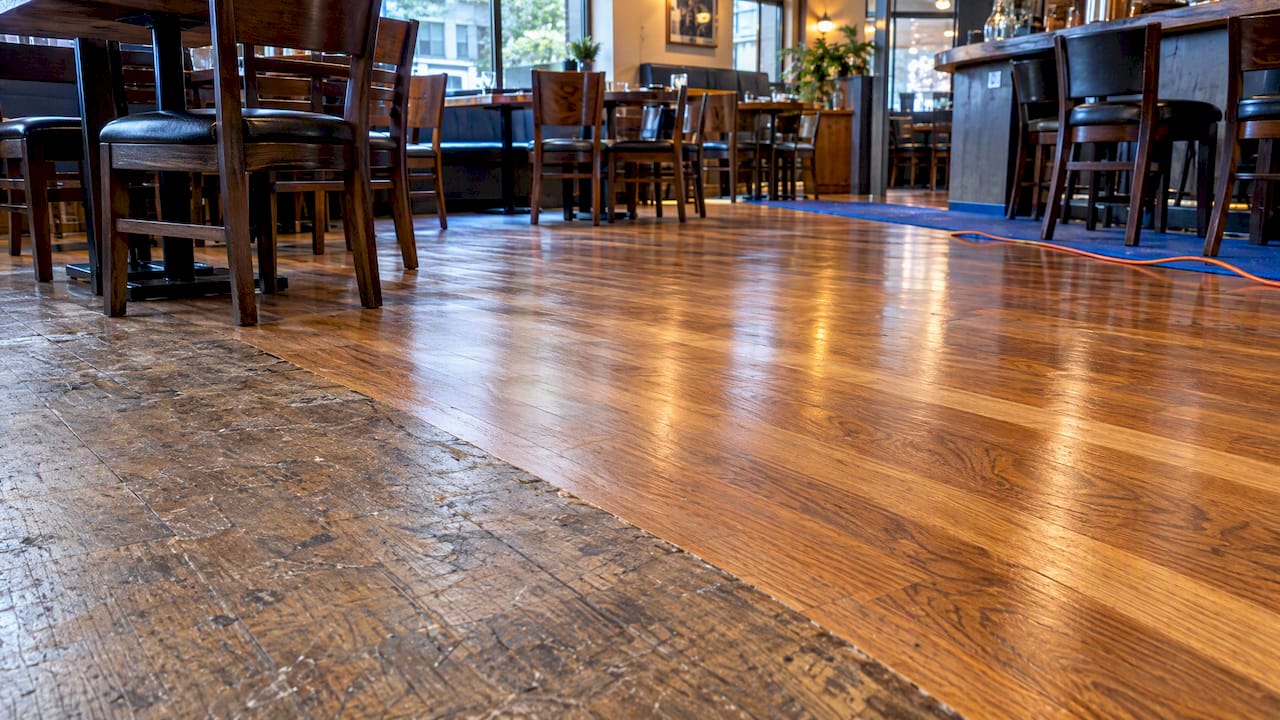
Here’s the rule we use when restaurant owners ask us to weigh in: if the frame or base is solid, refinish it. If the structure itself has failed, cracked joints, broken legs, water-damaged cores, replacement usually makes more sense than pouring repair dollars into something that won’t hold up anyway.
Budget for refinishing the same way you’d budget for routine maintenance, not as an emergency expense. A dining room that gets a light refresh every couple of years rarely needs the kind of sudden full-replacement budget that catches owners off guard. We keep this simple on our end: send us photos, tell us your quantity and timeline, and we’ll give you a straight answer on scheduling and turnaround built around keeping your dining room open.
— J.R.
Request a Free Photo Quote for Your Restaurant’s Floors
Getting a number you can actually plan around shouldn’t take a week of back-and-forth. Send us a few photos of your dining room floors along with square footage, and we’ll give you a written estimate without needing to schedule an on-site visit first.

For restaurant floors specifically, we handle the work that keeps dining rooms open and looking sharp:
- Instant UV-curable finishing that cures on contact, so floors are walkable the same day instead of sitting closed overnight.
- Screen and recoat for floors that need a quick refresh without a full sand-down.
- Full sanding and refinishing for floors with deeper wear, scratches, or finish breakdown.
- Flexible scheduling, including phased and off-hours work, to minimize closed sections during service hours.
Restaurants across the Denver Metro Area, including downtown dining rooms and locations in Parker, Castle Rock, Boulder, and Colorado Springs, can access these services, with reviews and process videos available to show the kind of results that can be expected.
Ready for a number? Head to our commercial flooring services page and send over your photos to get started.
FAQ
What is the typical cost of professionally refinishing a kitchen table?
A single table top refinish is generally one of the most affordable jobs in this category, priced per piece based on surface condition and finish type. Costs scale up if the table needs a full strip to bare wood or if the base also needs repair work.
What is the average cost of a kitchen remodel in Denver?
A full kitchen remodel covers far more than furniture, including cabinetry, countertops, and flooring, and pricing depends heavily on scope and finish level. If you’re specifically comparing furniture refinishing to replacement, the per-piece ranges in this guide, like $150 to $400 for booth reupholstery from 5280 Upholstery, give a more direct comparison point.
Can you refinish just the top of a table?
Yes, refinishing just the top is common when the base and legs are still structurally sound and only the surface shows wear. This approach costs less than a full table refinish and is usually the right call unless the base also has damage or doesn’t match the top’s new finish.
Is refinishing furniture worth it?
Refinishing is usually worth it when the frame or structure is solid, since repair costs often run roughly 10% to 20% of full replacement for restaurant seating, based on booth pricing from Den Leather Repair. It stops being worth it once structural damage, cracked joints, broken frames, pushes the repair cost close to what new furniture would cost.
Sources
- Commercial Leather Repair Denver | Restaurant Booths, Office Chairs — Den Leather Repair
- Commercial Upholstery Denver | Restaurant Booths, Hotel & Office | 5280 Upholstery