 Skip to content
Yes, professional crews can refinish hardwood floors after hours so your home or business stays open and disruption stays minimal. Homeowners avoid packing up their whole life for a week, and property managers keep operations running while zones get finished in rotation. Faster methods like screen-and-recoat or Instant UV-curable finishing often allow same-night or next-morning re-entry, though a full sand-and-refinish on damaged floors still needs longer downtime, even when it’s scheduled overnight.
TL;DR:
- Refinish methods like scrub-and-recoat and UV-curable finishes often enable same-night or next-morning re-entry, minimizing downtime for light wear floors.
- Full sand-and-refinish jobs require at least three to five days of curing, making them less suitable for overnight execution if structural damage exists.
- Zone-based scheduling allows larger commercial properties to stay operational during the refinishing process by rotating work zones over multiple nights.
- Proper inspection before scheduling, including daylight checks, helps contractors accurately estimate scope and avoid underestimating deep scratches or damage.
- Clear planning of safety, access control, and liability provisions is essential for overnight work to prevent accidents, fumes drifting, or disputes over extended or delayed jobs.
Table of Contents
- What After-Hours Floor Refinishing Includes
- Which Refinishing Methods Work Best for After-Hours Jobs
- Timeline and Downtime: What to Expect After-Hours
- Cost Expectations for After-Hours Refinishing
- How to Plan and Schedule After-Hours Refinishing
- Day-Of Checklist: Preparing Your Property and Occupants
- Quality Assurance and Inspection Practices After Refinishing
- Safety Protocols Specifically During After-Hours Operations
- Contract and Liability Considerations Unique to Off-Hour Work
- Case Studies: Successful After-Hours Refinishing in Practice
- First-Hand Perspective: How J.R. Hardwood Handles After-Hours Jobs
- How to Book J.R. Hardwood for After-Hours Refinishing
- Sources
What After-Hours Floor Refinishing Includes
After-hours work usually falls into three scheduling patterns: overnight shifts, weekend blocks, and zone-based phasing where crews finish one section of a building while the rest stays open. That last option matters most for commercial properties. Property managers often prefer zone-based phasing so a restaurant, gym, or office keeps functioning while one wing gets attention overnight.
The actual work performed off-hours typically includes:
- Screen and recoat for floors with light wear but intact finish
- Full sanding and refinishing for scratched, gray, or water-damaged wood
- Instant UV-curable finishing for near-immediate cure and reduced odor
- Clean and buff service between full refinishing cycles
Behind the scenes, crews stage equipment before hours end, seal off work zones with containment barriers, and run dust extraction attached to sanders. Quiet-hour crews also time loud sanding passes to avoid disturbing neighbors or overnight staff elsewhere in the building.
Which Refinishing Methods Work Best for After-Hours Jobs
Method choice depends on how much floor damage you’re dealing with and how fast you need the space back. Scrub-and-recoat and UV-curable finishing are the two most common picks for minimizing downtime, while full refinishing remains the only real fix for deep gouges or worn-through finish.
- Scrub-and-recoat: Often finished in a few hours, with far less dust and odor than sanding, making it a favorite for commercial maintenance cycles.
- Instant UV-curable finish: Cures under specialized lamps almost immediately, which is why same-day re-entry is realistic for many jobs.
- Full sand-and-refinish: Strips the floor to bare wood and rebuilds it, delivering the deepest restoration but requiring a multi-day cure window even when scheduled overnight.
Match the method to the floor, not the calendar. A retail floor with surface scuffs doesn’t need a full sanding job just because it’s convenient to schedule at night. Save that method for floors with real structural wear.
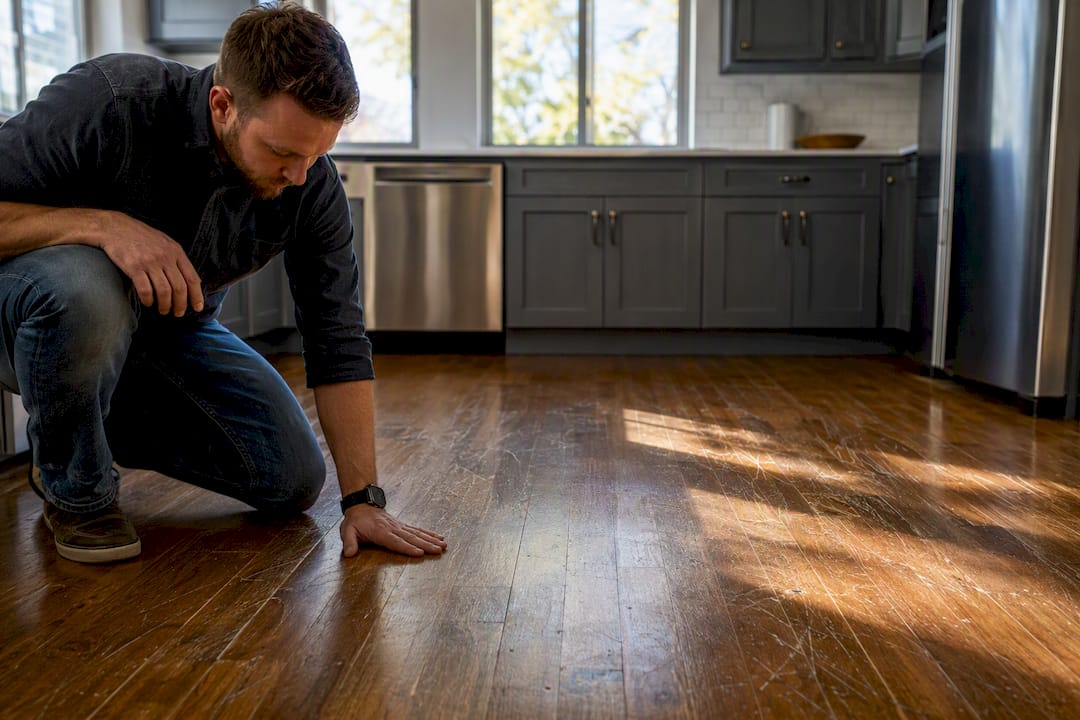
Pro Tip: Ask your contractor to inspect the floor in daylight before booking an after-hours job. Overhead work lights can mask deep scratches that only show up under natural light, and that mismatch leads to underestimated scope on the night of the job.
Timeline and Downtime: What to Expect After-Hours
Downtime depends entirely on the method and the finish. Here’s the general breakdown:
- Scrub-and-recoat: A few hours of work, often with same-night or next-morning re-entry.
- Instant UV-curable finish: Near-instant cure under lamps, frequently allowing same-day walk-on.
- Full sand-and-refinish: On average, refinishing 1,000 square feet takes about 3 to 5 days, depending on crew size and finish type.
Cure time also depends on the finish itself. Water-based finishes dry faster with lower odor than oil-based products, while UV-cured coatings set almost on contact with the lamp. Zone-based scheduling is what actually shrinks visible disruption for larger properties: instead of closing an entire building for five days, crews rotate through sections so only one zone is ever offline at a time.
Cost Expectations for After-Hours Refinishing
Budgeting for after-hours work means accounting for both the refinishing itself and the logistics of doing it outside normal hours.
- Most homeowners pay around $2,000 for a typical refinishing project, though square footage, method, and repairs shift that number in either direction.
- Overtime labor, after-hours access coordination, and extra containment setup can add to the total, especially for commercial jobs requiring security clearance or badge access.
- Repairs to damaged boards, water stains, or subfloor issues found during sanding add cost on top of the base estimate.
Statistic Callout: Refinishing a standard 1,000 square foot area typically runs on a 3 to 5 day timeline for full sand-and-refinish work, which is the single biggest factor separating a budget-friendly recoat from a full restoration price tag.
For accurate quotes, send clear photos of the whole floor, note any soft spots or gaps, and describe current foot traffic. That level of detail lets a contractor scope the job correctly the first time.
How to Plan and Schedule After-Hours Refinishing
Getting a clean, disruption-free result depends as much on the questions you ask upfront as on the crew’s skill. Work through this checklist before signing anything:
- Confirm what dust containment method they use and whether it’s rated for occupied buildings.
- Ask which finishing technology they offer, specifically whether Instant UV-curable and low-VOC options are available.
- Verify insurance and licensing, and get certificate copies for your records.
- Clarify exact start and end times, shift handoff procedures, and how zone phasing will work if your property needs to stay partially open.
- Ask about security and access: who holds keys, how entry is logged, and what happens if a shift runs long.
- Request ventilation and re-entry rules in writing, along with any signage they’ll post to prevent early walk-on.
Pro Tip: Get your scheduling answers in writing, not just verbally. A contractor who can specify exact start times, zone boundaries, and re-entry hours has actually planned the job. Vague answers usually mean vague results.
Day-Of Checklist: Preparing Your Property and Occupants
A little prep the day of the job prevents almost every common delay.
- Move light furniture out of the work zone and pad or relocate anything too heavy to carry, like pianos or built-ins.
- Adjust HVAC settings as instructed. Some finishes need airflow, others need it minimized during cure.
- Secure valuables and lock rooms not included in the job scope.
- Post occupant notices with clear re-entry times so nobody walks onto a curing floor by accident.
- After the crew leaves, do a quick walk-through checking for consistent sheen, no tacky spots underfoot, and even coverage at edges and corners.
That last step matters more than people think. Catching an uneven patch the same night means a quick fix, not a callback next week.
Quality Assurance and Inspection Practices After Refinishing
A finished floor should get inspected before the crew packs up, not left for you to discover problems on your own. Reputable contractors walk the entire surface under raking light, which reveals lap marks, roller streaks, and uneven sheen that overhead lighting hides completely.
Adhesion is checked by looking for proper bonding between coats, particularly at seams and transitions where flooring meets tile or carpet. A tack-free surface test tells the crew whether the floor is ready to leave unattended. If a coat still feels slightly sticky, that section needs more cure time before anyone walks on it, no exceptions.
For commercial jobs, a written punch list helps everyone stay accountable. It should note any touch-up areas, confirm the finish type applied, and record the exact time the floor was completed so re-entry timing is documented, not guessed at. For homeowners, a phone walkthrough with the crew lead before they leave, checking a few high-traffic areas together, catches most issues on the spot.
Ask whether the company offers any follow-up check. Some crews return within a week of a full refinish to confirm the cure held evenly, especially in humid basements or rooms with heavy sun exposure where finish can react differently than expected.
Safety Protocols Specifically During After-Hours Operations
Working in an occupied or partially occupied building overnight raises different safety questions than a daytime job in an empty house. Lighting is the first concern: crews need portable work lights bright enough to see fine surface detail, since overhead building lighting alone often isn’t sufficient for sanding or finish application.
Ventilation planning matters even with low-VOC products. Overnight crews should coordinate with building HVAC systems so fumes don’t circulate into occupied areas, particularly in multi-tenant buildings where air handlers connect floors that aren’t part of the job. Tying curing windows directly to HVAC scheduling prevents a common mistake: fumes drifting into an occupied space two floors away because a shared system kept running on its normal cycle.
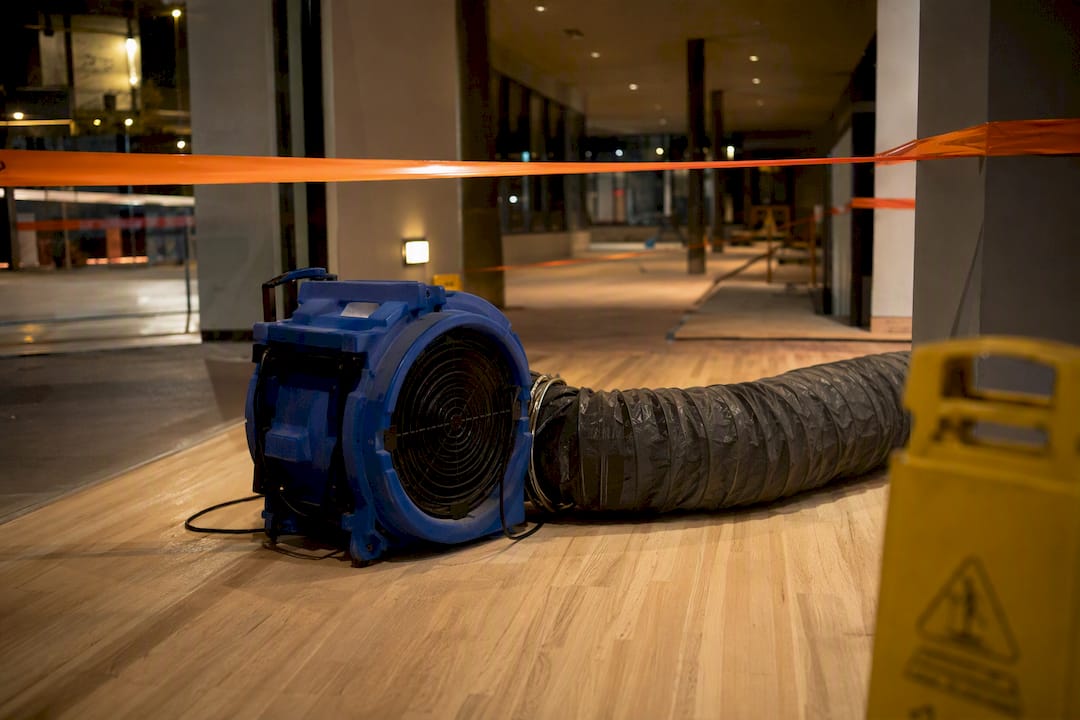
Physical access control is just as important. Crews working after building staff have gone home need a documented entry and exit process, ideally with a designated site contact reachable by phone. Wet finish and sanded surfaces also need clear physical barriers and signage, not just a verbal warning, since early morning staff or cleaning crews may enter before the contractor’s shift ends.
Electrical safety deserves a mention too. Sanders and buffers draw serious power, and overnight jobs in older buildings sometimes reveal circuits that can’t handle the load, something better discovered during a walkthrough than at 2 a.m.
Contract and Liability Considerations Unique to Off-Hour Work
After-hours contracts need more specificity than a standard daytime job agreement. The scope should state exact start and end times, what happens if work runs past the agreed window, and who’s financially responsible if a delay pushes into the next business day.
Access and key control belong in writing. If a contractor holds a key fob, alarm code, or building badge overnight, the contract should specify how that access is logged and returned. This protects both sides if something goes missing or a door is found unlocked the next morning.
Liability coverage should explicitly address after-hours scenarios, not just standard business-hours work. Ask whether the contractor’s insurance covers work performed without an on-site property manager present, since some policies carry different terms for unsupervised access situations.
Damage clauses matter more here too. If a wet floor sign gets moved and someone walks onto a curing surface before the contracted re-entry time, the contract should clarify whether that falls on the property owner (for not enforcing the notice) or the contractor (for insufficient signage). Get this spelled out before the job starts, not after a dispute.
Finally, confirm cancellation and rescheduling terms specific to after-hours slots. Overnight and weekend crews often have tighter scheduling windows than daytime teams, and a late cancellation can be harder to rebook quickly.
Case Studies: Successful After-Hours Refinishing in Practice
A retail strip mall needing floor work across three connected units is a common real-world scenario for zone-based phasing. Rather than closing the whole complex, crews handle one unit’s floor overnight while the neighboring units stay open the next day, then rotate. Customers never see closed doors during business hours, and the property owner avoids a week of lost rent from vacant storefronts.
Office buildings present a different challenge: shared HVAC and elevator access. A phased overnight schedule, working one floor of a multi-story building per night, lets a full refinishing project move through an entire office tower over one to two weeks without a single business day of closure. Employees arrive each morning to a finished floor from the night before, with no awareness that work happened at all.
For a single-family home, the pattern is simpler but the goal is identical. Night work allows deeper cleaning and better cure management, meaning a family can leave for work and dinner, come home to curing floors handled through the evening, and wake up to a finished, walkable surface. That uninterrupted cure window, free of foot traffic and pets wandering across a tacky finish, is often the real reason overnight jobs hold up better long-term than rushed daytime work squeezed between school pickups.
First-Hand Perspective: How J.R. Hardwood Handles After-Hours Jobs
We built our scheduling around the reality that most people can’t just vacate their home or shut down their business for a week. Our Instant UV-curable finishing, screen-and-recoat service, and clean-and-buff options exist specifically because same-night or next-morning re-entry is often possible, not a luxury add-on.
Every quote starts with a phone call and a few photos, no in-person visit required before you get a number. We use eco-friendly, low-VOC products throughout, and our process videos on YouTube show exactly what a crew does on-site, so you’re not booking blind. Our 5-star reviews across platforms reflect the same thing we tell every property manager: zone-based phasing keeps your space open while we work.
— J.R.
How to Book J.R. Hardwood for After-Hours Refinishing
If you’ve read this far, you already know the core trade-off: speed and disruption depend on method, and matching the right one to your floor is what actually protects your timeline. That’s exactly where Jrhardwoodfloorrefinishingandcleaning fits into the picture for homeowners and property managers across the Denver Metro Area and surrounding Colorado communities.

Getting started is simple. Call in or send photos of your floor, and our team builds a free quote around your actual space, no guesswork, no generic per-square-foot number pulled from a rate card. We’ll walk you through whether a screen-and-recoat, an Instant UV-curable finish, or a full refinish fits your timeline and budget, and we schedule around your hours, not the other way around. Property managers juggling tenants or business hours can compare their situation against similar setups covered in our DIY versus professional refinishing breakdown before committing to a scope.
Reach out today for a free over-the-phone quote and ask specifically about after-hours availability. Our team will walk you through zone phasing options if your property needs to stay partially operational during the job.
Sources
For deeper detail on timelines, costs, and finish types referenced throughout this guide:
- When to Strip and Refinish Commercial Floors | D&D CleanIt
- Cost to Refinish Hardwood Floors in 2026: Is It Worth It? – NerdWallet
- Cost to Refinish Hardwood Floors – Today’s Homeowner
- Can You Refinish Floors Without Moving Out? What Homeowners Should Know – Profresh Floor Care
- What to expect when sanding and finishing wood floors – Bona