 Skip to content
Instant UV-cured finishes deliver factory-level hardness and same-day return to service for sanded hardwood floors — and that combination changes everything about how a refinishing job fits into your life. According to Hardwood Floors Magazine, field-applied waterborne UV finishes produce a fully developed coating immediately after the UV cure pass, so floors are ready for light traffic the same day the crew leaves. No prolonged waiting in socks or rescheduling around a cure window lasting days.
Here is what that means in practice:
- Same-day walk-on and rug replacement — light traffic within hours, not days
- Superior scratch, abrasion, and black-heel-mark resistance compared with many conventional 2K waterborne systems
- Lower VOCs and no on-site crosslinker mixing, making the job safer for your family and the crew
- Fewer post-coat defects — because polymerization is complete the moment the UV lamp passes, footprints and marring during a soft-cure phase simply do not happen
The advantages of instant UV finish go well beyond speed. The sections below walk through the chemistry, the performance data, the real-world workflow, and the honest trade-offs — so you can decide whether UV-cured finishing is the right call for your floors.
Key Takeaways
Instant UV-cured finishes deliver factory-level hardness immediately after cure, enabling same-day return to service while outperforming conventional finishes on scratch resistance, BHMR, and VOC safety.
| Point | Details |
|---|---|
| Same-day return to service | Light traffic is possible within hours of cure; heavy furniture can return after a precautionary 24 hours. |
| Superior durability metrics | UV-cured finishes achieve higher initial hardness and better scratch, Taber abrasion, and BHMR than typical 2K waterborne systems. |
| Lower VOC and safer job site | Single-component (1K) formulas eliminate on-site crosslinker mixing, reducing chemical handling risks for occupants and crew. |
| Key trade-offs to weigh | Higher equipment cost and the need for an experienced applicator make UV finishing less competitive on very small or budget-limited jobs. |
| Jrhardwoodfloorrefinishingandcleaning | Offers instant UV-curable finishing across the Denver Metro Area with eco-friendly products, free phone quotes, and same-day scheduling where feasible. |
Table of Contents
- How instant UV curing works — and why it is different from regular drying
- ## 1. You get immediate, measurable hardness gains
- 2. Scratch and abrasion resistance is genuinely superior
- 3. Lower VOCs make the job safer for your family and the crew
- 4. Same-day occupancy changes how you plan your life around a refinishing job
- 5. Fewer post-coat defects mean a cleaner result
- 6. No pot-life pressure makes scheduling more predictable
- 7. Chemical resistance holds up where conventional finishes struggle
- 8. Higher contractor throughput lowers your overall project cost
- When instant UV finishes are not the right fit
- What to expect on the day of your UV finish job
- How instant UV compares to conventional finish options
- What lab testing and industry recognition say about UV finishes
- Our honest take: when we recommend UV finish and when we might not
- Ready for same-day floors? Here is how Jrhardwoodfloorrefinishingandcleaning can help
- Sources
How instant UV curing works — and why it is different from regular drying
Most conventional finishes cure through evaporation or a chemical reaction that unfolds over hours or days. UV-cured finishes work on an entirely different principle: photoinitiator-driven polymerization. The finish contains photoinitiator molecules pre-blended into the formula. When a UV lamp passes over the wet film, those molecules absorb the UV energy and trigger an almost instantaneous chain reaction that cross-links the resin into a hard, durable film. The whole process takes seconds per pass, not hours.
Two main system types exist in the field-applied market, and the difference matters for your project.
Waterborne UV polyurethane dispersions (UV PUDs) are the more common choice for residential refinishing. The finish is applied like a standard waterborne coating, allowed to dry tack-free (water evaporates first), and then cured with the UV lamp. Because the water must flash off before curing, the workflow is: apply coat → allow water to flash/dry → UV cure pass → cured film. Paint & Coatings Industry research notes that waterborne UV PUDs are preferred for field applications because they handle similarly to conventional waterborne products, produce lower shrinkage, and allow matte finishes with fewer artifacts.
That means there is no flash-off wait, but it also means any area that misses the UV lamp stays uncured. That risk makes experienced applicators and calibrated equipment non-negotiable.
Equipment wattage and travel speed are directly linked. A 3,000 W lamp run at an appropriate speed produces equivalent cure properties to a 1,500 W lamp run at half the speed. Contractors who do not document and calibrate that relationship are guessing, not curing.
## 1. You get immediate, measurable hardness gains
Comparative testing published in RadTech proceedings shows UV-cured waterborne finishes achieving higher initial hardness and better scratch, Taber abrasion, and black-heel-mark resistance (BHMR) than typical 2K water-based systems. That hardness is present immediately after cure — not after a week of ambient cross-linking.
For homeowners, that means the floor you walk on the evening of your refinishing job is already performing at close to its peak. For contractors, it means fewer callbacks from clients who scuffed a floor during the soft-cure window.
2. Scratch and abrasion resistance is genuinely superior
Taber abrasion testing and scratch-resistance panels consistently favor UV-cured systems over oil-modified polyurethane and many conventional 2K waterborne finishes. The cross-linked polymer network formed during UV cure is denser and more uniform than a film that cures through oxidation or ambient moisture. Think of it like the difference between a tempered glass screen protector and a plastic film — both cover the surface, but one is fundamentally harder.
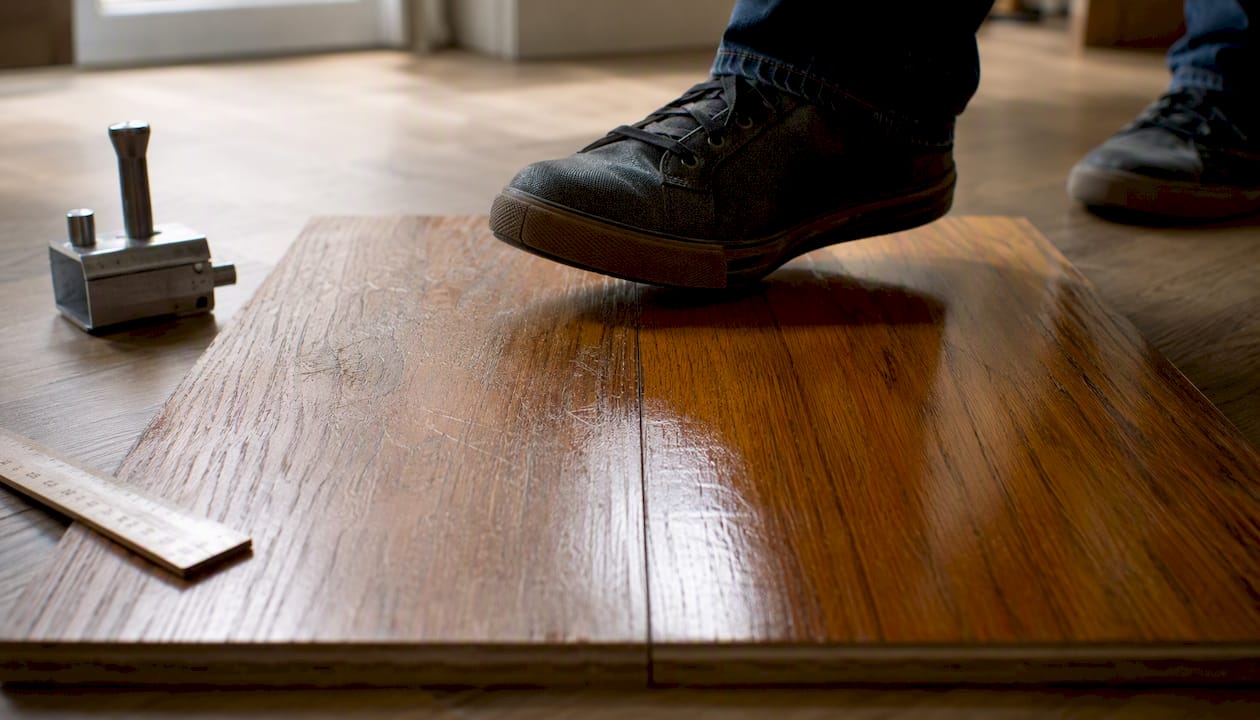
BHMR — black-heel-mark resistance — is a practical metric that matters in real homes. Rubber-soled shoes dragged across a soft finish leave dark scuffs that are difficult to remove. UV-cured films resist those marks at a level that conventional finishes rarely match in their first days of cure.
3. Lower VOCs make the job safer for your family and the crew
Because UV-cured finishes are single-component (1K) systems with photoinitiators pre-formulated, there is no on-site mixing of isocyanates or aziridines — the potent crosslinkers used in 2K systems. That removes a meaningful chemical-handling risk from the job site entirely. The RadTech study specifically highlights this as a job-site safety advantage.
Waterborne UV PUDs also carry low VOC levels, which translates to less lingering odor in your home after the job. If you have young children, pets, or anyone with respiratory sensitivities in the house, that matters. You can learn more about the indoor air quality benefits of UV-cured finishes in residential settings.
4. Same-day occupancy changes how you plan your life around a refinishing job
This is the benefit most homeowners feel most directly. With a conventional oil-modified polyurethane finish, light traffic is typically possible after 24 hours, but rugs and furniture often need to wait 72 hours or more. A full cure with conventional finishes can take an extended period. With an instant UV-cured system, trade-level guidance confirms that light use is possible the same day, with heavy furniture placement recommended after a precautionary 24-hour wait.
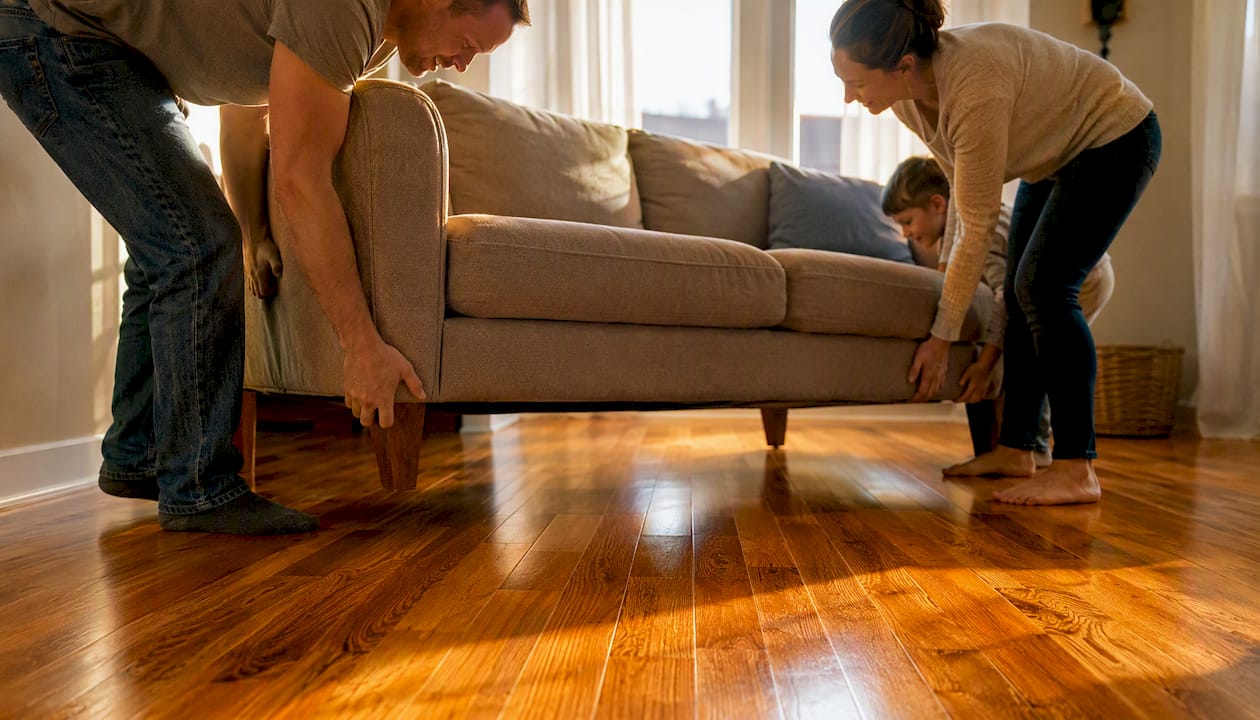
For a busy family, that is the difference between a one-night hotel stay and a multi-day disruption. For a commercial property, it can mean the difference between closing for a weekend versus closing for a week.
5. Fewer post-coat defects mean a cleaner result
Because polymerization is complete and uniform the moment the UV lamp passes, the film is no longer vulnerable to footprints, marring, or dust nibs settling into a soft surface. Hardwood Floors Magazine notes that this immediate property development is one of the clearest workflow advantages UV systems hold over conventional finishes. Contractors can apply a coat, inspect it, correct any issues, and cure — all in the same visit. That apply-inspect-cure loop, described in practitioner accounts, reduces rework and produces more repeatable outcomes.
6. No pot-life pressure makes scheduling more predictable
With 2K systems, once you mix the crosslinker into the base, the clock starts. You have a finite pot life — sometimes as short as a few hours — before the product gels and becomes unusable. UV-cured finishes have no pot life because the photoinitiator only activates under UV light. Open the can, apply the finish, and cure when you are ready. That flexibility makes scheduling more predictable for contractors and less stressful for homeowners who need to coordinate around a job day.
7. Chemical resistance holds up where conventional finishes struggle
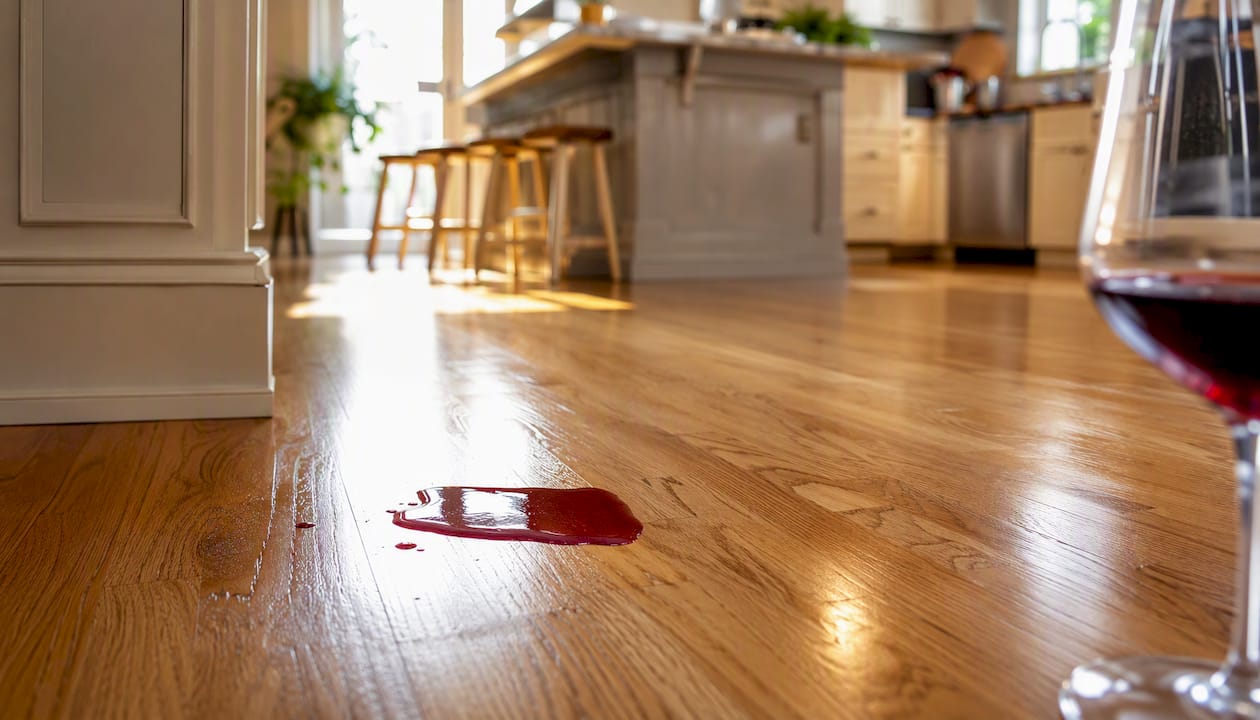
Spilled wine, cleaning products, pet accidents — UV-cured films resist chemical attack better than oil-modified polyurethane and perform comparably to or better than many 2K waterborne systems. The dense cross-linked network that makes UV finishes hard also makes them less permeable to liquids. For kitchens, mudrooms, and high-traffic entryways, that resistance is a practical daily benefit, not just a lab result.
8. Higher contractor throughput lowers your overall project cost
A contractor who can complete a refinishing job in one day instead of three can take on more projects per week. That efficiency tends to flow back to clients through more competitive pricing on labor, especially for larger jobs. The Lite n Done practitioner guide describes UV curing as converting a multi-day workflow into a same-day process, which directly improves throughput for shops and reduces homeowner disruption. Fewer return visits also mean fewer opportunities for something to go wrong between coats.
When instant UV finishes are not the right fit
Every finish technology has trade-offs, and UV-cured systems are no exception. Here is an honest look at where they can fall short.
- Upfront equipment cost. Portable UV curing units represent a real capital investment. That cost gets factored into job pricing, which can make UV finishing less competitive on very small or budget-sensitive jobs.
- Matte finish inconsistency. Historically, matte UV finishes have been tricky. Inorganic matting particles can settle unevenly during the flash-off phase, producing a blotchy appearance. Newer waterborne UV PUD formulations have reduced this problem significantly, but it has not disappeared entirely. If you want a true matte look, ask your contractor specifically about their matte formulation and whether they have completed test patches on similar wood species.
- Substrate and moisture constraints. Waterborne UV systems require the water to fully flash off before the UV pass. On a humid job day or over a substrate with elevated moisture content, that flash-off takes longer and must be confirmed before curing. Rushing it produces a cloudy or under-cured film.
- Uncured-footprint risk with 100% solids. Any area that the UV lamp misses stays permanently uncured. This is not a forgiving system for inexperienced applicators.
- Experienced applicators are non-negotiable. The equipment calibration, overlap strategy, and formulation knowledge required for a consistent UV cure are not skills you pick up on a first job. Hiring a contractor who has done this many times is not optional — it is the whole ballgame.
Pro Tip: Ask any contractor quoting a UV finish job three specific questions: What is the lamp wattage? What is the recommended travel speed for that wattage? And have they done a test patch on your specific wood species and stain combination? A contractor who can answer all three without hesitation has done this before.
What to expect on the day of your UV finish job
Knowing what happens step by step takes the mystery out of the process and helps you prepare your home.
Job steps in order
- Prep and sanding. The crew sands the floor to bare wood (or screens for a recoat), removing old finish, scratches, and surface damage.
- Tack and clean. The floor is vacuumed and tack-clothed to remove all dust. Any remaining particles will be locked under the finish.
- Stain or sealer application (if used). If you have chosen a stain color, it goes on now and must dry fully before the finish coats begin.
- First finish coat application. The waterborne UV finish is applied with a T-bar or applicator and allowed to flash dry (water evaporates).
- UV cure pass. The UV lamp machine makes its calibrated passes across the floor. The film is fully cured within seconds of exposure.
- Additional coats. Most jobs involve two to three finish coats, each applied and cured in sequence.
- Final inspection and touch-ups. The crew inspects for any missed areas, edge inconsistencies, or surface issues before signing off.
Homeowner checklist
- Clear all furniture, rugs, and décor from the rooms being finished
- Remove or cover pets and plants — UV lamps are intense light sources, and low-VOC does not mean zero odor during application
- Plan for light ventilation (open a window in an adjacent room) without creating a draft across the wet finish
- Expect light foot traffic to be possible the same evening; hold off on replacing heavy furniture and area rugs for 24 hours as a precaution
- Keep the floor free of grit and debris for the first few days — even a hard UV finish can be scratched by sand tracked in on shoes
For a deeper walkthrough of the full process, the UV-curable floor finish homeowner’s guide covers each stage in detail.
Contractor quality-control checklist
- Confirm lamp wattage and set travel speed proportionally (document both)
- Plan overlap strategy so no strip of floor misses UV exposure
- Complete a test patch on an inconspicuous area before full application
- Photograph the finished floor before leaving for documentation
How instant UV compares to conventional finish options
| Dimension | Instant UV-cured | 2K waterborne | Oil-modified polyurethane | Penetrating oils |
|---|---|---|---|---|
| Time to light traffic | Same day (hours) | 24 hours | 24 hours | 24–72 hours |
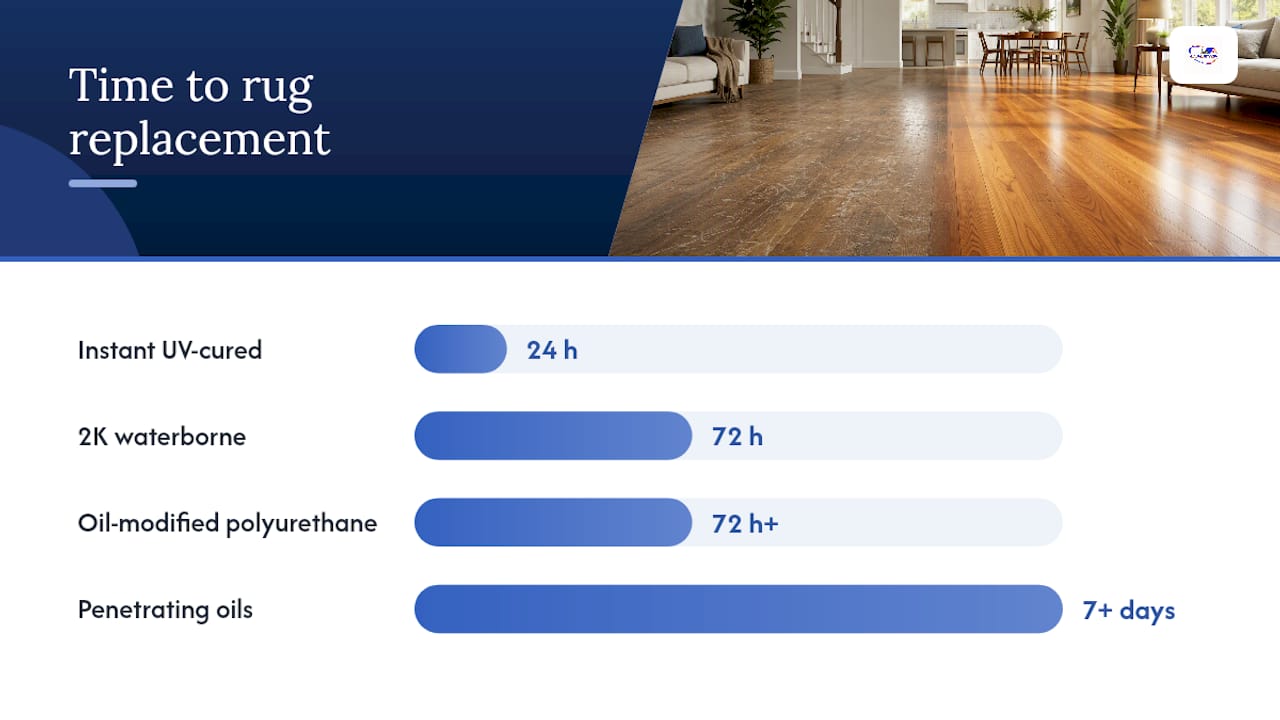
| Time to rug replacement | 24 hours (precaution) | 72 hours | 72 hours+ | 7+ days |
| Hardness / abrasion resistance | High (immediate) | Moderate to high (builds over days) | Moderate (builds over weeks) | Low to moderate |
| BHMR | Excellent | Good | Fair | Poor |
| VOC / job-site safety | Low VOC, no crosslinker mixing | Low VOC, but crosslinker handling required | Higher VOC, strong odor | Low to moderate VOC |
| Upfront cost / equipment | Higher (UV lamp required) | Moderate | Low | Low |
| Gloss / matte consistency | Excellent gloss; matte improving | Excellent | Good | Variable |
| Maintenance / aggregate cost | Lower (durability reduces recoat frequency) | Moderate | Moderate to high | Higher (more frequent reapplication) |
Fast-turn renovations, high-traffic residential spaces, and commercial jobs where downtime is expensive all favor UV-cured systems. A small touch-up on a low-traffic room with a tight budget may still make sense with a conventional waterborne product — the equipment overhead does not always pencil out for tiny areas.
What lab testing and industry recognition say about UV finishes
The Paint & Coatings Industry technical paper on UV-curable floor coatings documents that formulation advances in waterborne UV PUDs have addressed earlier limitations in scratch and chemical resistance, making field-applied UV systems genuinely competitive with factory-applied coatings on hardness and durability metrics.
The Maple Flooring Manufacturers Association (MFMA) classifies high-gloss UV finishes under Group 6 — its highest-performance finish category — which reflects the industry’s recognition that UV-cured systems deliver a distinct tier of durability compared with lower-gloss or conventional film-forming finishes.
RadTech comparative testing found UV-cured waterborne finishes outperforming conventional 2K systems on hardness, scratch resistance, BHMR, and Taber wear across multiple formulations. The critical practical implication: those properties are present immediately after cure, not after a multi-day development period. That immediate property development is what makes same-day return to service possible and what eliminates the soft-cure defect window that plagues conventional finishes.
Our honest take: when we recommend UV finish and when we might not
We recommend instant UV-cured finishing for the majority of the hardwood refinishing jobs we see — particularly high-traffic family homes, rental properties turning between tenants, and any commercial space where closing for multiple days is not realistic. The combination of same-day occupancy, superior durability, and a cleaner job-site experience is hard to argue against when the floor area justifies the equipment.
Picture a busy household with two kids and a dog: the crew arrives in the morning, sands and refinishes the main living areas, and the family is back on the floor by dinner. That is not a marketing claim — it is what UV curing makes structurally possible, as the UV-curable hardwood floor finish overview on our site describes in detail.
Where we might steer a client toward a different approach: a very small area (say, a single closet or a narrow hallway) where the equipment cost does not make financial sense, or a client who has their heart set on a specific specialty matte look and whose wood species has shown inconsistent matting behavior in our test patches. We would rather be honest about that upfront than deliver a result that does not match expectations.
Ready for same-day floors? Here is how Jrhardwoodfloorrefinishingandcleaning can help
Jrhardwoodfloorrefinishingandcleaning offers instant UV-curable finishing in Denver and across the Colorado Front Range, using eco-friendly, low-VOC products and calibrated UV equipment. We handle the full process — prep, sanding, staining if needed, finish application, and UV cure — so your floors are ready for light use the same day.
Getting a quote is straightforward. Call us with your square footage, a description of your floor’s current condition, and a couple of photos, and we will give you a free over-the-phone estimate. No obligation, no guesswork. If you are still weighing whether professional UV refinishing is the right move versus other options, our DIY vs. professional refinishing guide lays out exactly when it pays to bring in a pro.

We have earned 5-star reviews across multiple platforms and document our work through detailed YouTube videos so you can see the process and results before you commit. From Parker and Castle Rock to Denver, Boulder, and Colorado Springs, we are ready to give your floors the upgrade they deserve. Reach out today and let us find a same-day scheduling window that works for you.
Sources
- The UV Cured Opportunity – Hardwood Floors Magazine
- A Comparison of UV Cured Wood Floor Finishes to Conventional 2K Coatings (RadTech proceedings)
- UV-Curable Floor Coatings (Paint & Coatings Industry / March 2013)
- Understanding UV-Cured Floor Finishes: A Guide to Faster, More Durable Hardwood Floor Coatings
- UV Cured Wood Finish vs. Polyurethane: Why pros are switching – Lite n Done