 Skip to content
Eco-friendly finishes deliver measurable advantages across health, environmental impact, performance, and long-term cost — making them a smart choice for homeowners, builders, and designers who want beautiful floors without the trade-offs of older solvent-heavy systems.
- Healthier indoor air: Low-emission formulas cut VOC exposure during and after application, reducing risks from irritation to chronic health effects.
- Lower environmental footprint: Reduced volatile emissions mean less smog-forming pollution and a lighter lifecycle impact from raw materials to disposal.
- Comparable durability: Modern waterborne and hardwax/oil systems match traditional finishes for most residential and many commercial uses.
- Easier maintenance: Faster dry times and spot-repair capability lower disruption and long-term upkeep costs.
- Better marketability: Certified low-emission finishes are increasingly a selling point for homes and commercial spaces.
Here in Colorado, Jrhardwoodfloorrefinishingandcleaning applies these options on every project across the Denver Metro Area, selecting products by certification, SDS review, and the specific demands of each floor.
Key Takeaways
Eco-friendly finishes deliver real, measurable advantages in health, environmental impact, and performance — and certified low-emission options are now available for virtually every residential and commercial application.
| Point | Details |
|---|---|
| Health and IAQ benefits | Roughly 80% of tested wood finishes emit toxic VOCs; certified low-emission products cut that exposure at the source. |
| Environmental advantage | Waterborne and bio-based systems reduce smog-forming emissions and embodied solvent use across the product lifecycle. |
| Performance is comparable | Modern waterborne polyurethanes and hardwax/oil systems match traditional finishes for most residential and light commercial uses. |
| Certifications to trust | GREENGUARD Gold and Green Seal are the most reliable third-party screens; always pair them with a compound-level SDS review. |
| Jrhardwoodfloorrefinishingandcleaning | Applies eco-friendly, SDS-reviewed finishes on every project in the Denver Metro Area, including Instant UV-curable options for same-day re-occupancy. |
Table of Contents
- What actually makes a finish “eco-friendly”?
- How eco-friendly finishes protect your health and indoor air quality
- The environmental case: emissions, lifecycle impacts, and sourcing
- Performance, durability, and lifecycle cost: how green finishes stack up
- Which eco-friendly finish type fits your project?
- Which certifications and labels actually mean something?
- Honest limitations: what eco-friendly finishes do not always deliver
- How to choose the right eco-friendly finish for your project
- How we apply eco-friendly finishes on a Colorado project
- Our perspective on why eco-friendly finishes matter in Denver-area work
- Ready to get a free quote on eco-friendly refinishing in Colorado?
- Sources
What actually makes a finish “eco-friendly”?
The term gets used loosely, so it helps to know what it actually means in practice. A genuinely eco-friendly finish combines several specific attributes: low or zero regulated VOCs, no known carcinogens or reproductive toxins, no heavy metals or phthalates, responsibly sourced raw materials, and at least one third-party health or emissions certification. Marketing language like “natural” or “green” means nothing without those underlying credentials.
Here is a quick checklist you can run through when reading a product label or Safety Data Sheet (SDS):
- VOC content: Look for g/L values that fall within or below EPA and local regulatory limits for your finish category.
- No prohibited compounds: The SDS should show no aromatic solvents (toluene, xylene), no heavy metals (lead, chromium), no phthalates, and no listed carcinogens or reproductive toxins.
- Third-party certification: GREENGUARD, GREENGUARD Gold, or Green Seal certification confirms independent emissions testing.
- Renewable or responsibly sourced content: Natural oils (tung, linseed) or bio-based resins indicate lower embodied carbon.
- Manufacturer application documentation: Factory curing notes or site-application instructions that address ventilation and cure time.
One thing worth knowing: the VOC g/L number on a label measures a product’s smog-forming potential under EPA rules, not every indoor-health risk it carries. As a practical trade resource explains, those numbers are designed to track photochemical-smog precursors, so a “low VOC” label does not automatically mean every compound in the formula is safe to breathe during application. That is why a compound-level SDS check and a recognized certification both matter.
How eco-friendly finishes protect your health and indoor air quality
Low-emission finishes substantially cut occupant and worker exposure during and after application compared with solvent-heavy alternatives. That gap is wider than most people expect.
UL’s testing found that a large majority of tested wood finishes emitted some level of toxic VOCs, with emissions continuing for days after application. Those compounds include solvents linked to acute effects like eye and throat irritation, headaches, and dizziness, as well as chronic risks including liver and kidney stress, reproductive harm, and in some cases carcinogenic exposure with repeated high-level contact.
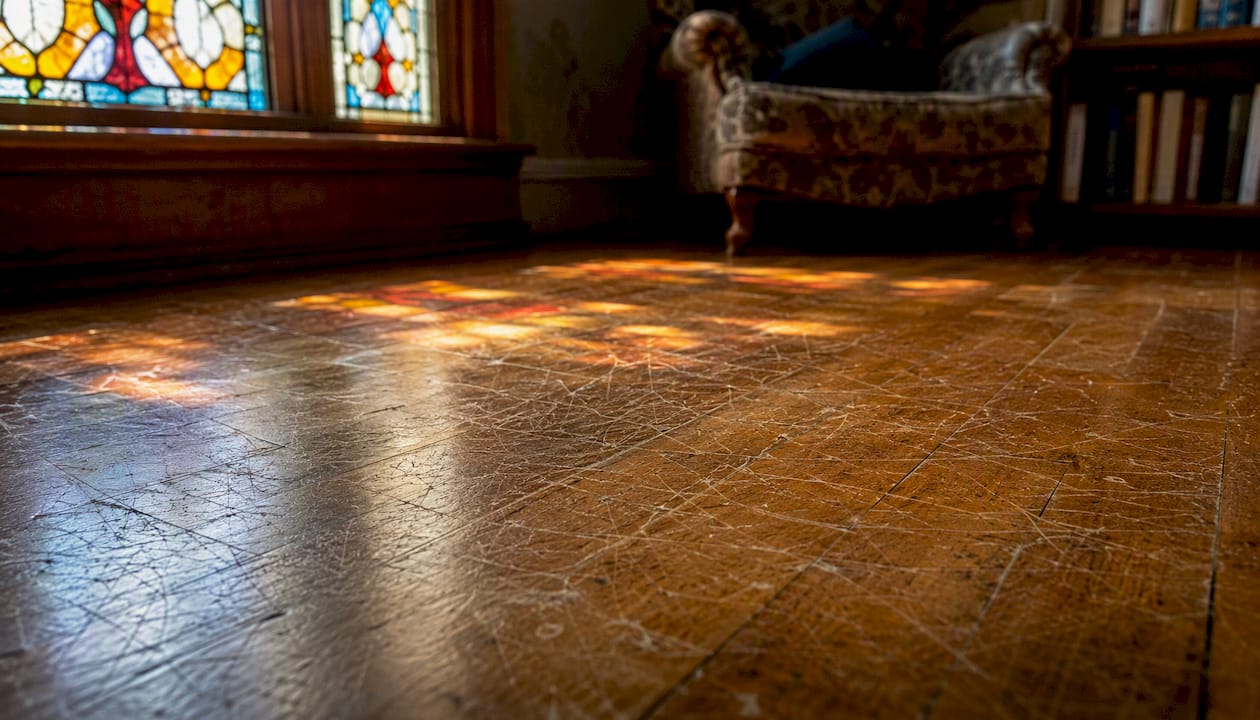
The EPA confirms that indoor VOC concentrations can spike sharply after product application and that indoor levels can exceed outdoor levels by large margins during and shortly after use. In a freshly finished room with limited ventilation, that spike is not trivial.
Switching to certified low-emission products cuts that exposure at the source. Waterborne polyurethanes and hardwax/oil systems reach inert cure faster than oil-based solvent systems, shrinking the hazard window considerably. The primary risk period is always during application and early cure, not the fully cured film, which becomes essentially inert.
Pro Tip: Ask your contractor for the product SDS before work begins. Check for aromatic solvents, NMP (N-methylpyrrolidone), and any listed carcinogens. Also confirm the ventilation plan and the cure time before re-occupancy. For occupied homes or spaces with children, GREENGUARD Gold certification is the most reliable screen for low-emission products.
For more on how these choices affect your home specifically, the eco-friendly floor finishes guide from Jrhardwoodfloorrefinishingandcleaning walks through the residential IAQ picture in detail.
The environmental case: emissions, lifecycle impacts, and sourcing
Eco-friendly formulations reduce volatile emissions and embodied impacts compared with traditional solvent-based finishes, and the benefits show up at multiple stages of a product’s life.
The VOC regulatory framework exists primarily to limit smog-forming precursors in outdoor air. When a contractor applies a high-solvent finish indoors, those compounds eventually migrate outside and contribute to ground-level ozone. Lower-VOC products reduce that pathway while also cutting the worker exposure that happens before any compound reaches the outdoors.
The lifecycle picture goes further:
- Lower embodied solvent use: Waterborne systems replace petroleum-derived solvents with water as the carrier, reducing the volume of fossil-derived inputs per gallon applied.
- Renewable feedstocks: Natural penetrating oils (tung, polymerized linseed) and bio-based hardwax systems draw on plant-derived raw materials with lower embodied carbon than petrochemical resins.
- Easier disposal: Water-based products generate less hazardous waste at the job site and require less specialized disposal handling than solvent-heavy systems.
- Factory curing advantage: BuildingGreen recommends factory-applied finishes when possible because factory curing captures emissions before installation, keeping them out of your home entirely.
GREENGUARD-certified products provide a documented, tested pathway to lower-emission finishing. Specifying them is one of the most direct ways to reduce the indoor and outdoor air-quality footprint of a flooring project.
Performance, durability, and lifecycle cost: how green finishes stack up
Modern low-VOC waterborne and hardwax/oil systems can match or exceed traditional finishes for most residential and many commercial applications. The performance gap that existed a decade ago has largely closed.
Here is how the main categories compare across the decision factors that matter most:
- Waterborne polyurethane: Comparable scratch resistance to oil-based poly, faster dry time (2–4 hours between coats vs. 8–24 hours), lower odor, and a clearer finish that does not amber over time. Durability is strong for residential and light commercial use.
- Oil-based polyurethane: Higher build per coat and a warm amber tone some homeowners prefer. Longer cure time and higher VOC content are the trade-offs.
- Natural penetrating oils (tung, polymerized linseed): Soak into the wood rather than forming a surface film. Easier spot repair, a natural matte look, and renewable sourcing. More susceptible to surface scratches than film-forming finishes in high-traffic areas.
- Hardwax oils: Combine penetrating oil with wax for a durable, repairable surface. Popular in European residential and boutique commercial settings. Maintenance requires periodic re-oiling rather than full refinishing.
- UV-cured factory finishes: Cure in seconds under ultraviolet light, capturing virtually all emissions before the product reaches your home. Extremely hard surface, minimal on-site disruption.
On lifecycle cost, waterborne systems typically mean less disruption per project: faster dry times reduce the time you are out of a room, and lower odor means you can often stay in the home. Spot-repairable penetrating systems can extend the interval between full refinishing cycles. Both factors translate to real savings over time. Eco-friendly maintenance practices also extend finish life when paired with the right cleaning routine.
Pro Tip: For heavy commercial traffic or specialty industrial uses, UV-cured or high-build factory-applied finishes still hold a durability edge. If your project involves a restaurant, retail floor, or gym, ask your contractor specifically about UV-curable options and what the manufacturer’s wear-rating documentation says.
Which eco-friendly finish type fits your project?
The main categories are waterborne polyurethanes, waterborne acrylics, natural penetrating oils, hardwax oils, shellac, low-VOC stains, and UV-cured factory finishes. Each has a natural home.
- Waterborne polyurethane: Best all-around choice for interior hardwood floors. Strong durability, low odor, fast recoat, and widely available in GREENGUARD-certified formulas. Works on floors, stairs, and trim.
- Waterborne acrylic: Softer than polyurethane but excellent for furniture and cabinetry where flexibility and clarity matter more than abrasion resistance.
- Natural penetrating oils (tung, polymerized linseed): Ideal for floors and furniture where you want a natural, in-the-wood look and easy spot repair. Not the best choice for high-traffic commercial floors without regular maintenance.
- Hardwax oil: A strong fit for residential floors, dining tables, and wood countertops. Repairable without full refinishing. Requires periodic re-oiling.
- Shellac: A traditional, fully renewable finish derived from lac resin. Excellent for furniture, antiques, and trim. Not water-resistant enough for floors in wet areas.
- Low-VOC stains: Used under a topcoat to add color without the solvent load of traditional oil stains. Check the SDS for aromatic solvents even on “low VOC” labeled products.
- UV-cured factory finishes: Applied and cured at the factory before installation. The lowest on-site emission profile of any finish type. Best for new installations where factory-finished flooring is specified.
For a deeper look at specific eco-friendly finish options used on Colorado projects, Jrhardwoodfloorrefinishingandcleaning’s product page covers what we recommend and when.
| Finish Type | Best Application | Typical Durability | IAQ Consideration |
|---|---|---|---|
| Waterborne polyurethane | Interior floors, trim, stairs | High | Low VOC; seek GREENGUARD cert |
| Waterborne acrylic | Furniture, cabinetry | Moderate | Low VOC; check SDS for NMP |
| Natural penetrating oil | Floors, furniture | Moderate | Very low VOC; renewable |
| Hardwax oil | Floors, countertops | Moderate–High | Low VOC; repairable |
| Shellac | Furniture, trim, antiques | Moderate | Very low VOC; avoid wet areas |
| Low-VOC stain | Under topcoat, any surface | N/A (topcoat dependent) | Check SDS for aromatic solvents |
| UV-cured factory finish | New floor installation | Very High | Near-zero on-site emissions |
Which certifications and labels actually mean something?
Third-party certifications and compound-level SDS checks are more reliable than any marketing claim on a product label. Here is what to look for:
- GREENGUARD Gold (UL): The most stringent indoor-air-quality certification for building products. Tests for over 360 VOCs and chemical compounds. Meaningful for occupied spaces, schools, and healthcare environments. UL’s GREENGUARD program grew directly from research on finish emissions.
- GREENGUARD (standard): Broader certification covering general product emissions. Solid baseline but less stringent than Gold.
- Green Seal: A nonprofit certification covering environmental and health criteria. The City of San Diego’s technical report specifically references Green Seal as a third-party selection criterion for identifying preferable wood-finish products.
- Low VOC / Zero VOC labeling: Regulated by the EPA and state agencies (notably CARB in California). “Low VOC” means the product meets a regulatory g/L threshold for smog-forming compounds. “Zero VOC” typically means below 5 g/L. Neither label guarantees the absence of hazardous compounds, which is why SDS review remains necessary.
- CARB vs. EPA limits: California Air Resources Board (CARB) sets stricter VOC limits than federal EPA rules for many coating categories. A CARB-compliant product meets a higher bar than EPA-only compliance.
What to check on the SDS:
- Section 2 (Hazard Identification): look for GHS hazard statements about reproductive toxicity, carcinogenicity, or organ damage.
- Section 3 (Composition): scan for toluene, xylene, ethylbenzene, NMP, and heavy-metal compounds.
- Section 8 (Exposure Controls): check recommended PPE and ventilation requirements during application.
Honest limitations: what eco-friendly finishes do not always deliver
Eco-friendly finishes are not universally perfect. They have real trade-offs compared with older solvent systems, and knowing them upfront helps you make a better decision.
- Higher upfront cost: Specialty certified products, particularly hardwax oils and GREENGUARD Gold-certified waterborne systems, often cost more per gallon than conventional finishes. The lifecycle savings can offset this, but the initial invoice is higher.
- Variable cure behavior: Some waterborne systems are more sensitive to temperature and humidity during application. Colorado’s dry climate can actually help, but cold or damp conditions require closer attention to manufacturer application windows.
- Penetrating oils scratch more easily: Natural oil and hardwax systems offer easier spot repair but do not match the surface hardness of a high-build polyurethane film. For a household with large dogs or heavy furniture traffic, that trade-off is worth discussing with your contractor.
- “Zero VOC” can be misleading: A zero-VOC base formula can still contain hazardous compounds. Colorants added at the store, coalescents, and biocides may not be captured in the base-formula VOC number. BuildingGreen notes that clear finishes commonly carry higher VOC contents than paints, and that carcinogens, aromatic solvents, and reproductive toxins can appear even in products marketed as green.
- “Water-based” is not automatically safe: UL experts warn that some waterborne formulations use NMP, a compound with reproductive-toxicity concerns. Third-party certification, not the water-based label alone, is the reliable screen.
The hazard window is during application and early cure, not the fully cured film. Once a film-forming finish has fully cured, it is essentially inert. The practical implication: plan for ventilation and re-occupancy timing, not permanent avoidance.
How to choose the right eco-friendly finish for your project
Prioritize health certifications, a compound-level SDS review, demonstrated durability for your specific use-case, and a documented application protocol. That four-part framework cuts through the marketing noise.
Selection checklist:
- [ ] Request the full SDS and check Sections 2, 3, and 8 for hazardous compounds and ventilation requirements.
- [ ] Confirm third-party certification (GREENGUARD Gold preferred for occupied spaces).
- [ ] Match the finish category to the use-case: film-forming for high-traffic floors, penetrating for furniture and spot-repair-friendly surfaces.
- [ ] Ask whether factory-applied or Instant UV-curable finishing is available for your project to minimize on-site emissions.
- [ ] Confirm cure time and re-occupancy timeline before scheduling.
- [ ] Ask for the ventilation plan during and after application.
- [ ] Request references or before/after documentation for similar projects.
Questions to ask a professional:
- Which specific product are you using, and can I see the SDS and certification documentation?
- What is the cure time, and when is it safe for children and pets to re-enter?
- Do you offer factory-finished or UV-curable options for this project?
- How do you handle ventilation during and after application?
- What maintenance routine do you recommend to extend the finish life?
For Colorado homeowners weighing their options, the low-VOC hardwood floor finish guide from Jrhardwoodfloorrefinishingandcleaning covers local climate considerations and product recommendations in detail.
How we apply eco-friendly finishes on a Colorado project
A professionally executed eco-friendly refinishing project delivers healthier air, minimal downtime, and a durable finish that looks great for years. Here is how we approach it at Jrhardwoodfloorrefinishingandcleaning:
- Assessment and quote: We start with a free over-the-phone consultation. You share verbal details and photos of your floors, and we give you a clear, honest estimate before anyone sets foot in your home.
- Product selection: We review the SDS and certification documentation for the products we plan to use, matching the finish category to your floor’s species, condition, traffic level, and your household’s occupancy needs.
- Prep work: Full sanding or screening removes the old finish, scratches, and surface damage. Clean prep is what makes the new finish bond correctly and last.
- Application sequence: We apply the selected low-VOC or certified finish in the correct number of coats, following manufacturer application instructions for temperature, humidity, and inter-coat timing.
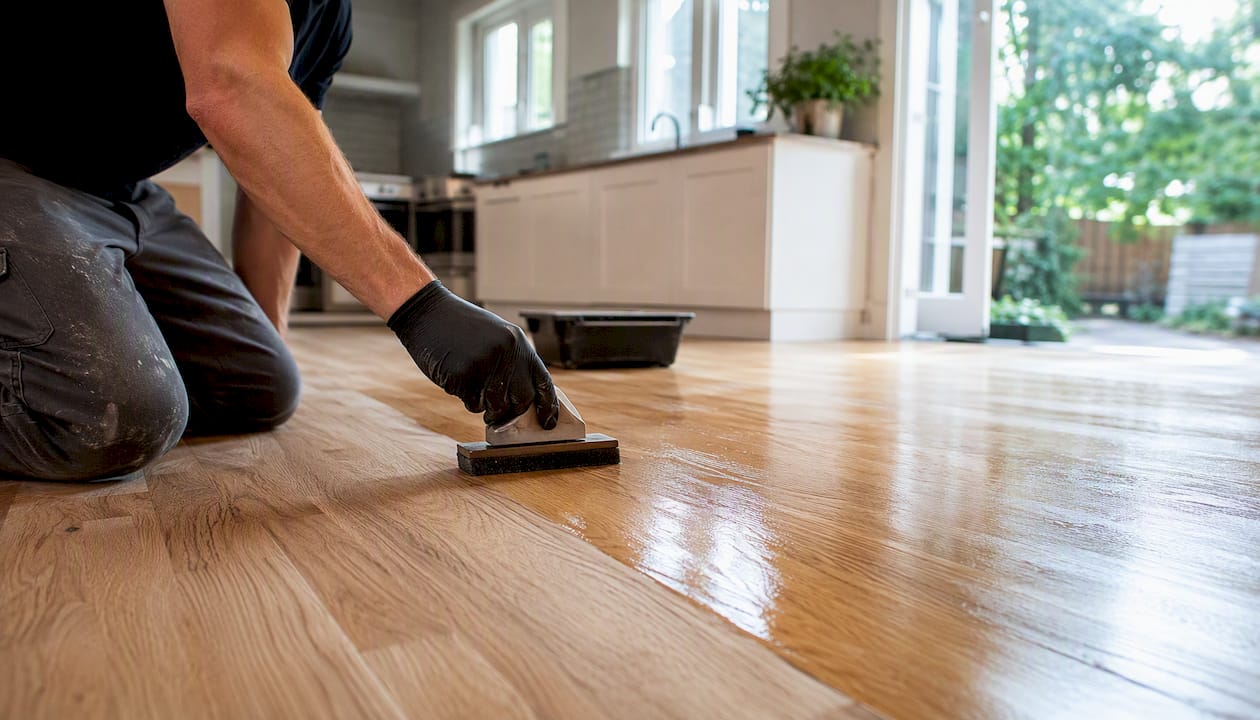
- Curing and ventilation: We confirm cure time with you before re-occupancy and walk you through the ventilation steps. For projects where occupancy is a priority, we offer Instant UV-curable finishing that cures in seconds and gets you back on your floors the same day.
- Client handoff: You get a clear maintenance plan, product documentation, and our contact information for any follow-up questions.
Pro Tip: If you have young children, pets, or anyone with respiratory sensitivities in the home, ask us specifically about UV-curable or factory-finished options. These approaches capture virtually all emissions before or immediately after application, making re-occupancy faster and the air quality impact essentially negligible.
Our perspective on why eco-friendly finishes matter in Denver-area work
We have seen firsthand how much the finish choice affects a family’s experience of a refinishing project. The difference between a solvent-heavy application and a certified low-VOC system is not subtle: it is the difference between vacating your home for days and being back on your floors the same afternoon. We prioritize eco-friendly products on every project we take in the Denver Metro Area because our customers’ health and comfort are not negotiable, and because the performance of modern waterborne and UV-cured systems has made the trade-offs essentially obsolete. Our 5-star reviews across multiple platforms and our YouTube process videos reflect that commitment in practice. If you want to see what a low-emission refinishing project looks like from start to finish, we are happy to walk you through it on a free over-the-phone quote.
Ready to get a free quote on eco-friendly refinishing in Colorado?
Jrhardwoodfloorrefinishingandcleaning gives you certified low-emission finishing without the guesswork. We use eco-friendly products on every project, from full sanding and restoration to screen and recoat, Instant UV-curable finishing, and new hardwood or LVP installation across the Denver Metro Area and surrounding Colorado communities.

Our services relevant to eco-friendly finishing include:
- Hardwood refinishing with low-VOC certified products: Full sanding, restoration, and recoating using SDS-reviewed, GREENGUARD-aligned formulas.
- Instant UV-curable finishing: Same-day cure, near-zero on-site emissions, and no extended vacancy. Learn more about the UV-curable finishing process.
- Screen and recoat: A lighter-touch refresh that extends finish life with minimal disruption.
- Factory-finished floor installation: Hardwood and LVP installed with emissions already captured at the factory.
Getting started is simple. Call us for a free over-the-phone quote. Have your room dimensions and a few photos ready, and we will give you a clear estimate and product recommendation tailored to your floor. We serve Parker, Castle Rock, Denver, Boulder, Colorado Springs, and the surrounding area. You can also explore our complete hardwood refinishing guide to understand what the full process looks like before you book.
Sources
- UL Study Explains the Dangers of Wood Floor Finishes | UL Solutions
- Volatile Organic Compounds’ Impact on Indoor Air Quality | EPA
- Minimizing Exposure to Chemicals in Clear Wood Finishes | BuildingGreen
- City of San Diego: Wood Finish technical report (cgr_wood_finish.pdf)
- Low VOC Wood Finishes: What VOC Regulations Actually Measure, g/L Values by Finish Type, and How to Choose for Indoor Use | Start Woodworking Now
This article is general information, not a substitute for advice from a qualified doctor. Consult a qualified healthcare professional about your own circumstances before acting on anything here.