 Skip to content
TL;DR:
- Floor discoloration results from moisture, sunlight, chemical reactions, or biological activity, impacting both appearance and health of floors. Different causes require specific treatments based on the flooring material, with moisture being the most common trigger. Proper identification and prompt action can prevent permanent damage and restore the floor’s original condition.
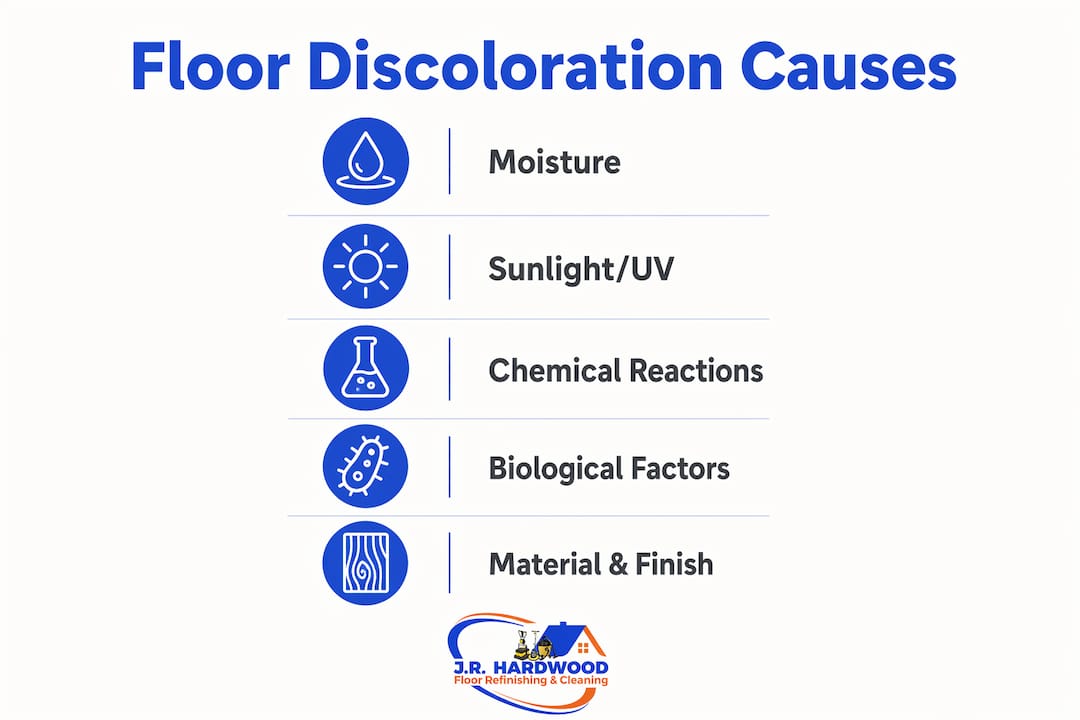
Floor discoloration is the visible alteration in floor color caused by moisture, sunlight, chemical interactions, or biological activity, and it affects both appearance and structural integrity. Whether you’re noticing dark patches on your hardwood, white haze on your concrete, or yellowing on your laminate, each stain tells a story about what’s happening beneath the surface. Understanding what causes floor discoloration is the first step toward fixing it correctly and preventing it from coming back. We’ve seen every variation of this problem across Denver Metro homes, and the good news is that most causes are identifiable and treatable.
What causes floor discoloration in most homes?
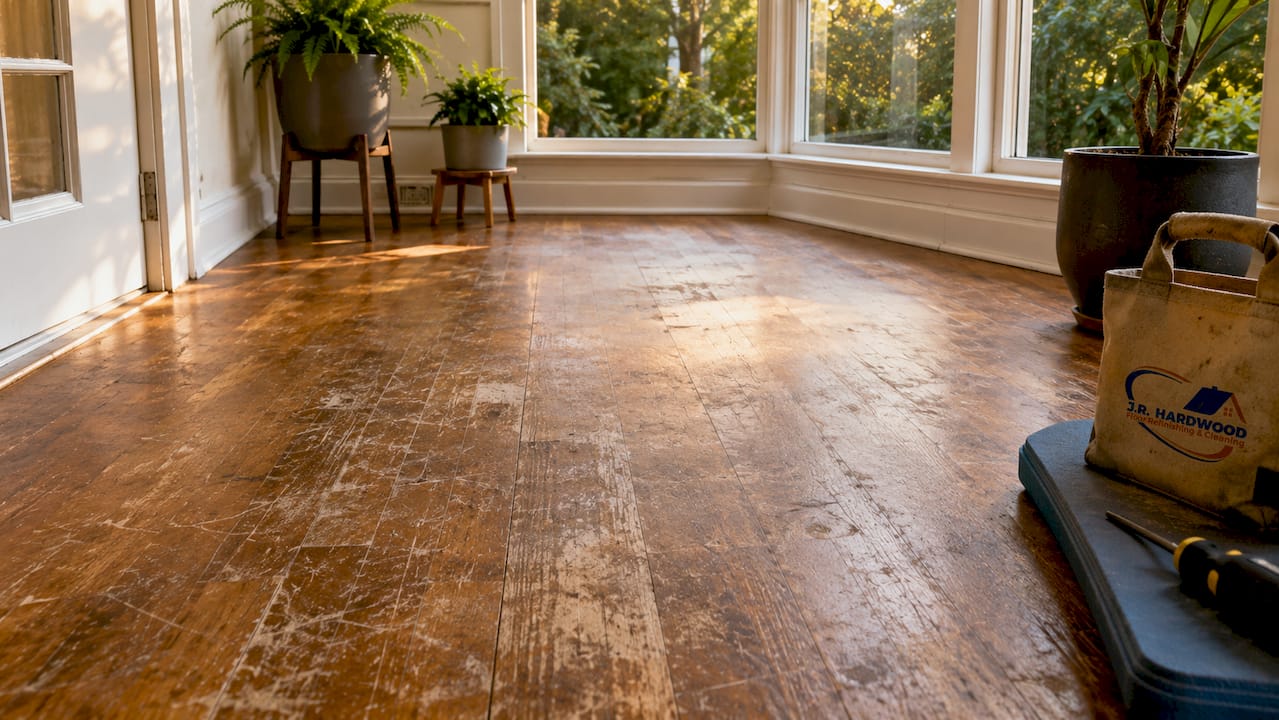
Moisture is the leading cause of floor discoloration across all flooring types. Standing water penetrating standard polyurethane finishes after more than 24 hours triggers tannin oxidation in hardwood, producing the dark brown or black stains homeowners often mistake for mold. Tannin oxidation is a chemical reaction where water unlocks naturally occurring acids in wood, causing them to darken on contact with air or metal. The result looks alarming, but knowing the cause points you directly to the right fix.
Sunlight and UV exposure are the second major driver of color change. Floors fade unevenly when furniture or rugs block light, creating a patchwork of bleached and darker zones. Chemical reactions from cleaning agents, pet urine, and iron compounds round out the top causes. Each of these mechanisms works differently, which is why treating the wrong cause with the wrong product can make things significantly worse.
How does moisture cause floor discoloration?
Moisture attacks floors through several distinct pathways, and each leaves a different mark. On hardwood, water that sits for more than 24 hours penetrates polyurethane finishes and reacts with tannins in the wood, producing dark staining that goes well beyond the surface. On concrete, a process called efflorescence occurs when hydrostatic pressure pushes water through the slab, depositing white mineral salts on the surface. These white deposits are a symptom of moisture movement through the slab that can lead to adhesive failure and broader flooring damage if untreated.
One thing that surprises many homeowners is seasonal discoloration with no obvious water source. In spring, rising humidity causes moisture to reactivate dormant tannins and iron compounds already present in wood, producing sudden dark patches without any new spill or leak. This is called tannin pull, and it’s more common in older hardwood floors with iron fasteners or previous water exposure. The patches appear out of nowhere, which is why homeowners often panic thinking something is seriously wrong.
Pet accidents add another layer of complexity. Ammonia in pet urine reacts deeply with wood tannins and can penetrate all the way to the subfloor, sometimes requiring board replacement for full remediation. Addressing pet accidents fast is critical. You can find practical guidance on protecting wood from pet damage before stains become permanent.
Pro Tip: Blot any spill within 30 minutes. Spills addressed that quickly are far easier to neutralize because organic oils and pet waste haven’t had time to penetrate deep into the finish or subfloor.
| Floor type | Moisture discoloration effect | Key risk factor |
|---|---|---|
| Hardwood | Dark tannin stains, black patches | Standing water over 24 hours |
| Concrete | White efflorescence, rust transfer | Hydrostatic pressure through slab |
| Laminate | Swelling, edge staining, warping | Water infiltrating seams |
| LVP/SPC | Adhesive bleed-through, yellowing | Moisture under glued panels |
How does sunlight cause uneven floor color changes?
Sunlight creates two competing processes on wood floors, and both cause discoloration. Direct UV exposure bleaches the surface pigments in wood, lightening the floor over time. Simultaneously, oxygen in the air causes wood to oxidize and darken naturally. When a rug or piece of furniture blocks both light and air, the floor underneath ages at a different rate than the exposed areas. Color change occurs regardless of sunlight because oxygen exposure alone drives oxidation, meaning even rooms with minimal sun will show uneven aging under furniture.
This is not a defect. It is a natural characteristic of wood, but it becomes a visual problem when you rearrange furniture and expose the contrast. Different wood species react at different speeds. Cherry and walnut darken quickly with oxygen exposure, while maple and ash are slower to change. Knowing your species helps you predict and manage the effect.
Rubber-backed mats create a separate problem. The plasticizers in rubber can transfer to your floor finish under heat and pressure, leaving permanent yellow or brown marks that look like stains but are actually chemical transfers. This is a floor color change reason that catches many homeowners off guard.
Pro Tip: Use felt-backed or natural fiber rugs instead of rubber-backed mats. Rotate rugs every few months so the floor ages evenly, and use UV-filtering window film on south-facing windows to slow bleaching.
Key sunlight and oxidation impacts on floors:
- UV bleaching lightens exposed wood, creating contrast with covered areas.
- Oxygen-driven oxidation darkens wood even in low-light rooms.
- Rubber-backed mats transfer plasticizers, causing chemical staining under the mat.
- Heat buildup under rugs accelerates finish breakdown and color change.
- Species like cherry and walnut show oxidation color shifts faster than maple or ash.
What chemical and biological reactions cause floor staining?
Chemical staining is one of the most misunderstood floor color change reasons because the stain often looks like a water stain or a finish problem. Tannins in wood react with iron from fasteners, tools, or even iron-rich water, producing dark gray or black marks. Cleaning agents with the wrong pH can trigger similar reactions. Using muriatic acid on an iron stain, for example, permanently locks in discoloration rather than removing it. Correct stain identification before treatment is not optional. It is the difference between a fix and a bigger problem.
Pet urine deserves its own category. The ammonia in urine reacts with wood tannins at a molecular level, and the stain penetrates the finish, the wood itself, and often the subfloor beneath. Surface refinishing alone rarely solves a deep pet urine stain. In severe cases, board replacement is necessary for full remediation. For homeowners dealing with this, our detailed guide on removing pet stains from hardwood walks through the right approach step by step.
Mold and mildew add a biological dimension to floor staining. Both thrive in damp conditions under flooring or in grout lines, producing green, black, or gray discoloration. Mold stains are not just cosmetic. They signal an ongoing moisture problem that needs to be resolved before any surface treatment will hold.
Pro Tip: Never use a one-size-fits-all floor cleaner on an unknown stain. The wrong product can set the stain permanently. Always identify the stain source first, then choose a treatment matched to that specific cause.
Steps to properly identify and address chemical or biological stains:
- Observe the stain color. Black or dark gray usually indicates tannin or iron reaction. White or chalky points to mineral deposits. Green or fuzzy growth signals mold.
- Check the location. Stains near fasteners or metal fixtures suggest iron reaction. Stains near pet areas suggest urine. Stains near walls or drains suggest moisture intrusion.
- Test a small hidden area with your chosen treatment before applying it broadly.
- Match the treatment to the cause. Use oxalic acid for tannin and iron stains, enzymatic cleaners for pet urine, and antifungal products for mold.
- If the stain does not respond to surface treatment, consult a professional to assess subfloor penetration.
How do flooring materials and finishes affect discoloration risk?
Not all floors discolor the same way, and the finish system on your floor plays a huge role in how vulnerable it is. Polyurethane finishes create a hard surface barrier that resists moisture and chemical contact, but once that barrier is breached, the wood underneath is exposed to all the reactions described above. Oil-based finishes penetrate the wood and offer different protection. They tend to amber over time, which is a natural yellowing that some homeowners love and others find alarming. UV-stabilized polymer finishes, used in modern LVP and SPC floors, resist yellowing from light exposure well.
Modern LVP and SPC floors rarely yellow from UV exposure because of built-in UV stabilizers. The more common discoloration cause in these floors is contact transfer from rubber mats or chemical spills, not the polymer itself aging. Homeowners often mistake natural finish aging for a product defect, when the real culprit is a rubber-backed rug sitting in a sunny spot.
Concrete floors face a different set of risks. Penetrating sealers reapplied every 3–5 years block moisture intrusion and prevent both efflorescence and rust transfer staining. Skipping resealing is the single most common reason concrete floors develop chronic discoloration problems. Adhesive bleed-through is another issue specific to vinyl and laminate. When the adhesive beneath a panel migrates upward, it creates yellowish or brown staining that typically requires panel replacement rather than surface treatment.
| Material | Primary discoloration cause | Best preventive practice |
|---|---|---|
| Hardwood | Tannin oxidation, moisture, pet urine | Polyurethane finish maintenance, fast spill response |
| Concrete | Efflorescence, rust transfer | Penetrating sealer every 3–5 years |
| Laminate | Moisture at seams, adhesive bleed | Avoid wet mopping, replace damaged panels |
| LVP/SPC | Contact transfer from mats, chemicals | Use felt-backed rugs, pH-neutral cleaners |
Key Takeaways
Floor discoloration is caused by moisture, UV exposure, chemical reactions, and biological activity, and each cause requires a different treatment matched to the specific floor material.
| Point | Details |
|---|---|
| Moisture is the top cause | Standing water over 24 hours penetrates polyurethane finishes and triggers tannin oxidation in hardwood. |
| Sunlight creates uneven aging | UV bleaching and oxygen-driven oxidation work at different rates under rugs versus open floor areas. |
| Chemical ID comes first | Treating the wrong stain type with the wrong product can permanently lock in discoloration. |
| Pet urine goes deep | Ammonia in pet urine penetrates the finish, wood, and subfloor, often requiring board replacement. |
| Material determines risk | LVP and SPC resist UV yellowing but are vulnerable to contact transfer from rubber mats and chemicals. |
What I’ve learned from years of floor discoloration calls
The call we get most often goes like this: a homeowner scrubbed a dark stain with a strong cleaner, the stain got worse, and now they’re worried the floor is ruined. In almost every case, the problem was not the original stain. It was the treatment applied without knowing the cause.
The floor care industry has a phrase for this: treating the symptom instead of the source. I’ve walked into homes where a well-meaning homeowner used bleach on a tannin stain and turned a fixable dark patch into a bleached, gray mess that needed full sanding. I’ve also seen pet urine stains that looked minor on the surface but had soaked through three layers of flooring. A quick refinish would have done nothing.
My honest advice is this: slow down before you treat anything. Take a photo, note the location, and think about what happened in that spot recently. Was there a pet accident? A leaky plant? A rubber mat sitting in the sun? That context almost always points to the right answer. The signs your floor needs refinishing are usually clear once you know what to look for.
One more thing worth saying: seasonal discoloration in spring is real and it catches people off guard every year. If dark patches appear on your hardwood in march or april with no obvious cause, moisture reactivating dormant tannins is the likely explanation. It is not a new problem. It is an old one waking up.
— J.R.
Your floors deserve a professional look at what’s going on
When discoloration goes beyond a surface wipe-down, Jrhardwoodfloorrefinishingandcleaning is here to help. We serve homeowners and property managers across the Denver Metro Area, from Parker and Castle Rock to Boulder and Colorado Springs, with refinishing, restoration, and deep cleaning services tailored to your specific floor and its condition.
We use eco-friendly products and match every treatment to the actual cause of your floor’s color change, not a generic fix. Whether you’re dealing with tannin stains, pet urine penetration, or years of UV fading, we can assess the situation and give you a clear plan. Our hardwood refinishing options cover everything from a light screen and recoat to full sanding and restoration. Call us for a free over-the-phone quote and let’s figure out exactly what your floors need.
FAQ
What is the most common cause of floor discoloration?
Moisture is the most common cause. Standing water penetrating floor finishes triggers tannin oxidation in hardwood and efflorescence in concrete, both producing visible color changes.
Why does my floor look different under rugs and furniture?
Wood oxidizes and ages at different rates depending on light and air exposure. Areas blocked by rugs or furniture experience interrupted oxidation, creating visible color contrast with the surrounding floor.
Can pet urine stains be removed by refinishing alone?
Not always. Pet urine ammonia penetrates the finish, wood, and subfloor, and surface refinishing only addresses the top layer. Severe stains often require board replacement for full remediation.
Why is my LVP floor turning yellow?
LVP floors with UV stabilizers rarely yellow from sunlight. The more likely cause is contact transfer from rubber-backed mats or chemical spills reacting with the floor’s surface layer.
How do I prevent floor discoloration from coming back?
Match your prevention to the cause. Use felt-backed rugs, apply penetrating sealers on concrete every 3–5 years, respond to spills within 30 minutes, and use pH-neutral cleaners matched to your specific floor type.