 Skip to content
TL;DR:
- Laminate flooring mimics hardwood or stone with a multi-layer synthetic design that is durable and affordable. It comprises four bonded layers, including a core, decorative image, and protective wear layer, which influence its performance and lifespan. Proper installation, moisture management, and maintenance are essential for maximizing its durability and longevity in residential settings.
Laminate flooring is a multi-layer synthetic flooring product engineered to replicate the look of real wood or stone at a fraction of the cost. It sits on top of a high-density fiberboard (HDF) core, topped with a photographic decorative layer and sealed with a tough protective wear layer. The result is a surface that looks convincingly like hardwood but holds up to daily foot traffic, pet claws, and dropped toys without flinching. For homeowners and renters weighing their options, laminate delivers a strong combination of affordability, durability, and low-maintenance living that few flooring types can match at the same price point.
What is laminate flooring made of?
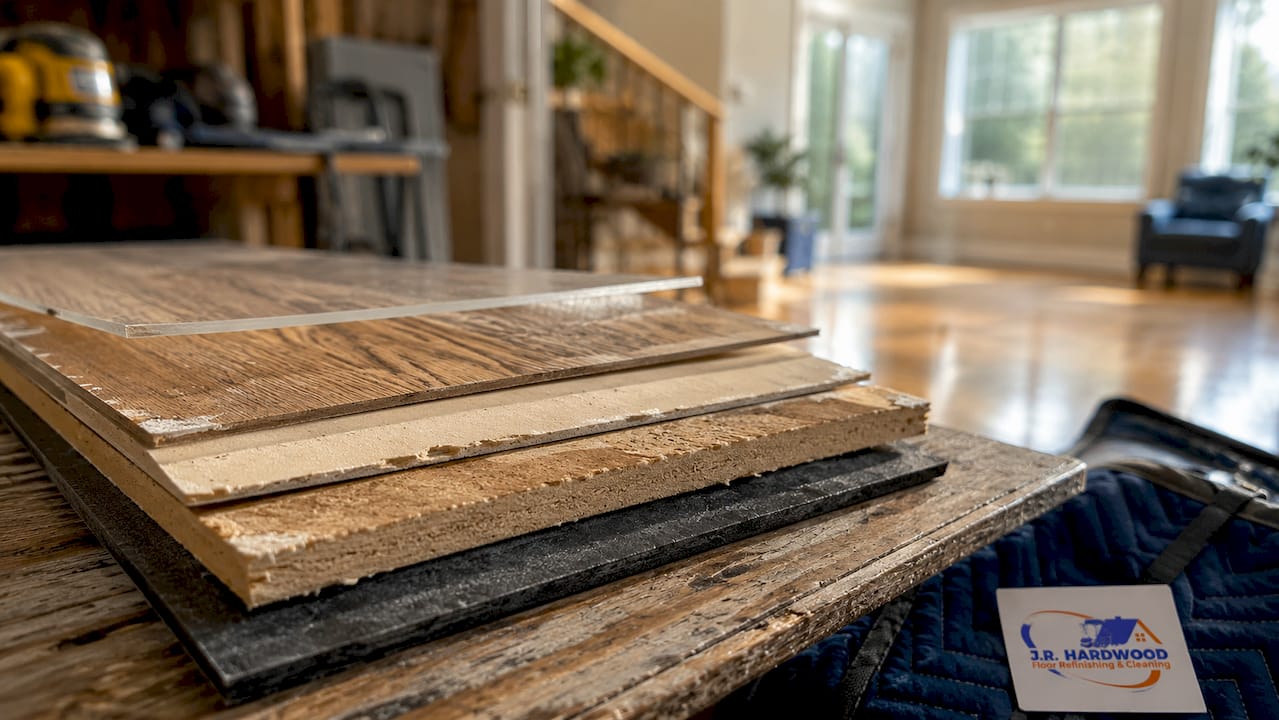
Laminate flooring is built from four distinct layers bonded together under heat and pressure. Each layer plays a specific role, and the quality of each one directly affects how your floor performs over time.
Here is what you will find inside every laminate plank:
- Backing layer: The bottom layer stabilizes the plank and protects against moisture rising from below. It also helps the plank resist warping.
- HDF core: High-density fiberboard forms the rigid middle of the plank. It gives laminate its solid feel underfoot and its resistance to dents. The layer quality directly impacts wear resistance and product longevity.
- Decorative paper layer: A high-resolution photographic image printed on paper sits on top of the core. This is what makes laminate look like oak, walnut, tile, or stone. Modern printing technology makes these images remarkably realistic.
- Wear layer: A clear, hard coating of aluminum oxide sits on top of everything. This is your floor’s armor. It resists scratches, stains, and fading from sunlight.
DPL vs. HPL: which manufacturing process matters?
The way these layers are bonded together affects the final product’s strength. Direct Pressure Lamination (DPL) is the standard process for residential products. All four layers are pressed together in a single step. It is cost-effective and perfectly adequate for most homes. High Pressure Lamination (HPL) uses a separate pressing process for the top layers, creating a denser, harder surface. HPL is reserved for commercial-grade products and offers superior impact resistance at a higher price point.
Typical plank thickness runs from 6mm to 12mm. Thicker planks feel more solid underfoot and hide minor subfloor imperfections better. If you are installing over concrete or an uneven surface, go with at least 10mm.
Pro Tip: Always check the wear layer thickness before buying. Entry-level products start around 6 mils, but active households with kids or pets should look for 12–20 mils for noticeably better scratch resistance.
Is laminate flooring durable enough for your home?
Laminate flooring is genuinely durable for most residential settings, but the right product depends on your specific traffic levels and room conditions. The industry uses an Abrasion Class (AC) rating system to help you match the product to the job.
| AC Rating | Recommended Use | Typical Setting |
|---|---|---|
| AC1 | Light residential | Bedrooms, closets |
| AC2 | General residential | Living rooms, dining rooms |
| AC3 | Heavy residential | All rooms, light commercial |
| AC4 | Commercial moderate | Offices, boutiques |
| AC5 | Commercial heavy | Department stores, public spaces |
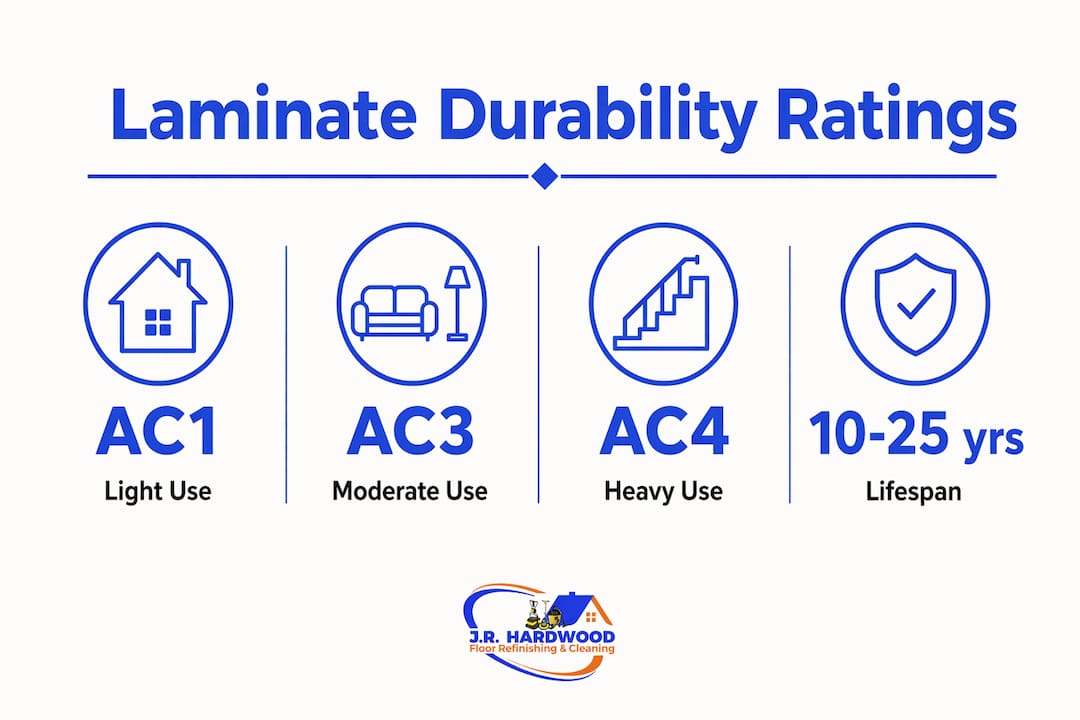
For most homes, AC3 is the minimum you should consider. Busy households with pets and kids should step up to AC4. The AC rating directly reflects how the wear layer holds up under abrasion, so it is the single most useful number when comparing products.
A well-chosen laminate floor lasts 10 to 25 years depending on the AC rating and how well you maintain it. That is a wide range, and the difference comes down to product quality and daily care. One important limitation to understand: laminate cannot be refinished like hardwood. When the wear layer is gone, you replace the planks. The surface layer is too thin for sanding.
Moisture is laminate’s biggest enemy. The HDF core absorbs water, and moisture intrusion at seams causes irreversible swelling that leads to floor failure. Unlike luxury vinyl plank (LVP), laminate is not waterproof despite any surface treatments. Keep it away from bathrooms, laundry rooms, and areas prone to flooding.
Pro Tip: Check your warranty’s moisture clauses carefully. Warranties are often voided due to moisture damage or improper underlayment, not product failure. Using the manufacturer-recommended underlayment is one of the easiest ways to protect your coverage.
How to install laminate flooring: basics and common pitfalls
Installing laminate flooring is a realistic DIY project for most homeowners. The process is forgiving compared to hardwood installation, but a few steps are non-negotiable if you want the floor to last.
Here is the basic process from start to finish:
- Acclimate the planks. Leave the unopened boxes in the room where they will be installed for at least 48 hours. This allows the planks to adjust to the room’s temperature and humidity. Skipping acclimation causes gapping or buckling after installation.
- Prepare the subfloor. The subfloor must be clean, dry, and level within 3/16" over 10 feet. Grind down high spots and fill low spots before laying anything down.
- Install the underlayment. Roll out your foam or cork underlayment. This layer cushions the floor, reduces sound, and provides a small moisture barrier. Some laminate products come with underlayment pre-attached.
- Lay the first row. Start along the longest, straightest wall. Use spacers to maintain your expansion gap along the wall.
- Click and lock the planks. Most modern laminate uses a click-lock system. Angle the tongue of one plank into the groove of the next and press down. No glue or nails required.
- Maintain expansion gaps. Leave 1/4" to 1/2" gaps around the entire room perimeter. Laminate expands and contracts with temperature changes. Without these gaps, the floor will buckle.
- Install baseboards and trim. Cover the expansion gaps with quarter-round molding or baseboards. Never nail trim through the floor itself.
A full DIY installation typically takes 3 to 4 days, including the 48-hour acclimation period plus 1 to 2 days of actual installation work. For detailed room-by-room guidance, our homeowner’s installation guide walks you through every step.
Pro Tip: Rent a pull bar and tapping block from your local hardware store. These two tools make clicking planks together much easier and prevent you from damaging the edges during installation.
Laminate vs. hardwood vs. vinyl: which one fits your life?
Choosing between laminate, hardwood, and luxury vinyl plank comes down to four factors: budget, moisture exposure, traffic levels, and how much you value a real wood feel underfoot.
| Feature | Laminate | Hardwood | Luxury Vinyl Plank |
|---|---|---|---|
| Cost per sq. ft. | Low to moderate | High | Low to moderate |
| Moisture resistance | Low | Low | High (waterproof) |
| Scratch resistance | Good (AC3+) | Moderate | Good |
| Refinishable | No | Yes | No |
| Realistic appearance | Very good | Authentic | Good |
| Best rooms | Living rooms, bedrooms | Living rooms, bedrooms | Kitchens, bathrooms |
Hardwood wins on authenticity and long-term value. You can sand and refinish real wood multiple times, which extends its life for decades. Laminate’s photo-realistic surface looks great, but it is a copy. Most homeowners cannot tell the difference from across the room, but up close, hardwood has a texture and warmth that laminate cannot fully replicate.
Luxury vinyl plank is the better choice for kitchens, bathrooms, and basements. Laminate suits dry, high-traffic indoor areas well but is risky in moist environments compared to vinyl. If you are choosing flooring for a kitchen, review this kitchen flooring guide before committing to laminate.
Where laminate shines is in living rooms, dining rooms, and bedrooms where moisture is not a concern. It costs less than hardwood, installs faster, and holds up well to everyday life. For renters who want an upgrade without a major investment, it is one of the best laminate flooring options available. For ongoing care, our laminate maintenance tips cover everything you need to keep your floor looking sharp for years.
Key takeaways
Laminate flooring is the right choice for dry, high-traffic rooms when you want hardwood looks, budget-friendly pricing, and low-maintenance care.
| Point | Details |
|---|---|
| Four-layer construction | HDF core, decorative layer, and wear layer determine durability and appearance. |
| AC rating guides selection | Choose AC3 minimum for residential use; AC4 for heavy household traffic. |
| Moisture is the main risk | Laminate is not waterproof; avoid bathrooms, kitchens, and flood-prone areas. |
| Acclimation prevents failure | Always acclimate planks for 48 hours before installation to prevent buckling. |
| Cannot be refinished | Worn laminate requires plank replacement, not sanding like hardwood. |
What i have learned after years of working with laminate floors
I have installed and cared for a lot of laminate floors across Colorado, from Parker to Boulder, and the pattern I see most often is this: homeowners buy a great product and then install it wrong or skip the maintenance basics. The floor fails, and they blame the laminate. Most of the time, the laminate was not the problem.
The number one mistake I see is skipping acclimation. People are excited to get the project done, so they pull the planks out of the car and start laying them immediately. Two months later, they call me because the floor is buckling. That 48-hour wait feels like nothing compared to pulling up an entire floor.
My honest recommendation: if you are putting laminate in a living room or bedroom, buy AC3 or better, use a quality underlayment, and follow the professional installation standards that protect your warranty. If you are even slightly unsure about moisture levels in the room, choose LVP instead. Laminate is a great product in the right conditions. It is a frustrating product in the wrong ones.
For cleaning, keep it simple. A dry microfiber mop handles daily dust. A damp mop with a pH-neutral cleaner handles the rest. Avoid steam mops entirely. The heat and moisture will work their way into the seams and swell that HDF core over time. Check out our laminate cleaning steps for a routine that actually works without risking damage.
— J.R.
Let us help you get the most from your floors
At Jrhardwoodfloorrefinishingandcleaning, we install laminate, hardwood, and LVP for homeowners across the Denver Metro Area, from Castle Rock to Colorado Springs. We also help you care for what you already have, using eco-friendly products and premium finishes that protect your investment for the long haul.
Not sure whether laminate is the right call for your space, or wondering if your existing hardwood could use a refresh instead? Our team offers free over-the-phone quotes based on your description and photos. No pressure, just honest guidance. Explore our floor refinishing services to see how we can help you decide between a new installation and restoring what you already have.
FAQ
What is laminate flooring made of?
Laminate flooring is made of four bonded layers: a backing layer, an HDF core, a photographic decorative paper, and a clear protective wear layer on top. The wear layer is typically made from aluminum oxide and determines how well the floor resists scratches and stains.
How long does laminate flooring last?
A quality laminate floor lasts 10 to 25 years depending on the AC rating and how well it is maintained. AC3 products in well-maintained residential settings routinely reach the upper end of that range.
Can laminate flooring get wet?
Laminate is not waterproof. The HDF core absorbs moisture and swells permanently when water infiltrates the seams. It is not recommended for bathrooms, kitchens, or basements without careful moisture management.
Is laminate flooring hard to install yourself?
Most homeowners can install laminate as a DIY project in 3 to 4 days. The click-lock system requires no glue or nails, but proper acclimation and expansion gaps are critical to avoid buckling.
How is laminate flooring different from hardwood?
Hardwood is solid or engineered real wood that can be sanded and refinished multiple times. Laminate uses a photographic image to mimic wood and cannot be refinished. Hardwood costs more but adds more long-term value and authenticity.