 Skip to content
TL;DR:
- Floor wax removal, or floor stripping, involves removing old wax layers and embedded dirt to restore a floor’s condition for new finishes. Proper techniques and products like mineral spirits and commercial strippers are crucial for different floor types, ensuring a clean surface that bonds well and maintains appearance. Regular maintenance and professional help prevent extensive buildup, prolonging floor longevity and appearance.
Floor wax removal is the process of stripping old, worn wax layers and embedded dirt from a floor’s surface to restore its condition and prepare it for new finishes or protective coatings. Known in the industry as floor stripping, this practice goes deeper than regular mopping or cleaning. It targets the residue that builds up over months of repeated wax applications and foot traffic. Whether you’re managing a Denver-area home with aging hardwood or overseeing a commercial property with resilient tile, understanding wax removal for floors is the first step toward floors that actually look and perform their best.
What is wax removal for floors, and why does it matter?
Floor wax removal is defined as the complete stripping of old wax films, trapped soil, and polish residues from a floor surface. Think of it like clearing out a clogged drain. Regular cleaning keeps things tidy on top, but the real gunk builds up underneath over time. The industry term “floor stripping” is used by professionals to describe this deeper process, and it’s distinct from routine maintenance.
Commercial floor stripping removes worn and discolored wax layers along with trapped soil, going far deeper than any mop can reach. That distinction matters because floors that look dull or feel sticky after cleaning are usually suffering from wax buildup, not a lack of cleaning effort. Stripping resets the surface so new finishes bond properly and shine the way they should.
The benefits of wax removal extend beyond appearance. Removing old wax prevents adhesion failure when new finishes are applied, eliminates the sticky film that attracts dirt, and restores the floor’s natural reflectivity. For property managers, it also reduces the frequency of deep cleans needed to maintain a presentable space.
Why wax builds up and what happens when you ignore it
Wax buildup happens gradually. Each new coat of wax sits on top of the previous one, and over time those layers trap dust, grit, and cleaning product residue inside them. The result is a floor that looks cloudy, feels tacky underfoot, and resists your best cleaning efforts.
Here’s what unchecked wax buildup actually does to your floors:
- Dulls the finish. Layers of old wax scatter light instead of reflecting it, making even a well-maintained floor look tired and flat.
- Creates sticky or slippery patches. Uneven buildup produces inconsistent traction, which is a safety concern in both homes and commercial spaces.
- Attracts more dirt. A tacky wax surface grabs particles from foot traffic, accelerating the buildup cycle.
- Blocks new finishes from bonding. Removing wax buildup thoroughly is a prerequisite to successful refinishing. Skipping this step causes adhesion failure and surface dullness in the new coat.
- Damages the floor over time. Trapped moisture and grit inside wax layers can scratch and degrade the wood or resilient surface beneath.
Wax-based cleaners create films that dull floors and attract dirt, causing problems with bonding of new finishes. That’s why periodic wax stripping is not optional maintenance. It’s the reset button your floors need to stay healthy and good-looking for years.
How do different wax removal methods compare?
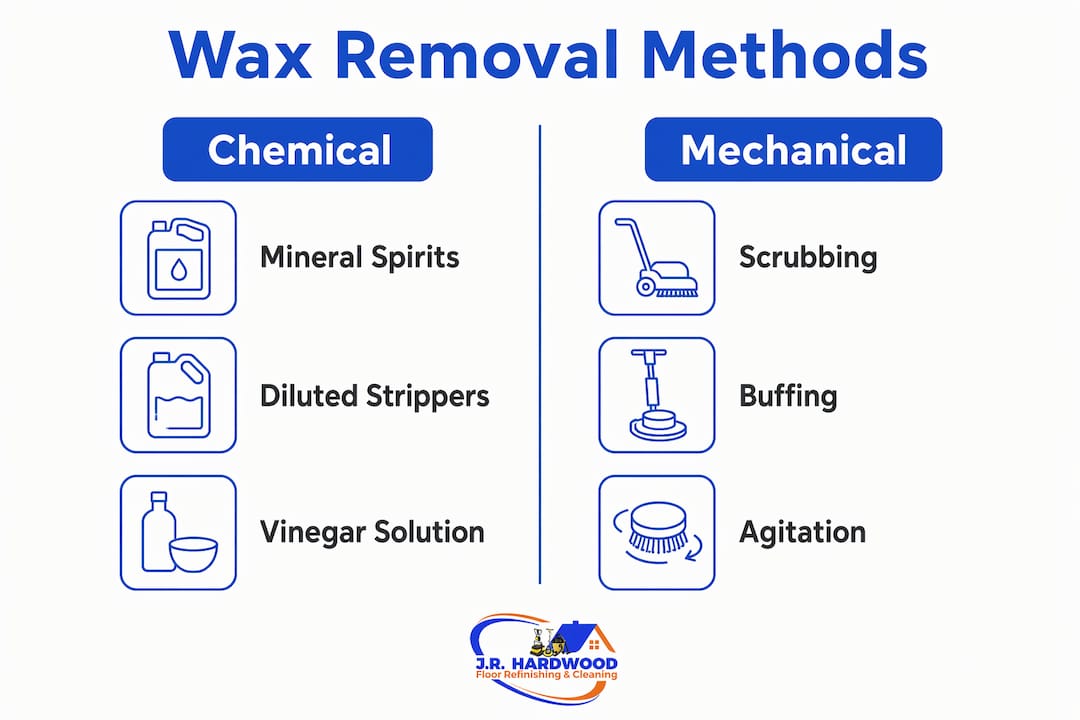
Not every floor responds to the same treatment. The right method depends on your floor type, the severity of the buildup, and the products available to you. Here’s how the most common approaches stack up:
| Method | Best for | Effectiveness | Key caution |
|---|---|---|---|
| Mineral spirits | Hardwood, waxed wood floors | High for heavy buildup | Requires ventilation and PPE |
| Diluted commercial stripper | Resilient tile, commercial floors | Very high with floor machine | Follow dilution ratios exactly |
| Vinegar and water solution | Light wax residue on resilient floors | Low to moderate | Not effective on heavy buildup |
| Enzyme-based cleaners | Vinyl, LVP, synthetic surfaces | Moderate | Choose product rated for floor type |
Mineral spirits dissolve old wax safely on hardwood but emit strong fumes, so users need to ventilate the space and wear chemical-resistant gloves and a respirator. This is the go-to solvent for wood floors with significant buildup, and it works because it breaks down the wax without damaging the wood grain underneath.
For resilient and commercial floors, diluted strippers like NCL’s EXPOSE™ are the professional standard. The process involves diluting the product, applying it to the floor, waiting about five minutes, then agitating with a floor machine fitted with a synthetic stripping pad before removing the residue with a mop or wet vacuum. This combination of chemistry and mechanical action lifts both the wax and the trapped soil inside it.
Vinegar solutions work for light residue on resilient surfaces but fall short on heavy buildup. They’re a reasonable first step for minor maintenance, not a substitute for proper stripping when layers have accumulated over months or years.
Pro Tip: Never use wax on laminate, luxury vinyl plank, or polyurethane-sealed hardwood floors. Wax on artificial surfaces creates a slippery, cloudy residue that is difficult to remove and can make the floor unsafe.
Steps for removing wax from hardwood floors safely
Hardwood floors deserve extra care during wax removal. The wood grain is sensitive to over-saturation, and the wrong technique can leave behind residue or damage the finish beneath the wax. Follow these steps for safe, thorough results:
-
Test in a hidden spot first. Apply a small amount of mineral spirits to an inconspicuous area and wait a few minutes. Check that the solvent does not discolor or damage the finish before proceeding to the full floor.
-
Gather your supplies. You’ll need mineral spirits, clean white cloths or fine steel wool (0000 grade), chemical-resistant gloves, safety glasses, and a respirator. Open windows and doors before you start.
-
Work in small sections. Apply mineral spirits sparingly to a cloth or fine steel wool. Work with the wood grain in small sections, using light pressure. Scrubbing across the grain can scratch the surface.
-
Wipe away dissolved wax immediately. As the solvent breaks down the wax, wipe it away with a clean cloth right away. Letting dissolved wax sit on the surface allows it to re-harden and leaves a residue that’s harder to remove.
-
Check your cloth for transfer. Keep going until a fresh cloth comes away clean with no dark wax residue. That’s your signal the section is done.
-
Repeat across the floor. Move systematically from one end of the room to the other, refreshing your cloth and solvent as needed. Rushing this step is the most common mistake we see.
-
Allow the floor to dry completely. Give the floor at least a few hours before applying any new finish, wax, or protective coating. Applying product to a damp surface causes adhesion problems and traps moisture in the wood.
This process takes patience, but the payoff is a clean, receptive surface that holds new finishes beautifully. If you’re planning to refinish hardwood floors afterward, thorough wax removal is what makes the new finish last.
Wax removal tips for vinyl, laminate, and commercial floors
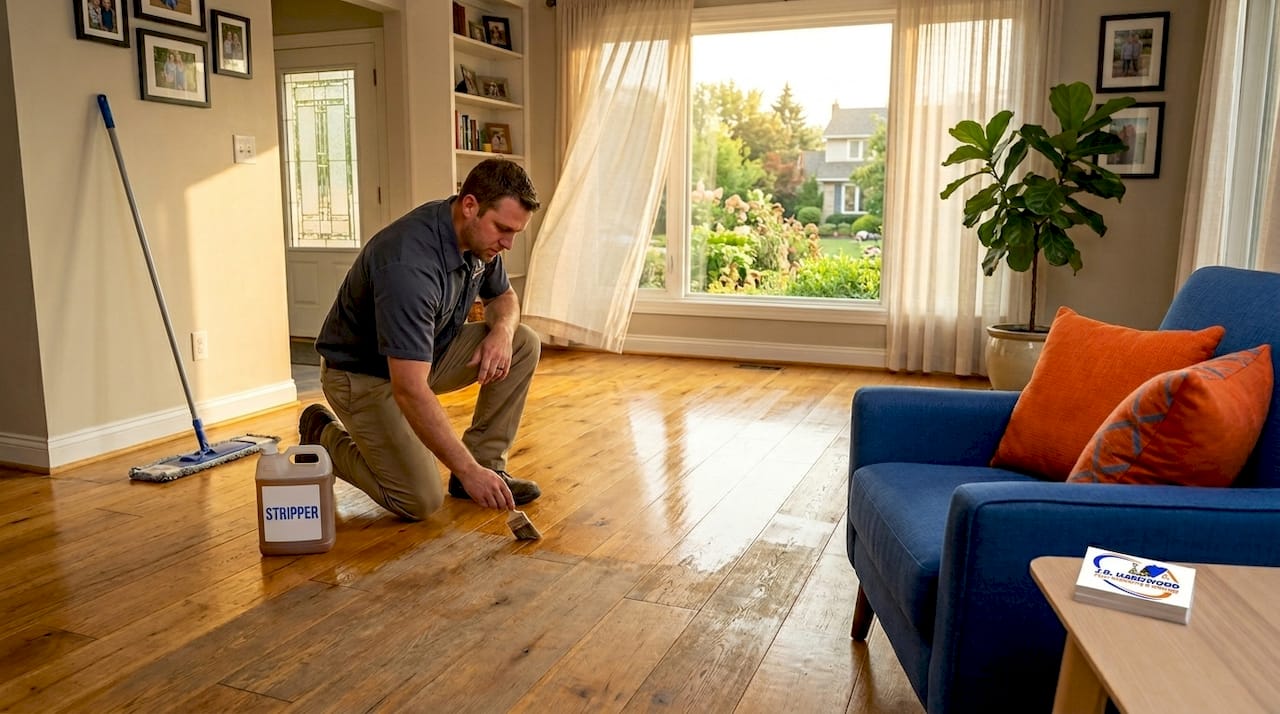
Non-wood floors have their own rules, and getting them wrong can cause permanent damage. Here’s what you need to know before tackling wax removal on vinyl, laminate, or commercial surfaces.
Laminate and luxury vinyl plank floors should never have wax applied to them in the first place. If wax has been used on these surfaces, the removal process requires a commercial-grade stripper rated specifically for synthetic floors, applied carefully to avoid saturating the seams. Excess moisture is the enemy of laminate. It seeps into the joints and causes swelling, warping, and delamination that no amount of refinishing can fix.
For vinyl tile and sheet vinyl in commercial settings, the professional approach combines a diluted floor stripper with mechanical agitation. Heavy wax buildup requires stronger strippers capable of emulsifying metal-interlocked finishes and old wax layers for effective removal. This is why commercial floor care professionals use rotary floor machines rather than mops alone. The mechanical action does the heavy lifting that chemistry alone cannot.
A few firm rules for non-wood floors:
- Avoid harsh abrasives. Steel wool and abrasive scrub pads scratch vinyl and laminate surfaces permanently.
- Never flood the floor with liquid. Use a damp application method, not a wet one, to protect seams and subfloor.
- Choose the right product. Enzyme-based cleaners work well for light buildup on synthetic surfaces. For heavy buildup, use a commercial stripper rated for the specific floor type.
- Call a professional for severe cases. If buildup has accumulated over years in a commercial space, a professional floor care service with the right equipment will save you time and prevent costly damage.
The benefits of wax removal on any floor type come down to one thing: a clean surface performs better, looks better, and lasts longer than one buried under layers of old product.
Key takeaways
Wax removal for floors, done correctly with the right solvent or stripper and proper technique, is the single most important step before any floor refinishing or recoating project.
| Point | Details |
|---|---|
| Define the process first | Floor wax removal strips old wax, trapped soil, and residue, not just surface dirt. |
| Match method to floor type | Use mineral spirits for hardwood and commercial strippers for resilient or vinyl floors. |
| Safety is non-negotiable | Ventilate the space and wear gloves and a respirator when using mineral spirits or chemical strippers. |
| Never wax the wrong floor | Laminate, LVP, and polyurethane-finished hardwood should never have wax applied to them. |
| Prep before refinishing | Thorough wax removal prevents adhesion failure and ensures new finishes bond and last. |
What I’ve learned after years of stripping floors the right way
Here’s something I see constantly: homeowners apply more wax to a dull floor thinking it will restore the shine. It does the opposite. That extra coat just adds another layer to an already-compromised surface, making the eventual stripping job harder and the floor worse in the meantime.
The insight that changed how I approach every job is this: mechanical agitation is just as important as the chemical stripper. You can apply the best product on the market, but if you’re just mopping it around, you’re leaving half the wax behind. A floor machine with the right synthetic pad physically breaks the bond between the wax and the floor. Chemistry loosens it. Mechanical action removes it. Both are required.
I also want to be direct about safety. Mineral spirits are effective, but they are not casual products. I’ve seen people use them in closed rooms without gloves and wonder why they feel lightheaded. Proper ventilation and PPE are not optional precautions. They’re the difference between a successful job and a trip to urgent care.
The other thing I’d tell any homeowner or property manager: regular maintenance prevents the need for heavy stripping. A light clean and buff on a schedule keeps buildup from reaching the point where you need aggressive solvents or a professional floor machine. Think of it like dental cleanings. Stay on top of it, and you avoid the painful, expensive procedure later.
— J.R.
Let Jrhardwoodfloorrefinishingandcleaning handle the hard part
If your floors have years of wax buildup, or if you’re not sure what finish is on them in the first place, professional help is the smart call. Jrhardwoodfloorrefinishingandcleaning serves homeowners and property managers across the Denver Metro Area, Parker, Castle Rock, Boulder, and Colorado Springs with expert wax removal, hardwood refinishing, and full floor restoration.
We use eco-friendly products and premium finishes to strip old wax safely and restore your floors to their best condition. Every project starts with a free over-the-phone quote based on your description and photos. No guesswork, no surprises. Whether you’re weighing DIY vs. professional refinishing or ready to schedule a full restoration, we’re here to help you make the right call for your floors and your budget.
FAQ
What is floor wax removal, exactly?
Floor wax removal, also called floor stripping, is the process of dissolving and lifting old wax layers, trapped dirt, and polish residue from a floor surface. It goes deeper than regular cleaning and prepares the floor for new finishes or protective coatings.
Is wax removal necessary before refinishing hardwood floors?
Yes. Thorough wax removal is a prerequisite to successful refinishing because wax residue prevents new finishes from bonding properly, leading to peeling, dullness, and adhesion failure.
What is the best product for removing wax from hardwood floors?
Mineral spirits are the most widely recommended solvent for hardwood floor wax removal. They dissolve old wax effectively without damaging the wood, but require ventilation and chemical-resistant gloves due to strong fumes.
Can I use vinegar to remove floor wax?
A diluted vinegar solution can address light wax residue on resilient floors, but it is not effective on heavy buildup. For significant accumulation, a commercial floor stripper with mechanical agitation is required.
Should I hire a professional for floor wax removal?
For heavy buildup, commercial spaces, or floors with an unknown finish type, professional floor care is the safer and more effective choice. Professionals use floor machines and commercial-grade strippers that remove years of buildup without damaging the surface beneath.