 Skip to content
TL;DR:
- Hiring local flooring specialists in Colorado ensures knowledge of regional licensing, climate adaptation, and timely, personalized service. They follow strict technical standards, manage moisture issues effectively, and support the community by reinvesting local dollars. Choosing local contractors reduces project risks and promotes long-term durability while maintaining accountability and community ties.
Choosing who installs or refinishes your floors feels straightforward until you realize how much can go wrong. Many Colorado homeowners assume any licensed contractor will do the job well, but why choose local floor specialists is a question worth answering carefully before signing anything. Local flooring experts bring something national chains and big-box stores genuinely cannot replicate: they know your climate, your municipality’s permit requirements, and your neighborhood. They show up when things go sideways. This article walks you through every real reason to go local, from licensing headaches to moisture management, so you can make a confident, informed decision.
Table of Contents
- Key takeaways
- Why choose local floor specialists: the licensing reality in Colorado
- Personalized service that actually feels personal
- How Colorado’s climate shapes every flooring decision
- Supporting your community with every flooring dollar
- Technical quality that protects your investment
- My honest take after years in Colorado floors
- Ready to see what local expertise looks like in action?
- FAQ
Key takeaways
| Point | Details |
|---|---|
| Local licensing knowledge | Colorado licensing varies by city and county, and local specialists navigate those rules correctly from day one. |
| Climate-matched materials | Local pros select flooring that handles Colorado’s dry altitude and humidity swings, preventing warping and mold. |
| Faster, personalized service | Local teams respond quicker, schedule more flexibly, and know your project by name, not by ticket number. |
| Community economic impact | Spending with local flooring contractors keeps dollars circulating in your Colorado neighborhood far longer. |
| Technical quality assurance | Local specialists meet substrate flatness and deflection standards that protect your floors for the long haul. |
Why choose local floor specialists: the licensing reality in Colorado
Here is something that surprises a lot of homeowners. Colorado has no statewide contractor license for general flooring work. Licensing and permit requirements shift dramatically depending on which city or county your property sits in. A contractor who pulls permits correctly in Denver may not understand what Aurora or Boulder requires for the exact same project.
In Boulder County specifically, contractors must hold a Boulder County Contractors License to perform construction or remodel work in unincorporated areas. The fee structure breaks down like this:
| License Class | Fee |
|---|---|
| Class A | $350 |
| Class B | $300 |
| Class C | $250 |
Plumbers and electricians are typically exempt, but flooring contractors are not. A local specialist who works regularly in Boulder County already knows this. An out-of-area contractor may not, and that gap can delay your project or create permit problems that cost you money to fix.
The risks stack up when you hire someone unfamiliar with your jurisdiction. Wrong permits, missed inspections, and improperly documented work can all create headaches when you sell your home. Local flooring experts understand which municipalities require permits for subfloor work, which ones require none for standalone tile, and exactly what documentation to submit before the first board goes down.
Here is what you should confirm before hiring any flooring contractor in Colorado:
- Verify they hold the appropriate license for your specific city or county
- Ask whether they pull permits for your project type and who handles that paperwork
- Confirm they have completed work in your municipality recently
- Request references from projects in your same area
Pro Tip: Ask your contractor to name the permit office they work with in your city. A local specialist will answer that question immediately. A non-local may hesitate or give a vague answer.
Personalized service that actually feels personal
One of the strongest benefits of local flooring services is something you feel before the first plank goes down: real communication. Local flooring experts answer the phone. They show up to walk your space in person. They give you recommendations tailored to your actual room, not a generic product pitch.
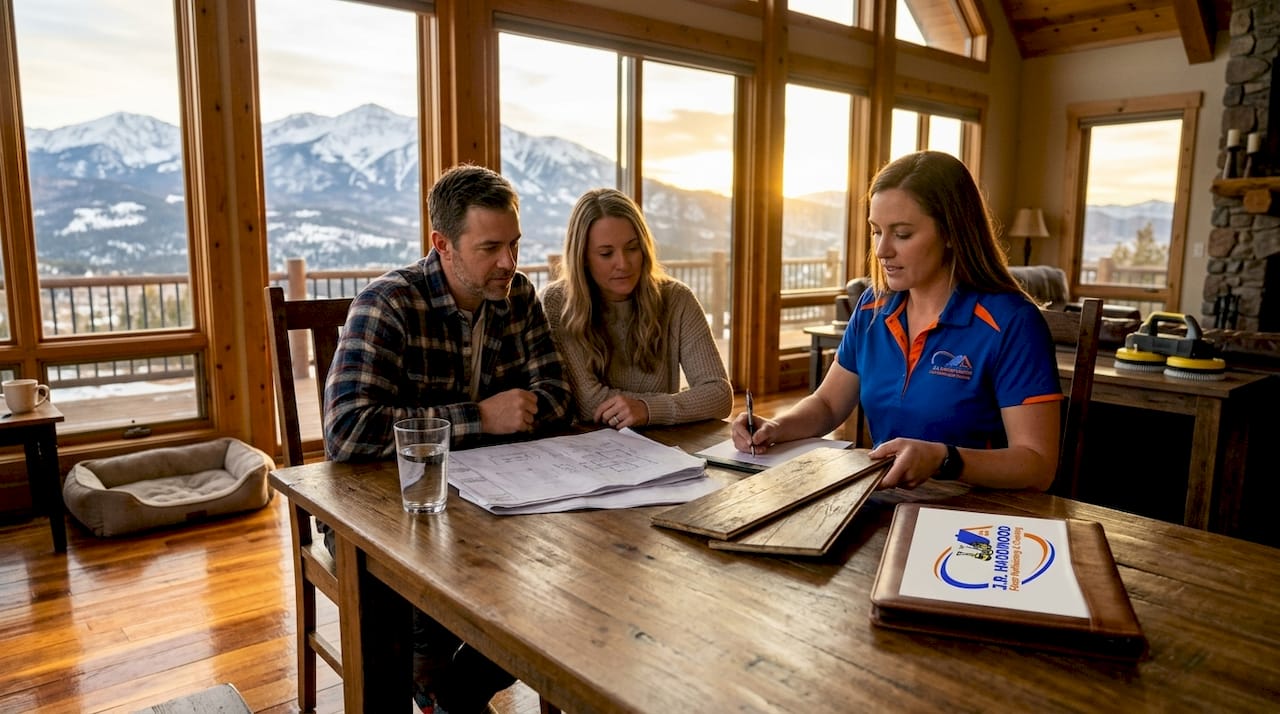
Local stores build deeper customer relationships with smaller, more focused teams, which means faster feedback and clearer answers when you have questions. That is not just a nice-to-have. On an active flooring project, a 24-hour delay in getting a question answered can push your timeline back by days.
Scheduling is another area where local flooring experts win consistently. Local installers can schedule sooner and offer evening and weekend appointments that larger providers rarely accommodate. If you run a business and need work done outside of operating hours, that flexibility is not optional. It is the difference between a smooth project and two weeks of disrupted operations.
After the job wraps up, local specialists stay available. They provide maintenance tips specific to your floor type, follow up on warranty questions, and offer reliable after-sales care that a remote provider simply cannot match. When a small scratch appears or a board starts to sound hollow six months later, your local contractor can be back onsite quickly. A national chain’s customer service line cannot do that.
Pro Tip: When getting quotes, pay attention to how fast the contractor responds and how clearly they explain their process. That communication style is exactly what you will get during and after the project.
How Colorado’s climate shapes every flooring decision
Colorado is not a forgiving environment for floors. The state’s high altitude, low average humidity, intense UV exposure, and dramatic seasonal temperature swings create conditions that can quietly destroy a floor installed without local knowledge. This is one of the most overlooked reasons to hire local floor guys: they treat climate as a design variable, not an afterthought.
Local environmental conditions directly affect adhesive choices, acclimation times, and moisture management for lasting floors. Hardwood brought in from a humid region needs time to acclimate to Colorado’s dry air before installation. Skip that step and the boards will shrink after installation, leaving gaps that look like defects and create structural vulnerabilities.
Here is a quick comparison of how flooring decisions differ based on climate awareness:
| Flooring Decision | Without Local Knowledge | With Local Expertise |
|---|---|---|
| Hardwood acclimation | Installed immediately | Acclimated 3 to 7 days minimum |
| Adhesive selection | Standard product | Low-VOC adhesive suited to dry conditions |
| Waterproofing | Skipped or minimal | Applied to subfloor before installation |
| Material recommendation | Generic catalog option | Species or product matched to your space |
Local specialists also understand how to select flooring matched to local humidity and subfloor conditions to prevent warping and mold. A basement in Denver has very different needs than a main floor in a Colorado Springs home with radiant heat. Getting that match right from the start is what separates a floor that lasts 20 years from one that causes problems in 18 months.
If you want to go deeper on this topic, check out Colorado-specific floor longevity practices that local experts recommend for both residential and commercial spaces.
Pro Tip: Ask any flooring contractor how they handle acclimation in Colorado. A local expert will walk you through their specific process without hesitation. That answer tells you a lot about their overall standards.
Supporting your community with every flooring dollar
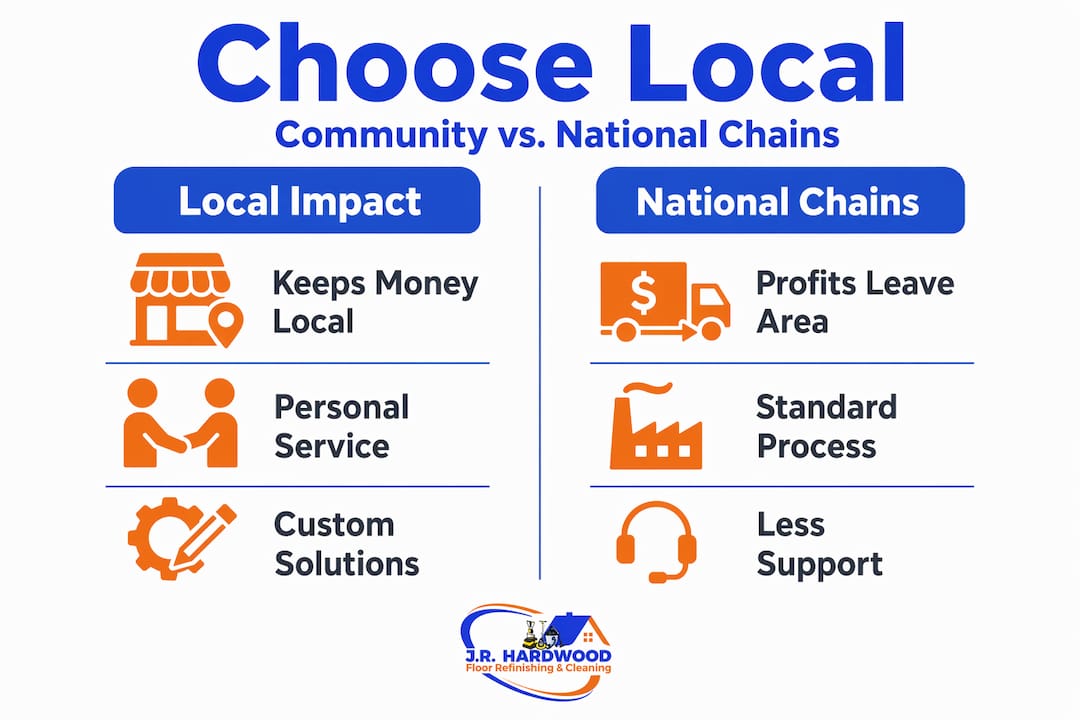
When you hire a local flooring contractor, you are not just getting a better floor. You are putting money back into the community you live in. Local spending creates a multiplier effect that benefits your neighborhood up to three times more than shopping at large national chains or big-box stores.
Here is what that actually looks like in practice:
- A local flooring company pays local wages to local installers who spend money at local businesses
- They purchase materials from regional suppliers, keeping that supply chain within Colorado
- Their tax dollars fund city infrastructure, parks, and services in your area
- Long-term relationships between local businesses create networks that raise quality standards across the industry
The contrast with big-box alternatives is stark. A national chain’s revenue flows out of your community almost immediately. The person installing your floor may be a subcontractor hired through a third party with no connection to your area. There is no relationship to build, no local reputation to protect, and no reason for them to go the extra mile on your project.
Local flooring businesses reinvest their earnings into the communities they serve, which means the neighborhoods of Denver, Boulder, Parker, and Castle Rock benefit directly when you choose a local contractor. That is worth thinking about when you are comparing quotes.
Technical quality that protects your investment
Great floors are not just about picking a beautiful product. The technical side of installation is where projects succeed or fail, and this is an area where local flooring specialists consistently outperform generalists or remote providers.
Here is a step-by-step look at what rigorous technical installation actually involves:
- Substrate evaluation. The subfloor must be flat, dry, and structurally sound before anything goes on top of it. Industry standards require a deflection limit of L/360, meaning the floor must not flex more than one three-hundred-sixtieth of its span under load. Failing this test before installation is far cheaper than fixing a cracked floor after.
- Moisture testing. Colorado’s dry climate can mask subfloor moisture problems that only show up after installation. Local specialists test before they install, not after.
- Proper waterproofing. For wet areas, showers require a minimum slope of 1/4 inch per foot and full mortar coverage to prevent water intrusion. Getting this right requires hands-on experience, not just reading a product guide.
- Code compliance and inspections. Local pros know which inspections apply to your project in your specific municipality, and they schedule them correctly to avoid rework.
- Follow-up and troubleshooting. Quick onsite problem-solving with local installers reduces downtime and catches minor issues before they become expensive repairs.
The importance of local floor specialists in this technical context is not abstract. These are the steps that determine whether your floor looks stunning for two decades or starts failing in two years. A solid installation checklist for durable Colorado floors covers these exact standards, and local specialists work from this kind of framework every day.
Pro Tip: Before any installation begins, ask your contractor to show you their moisture test results and confirm the subfloor meets flatness requirements. Professionals who do this routinely will have no problem showing you the data.
My honest take after years in Colorado floors
I have seen the full spectrum of what happens when homeowners skip the local question. A beautiful hardwood floor installed by someone who did not account for Colorado’s dry winters will gap and creak by February. A tile installation without proper moisture testing will show cracked grout within a year.
What I have learned is that local licensing and community presence are not just paperwork. They represent real accountability. A contractor who lives and works in your community has something to protect: their reputation with your neighbors. That is a very different motivation than a contractor who moves from job to job across multiple states.
Homeowners often underestimate how much the project planning phase matters. Most flooring failures I have seen trace back to decisions made before installation started. Wrong material choice, skipped acclimation, inadequate substrate prep. Local specialists catch those problems early because they have seen them before, in this climate, with these materials, in buildings just like yours.
My practical advice: meet your contractor in person before committing. Ask about their experience specifically in your city. Look at reviews from customers in your area. A solid local reputation is the most reliable indicator of a project that will go well.
— J.R.
Ready to see what local expertise looks like in action?
At Jrhardwoodfloorrefinishingandcleaning, we bring all of this to every project we take on across the Denver Metro Area, Parker, Castle Rock, Boulder, and Colorado Springs.
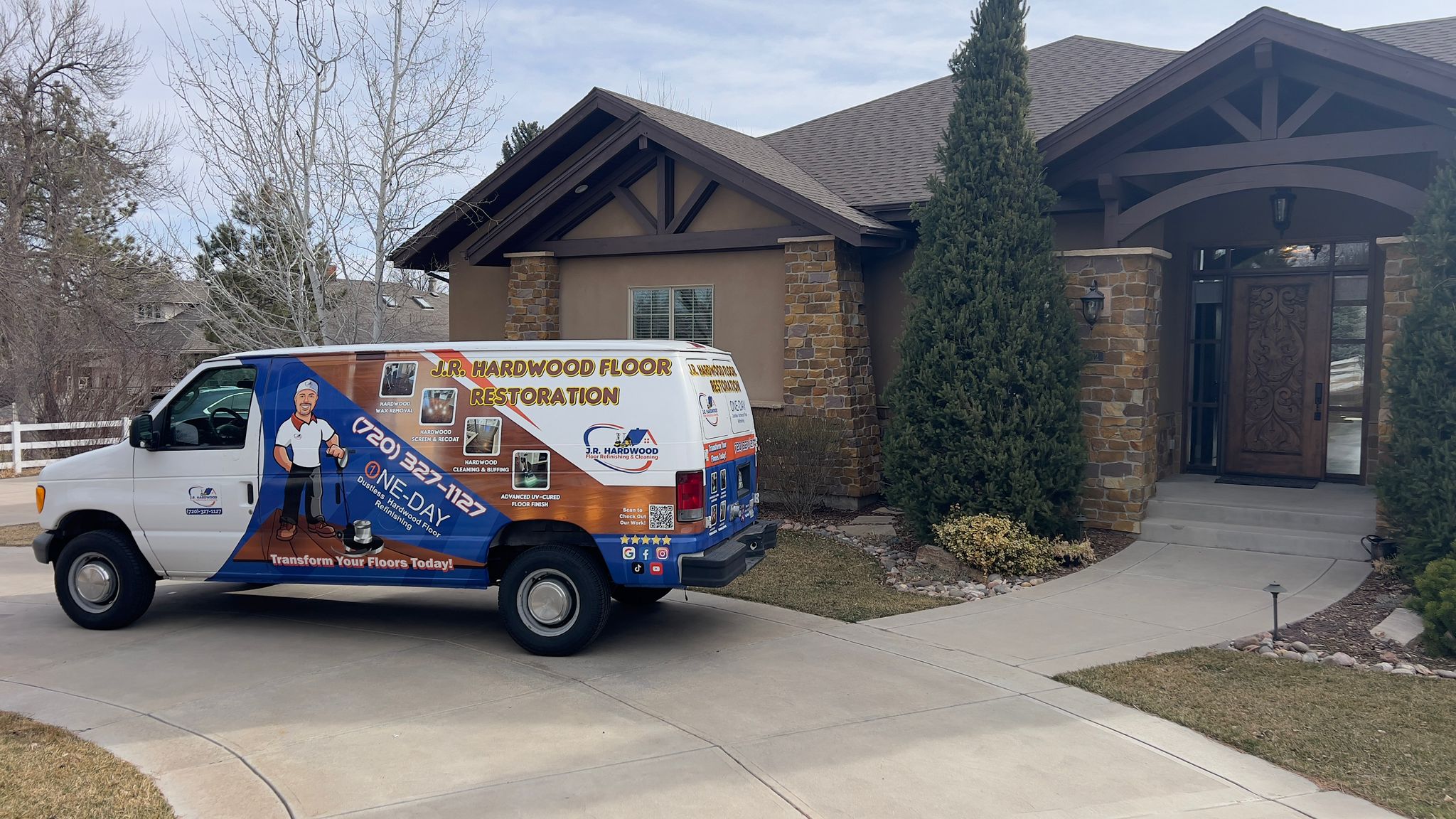
We handle hardwood refinishing, full sanding and restoration, LVP installation, laminate, screen and recoat, and our Instant UV-curable finishing, all with eco-friendly products and premium finishes matched to Colorado’s unique environment. Every customer gets a free over-the-phone quote based on verbal details and photos, clear scheduling with no runaround, and expert guidance from people who know Colorado floors. Our professional refinishing services and our complete guide to hardwood refinishing show you exactly what to expect. If you are considering LVP, our Denver LVP installation guide walks you through the whole process. Our 5-star reviews speak for themselves. Reach out today and let us show you what a local specialist actually feels like.
FAQ
Why does local flooring expertise matter in Colorado specifically?
Colorado’s altitude, low humidity, and seasonal temperature swings affect how floors are installed and how they perform. Local flooring specialists account for acclimation, moisture management, and material selection in ways that non-local contractors often miss.
Does Colorado require a license to install flooring?
Colorado has no statewide flooring contractor license, but licensing requirements vary by city and county. Boulder County, for example, requires a specific contractor license with fees based on license class.
How do local flooring contractors compare to big-box stores?
Local flooring contractors offer face-to-face consultations, faster scheduling, and after-sales support that big-box retailers cannot provide. They also build long-term relationships that make future maintenance and repairs much simpler.
What technical standards should local flooring installers meet?
Local specialists follow TCNA and ANSI standards, including a subfloor deflection limit of L/360 and proper moisture testing before installation. These standards protect your investment and prevent costly rework.
How does hiring local help my Colorado community?
Local spending creates a multiplier effect that benefits your community up to three times more than spending at national chains. Local contractors pay local wages, use regional suppliers, and reinvest in the neighborhoods they serve.