 Skip to content
TL;DR:
- Restoration maintains original wood and character through targeted repairs, preserving historic integrity. Refinishing involves sanding, staining, and sealing to renew the surface quickly and cost-effectively. Choosing between them depends on floor condition, age, and whether preservation or appearance is your priority.
If you’ve ever stood in a room with tired, worn hardwood and wondered whether you need a full restoration or just a refinishing, you’re not alone. The difference between restoration and refinishing is one of the most misunderstood topics in home care, and getting it wrong can cost you thousands of dollars or strip away decades of character from your floors. These two processes have very different goals, very different price tags, and very different outcomes. This guide breaks it all down so you can walk into any conversation with a contractor feeling confident and informed.
Table of Contents
- Key takeaways
- The difference between restoration and refinishing, defined
- What refinishing actually involves
- Restoration vs refinishing: a side-by-side comparison
- How to decide which method your floor actually needs
- Preservation laws, eco-friendly finishes, and property value
- My honest take after years on the job
- Ready to restore or refinish? We’re here to help
- FAQ
Key takeaways
| Point | Details |
|---|---|
| Restoration preserves, refinishing renews | Restoration maintains original materials and character; refinishing removes old coatings to apply fresh ones. |
| Cost drives most decisions | Refinishing runs $3 to $8 per square foot, while restoration costs vary based on repair complexity and scope. |
| Floor condition determines the method | Structurally sound floors benefit from refinishing; damaged, historic, or antique floors often require restoration. |
| Both extend floor life significantly | Most solid hardwood can be refinished multiple times, making either option far more cost-effective than replacement. |
| Eco-friendly products matter | Modern restoration and refinishing both benefit from low-VOC, sustainable finishes that protect people and floors alike. |
The difference between restoration and refinishing, defined
Think of restoration as giving your floors a careful, respectful rehabilitation rather than a makeover. Restoration focuses on preservation and maintaining historical integrity with as little alteration as possible. The goal is to keep the original wood, original patina, and original charm intact while repairing what time and wear have damaged.
In practice, what is restoration for hardwood floors? It often involves a combination of targeted repairs rather than sweeping surface treatments. Restoration methods can include:
- Repairing or stabilizing cracks and joints to stop further structural damage
- Conserving existing finishes and reattaching original parts to preserve authenticity
- Cleaning and treating the wood surface without stripping its character
- Replacing individual boards where damage is isolated, rather than sanding everything down
- Addressing subfloor issues that could cause squeaking, warping, or movement
Restoration is the right call when your floors have historical significance, when you’re dealing with antique wood that cannot be re-sanded without losing too much thickness, or when preservation rules require you to maintain the original look of a property. It takes more skill and craft than a standard refinishing job, and the furniture restoration process shares a similar philosophy: fix and protect what is already there rather than starting over.
Pro Tip: If you own a home built before 1940, always have a professional check how many sanding passes your floors can still handle before you choose any method. Older hardwood is often thinner than modern boards and has limited refinishing cycles left.
What refinishing actually involves
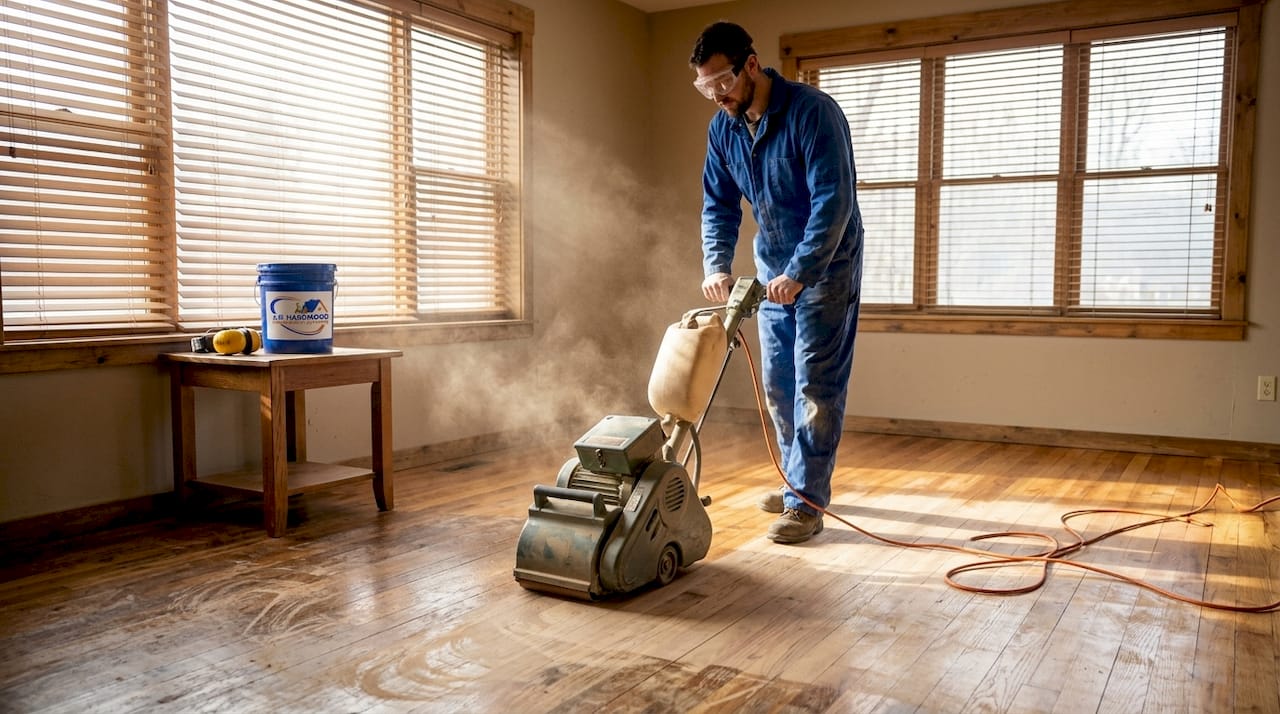
Refinishing is the floor care world’s equivalent of a spa day. It’s a deeper, more transformative process than a simple cleaning, but it’s not as extensive as full restoration. The focus here is on the surface. Sanding away the old finish, smoothing out scratches and surface wear, and then applying fresh stain and sealer gives your floors a brand-new look without replacing a single board.
Here is how a typical refinishing process works, step by step:
- Inspection and preparation. The floor is assessed for structural soundness. Furniture is moved, and the space is sealed to contain dust.
- Sanding. Multiple passes with progressively finer sandpaper remove the old finish layer completely, along with minor scratches and surface stains.
- Repair of minor damage. Small gaps, nail holes, and shallow scratches are filled during this stage.
- Staining (optional). If you want a new color or to refresh the existing tone, stain is applied at this point.
- Sealing. The floor is sealed with polyurethane, an oil finish, or a water-based finish to protect the fresh wood surface.
- Curing. The finish needs time to cure fully before the space is used again.
Full refinishing costs typically run $3 to $8 per square foot and take three to five days. It’s worth noting that refinishing is less expensive and quicker than most restoration work, but it does sacrifice the original patina. If your floors have beautiful, decades-old character that you love, refinishing will change that look permanently.
Pro Tip: Ask your contractor about a screen and recoat before committing to full refinishing. If your floor’s finish is just dull but not deeply scratched, a screen and recoat at $1 to $3 per square foot can refresh the look in a single day without sanding down to bare wood.
Restoration vs refinishing: a side-by-side comparison
Understanding the two methods separately is helpful, but seeing them side by side is where the decision usually becomes clear.
| Factor | Restoration | Refinishing |
|---|---|---|
| Primary goal | Preserve original character and materials | Renew surface appearance with new finish |
| Cost range | Higher, varies by repair scope | $3 to $8 per square foot |
| Project duration | Days to weeks depending on repairs | 3 to 5 days typically |
| Wood alteration | Minimal, preserves patina | Removes original coating and patina |
| Best for | Historic, antique, or damaged floors | Structurally sound floors with surface wear |
| Cosmetic change | Subtle, maintains original look | Dramatic, can include new stain and color |
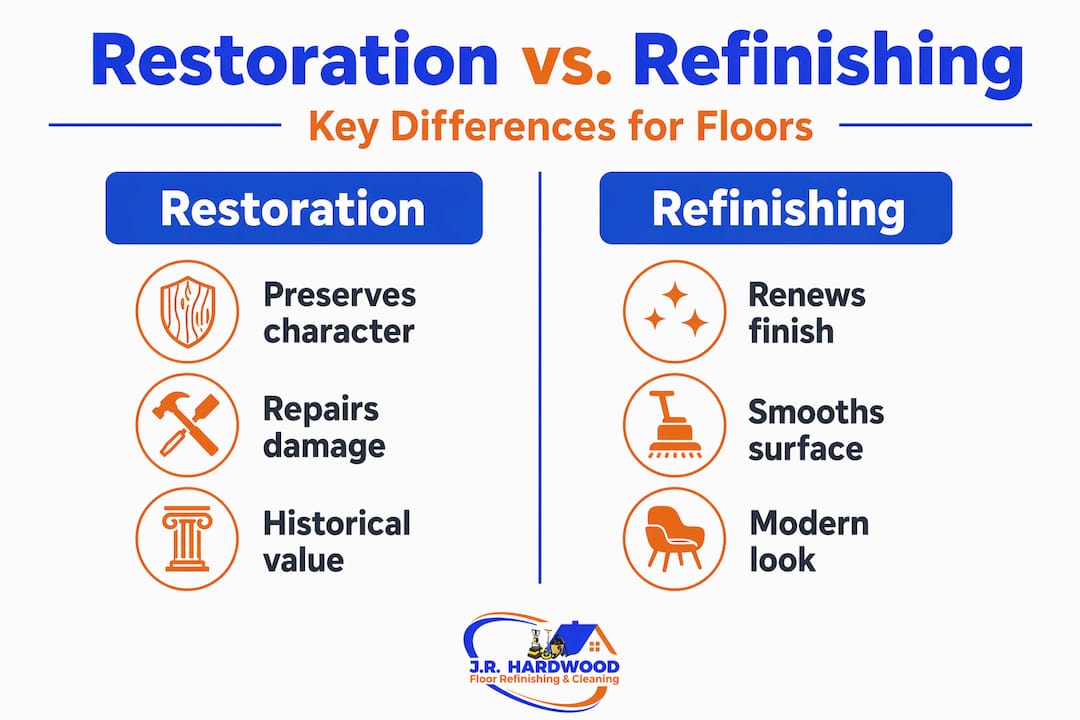
The difference in woodworking philosophy between these two approaches is significant. Restoration asks: “How do we protect what’s here?” Refinishing asks: “How do we make this look great again?” Both are valid questions. They just apply to different situations.
Here is a quick way to think about which approach fits your floors:
- Your floor has deep gouges, loose boards, or structural concerns? Restoration territory.
- Your floor is solid underfoot but looks dull, scratched, or discolored? Refinishing is likely your answer.
- You’re managing a rental property and need cost-effective results fast? Refinishing wins on speed and budget.
- You own a historic home or an antique piece with sentimental or market value? Restoration protects that value.
Refinishing hardwood costs 60 to 80 percent less than full replacement, which makes it a smart choice for property managers working within tight budgets. But if refinishing removes something irreplaceable, like the original finish on 100-year-old oak flooring, that savings may come with a cost that doesn’t show up on an invoice.
How to decide which method your floor actually needs
This is where the rubber meets the road. Knowing the definitions is great, but applying that knowledge to your own floors is what actually saves you money and headaches.
Signs that restoration is the right move:
- Boards are cracked, cupped, warped, or structurally compromised
- The floor has been previously refinished and may have limited wood thickness remaining
- You’re working with a historic property where original aesthetics are legally or personally protected
- Sections of flooring are loose or have significant gaps that go beyond surface-level filling
- Water damage has caused swelling or discoloration that cannot be sanded out
Signs that refinishing makes more sense:
- The floor is solid, flat, and structurally sound with no movement
- Surface scratches, dullness, and minor stains are the primary problems
- You want a color change or a completely updated look
- The floor has never been refinished, or it has been fewer than three to four times
After either method, maintenance matters. Solid hardwood floors can be sanded and refinished multiple times when cared for properly, which means the investment you make today extends the life of your floor for decades. After refinishing, use felt pads under furniture, avoid wet mopping, and apply a compatible floor cleaner regularly. After restoration, be especially gentle in the first few months while repaired areas settle and any new finish cures fully.
Restoration can sometimes feel like the more daunting choice, especially if the scope of repairs turns out to be larger than expected. That’s why getting a professional assessment before committing to either path is the smartest first step you can take. A DIY vs. professional approach comparison can also help you decide how much of the work you can realistically take on yourself.
Preservation laws, eco-friendly finishes, and property value
A few factors beyond the technical difference in woodworking often get overlooked, and they can be the deciding factors in certain situations.
Restoration is the preferred method for historic homes or buildings where preservation laws require maintaining original aesthetics. If you’re renovating a property listed on a historic register, refinishing may not be a legal option at all. Always check local landmark preservation guidelines before starting any floor work on a property with historical designation.
“Combining restoration and renovation can provide both historical preservation and modern functionality, depending on homeowner goals.” MWork.ca
On the eco side, eco-friendly products are now a meaningful factor in both restoration and refinishing decisions. Low-VOC water-based finishes have improved dramatically, and they cure faster, smell less, and are safer for families and pets. Whether you choose restoration or refinishing, asking for environmentally conscious products is a reasonable expectation of any reputable contractor.
From a real estate perspective, well-maintained original hardwood floors are a genuine selling point. Buyers notice them. Refinishing typically boosts appeal by making floors look fresh, while restoration maintains the period character that buyers of historic homes actively seek. In both cases, the return on investment is strong compared to replacement.
My honest take after years on the job
I’ve walked into hundreds of homes where a well-meaning homeowner had already refinished floors that should have been restored. They saved money on the front end and lost something they can never get back: the original finish, the grain color that came from decades of natural aging, the story the wood told just by existing. That’s a real loss, and it’s usually irreversible.
What I’ve learned is that most people don’t choose the wrong method out of ignorance. They choose it because no one explained the actual difference before they made the call. They heard “refinishing is cheaper” and stopped asking questions. The hidden cost of skipping restoration when it’s truly needed often shows up later, in structural problems, in floors that needed replacement sooner than expected, or in property value that didn’t hold up the way it should have.
My take on is restoration worth it? Almost always, when the floor genuinely calls for it. The craftsmanship required, the attention to the individual board, the preservation of something irreplaceable — that’s where real floor care expertise shows up. Sustainable, eco-friendly hardwood restoration also fits beautifully into how modern homeowners want to treat their homes: with care, longevity in mind, and a respect for what’s already there.
If you’re unsure which path your floor needs, get a professional opinion before you pick up a phone and schedule work. The assessment itself is invaluable, and a good contractor will tell you the truth even when the simpler answer is more profitable for them.
— J.R.
Ready to restore or refinish? We’re here to help
At Jrhardwoodfloorrefinishingandcleaning, we’ve helped homeowners, property managers, and real estate professionals across the Denver Metro Area get clarity on exactly this decision. Whether your floors need a full structural restoration or a fresh refinish to bring back their glow, our team assesses each floor individually and gives you honest guidance, not a sales pitch.
We offer free over-the-phone quotes based on your description and photos, so you can get a real answer before committing to anything. Our hardwood refinishing services cover everything from screen and recoat to full sanding and restoration, using eco-friendly products and premium finishes. We serve communities from Parker and Castle Rock to Boulder and Colorado Springs. If your floors are telling you something, we’re ready to listen and to help you figure out exactly what they need. Reach out today and let’s talk about your floors.
FAQ
What is the main difference between restoration and refinishing?
Restoration preserves original materials and historical integrity with minimal alteration, while refinishing removes original coatings to apply new ones, often changing the floor’s character and patina permanently.
When should I choose restoration over refinishing?
Choose restoration when floors have structural damage, are historically significant, or have been refinished so many times that limited wood thickness remains for additional sanding passes.
How much does refinishing cost compared to restoration?
Refinishing typically costs $3 to $8 per square foot, while restoration varies based on the extent of repairs needed. Both options are significantly less expensive than full floor replacement, which runs $8 to $25 per square foot.
Does refinishing affect property value?
Yes, refinishing freshens the appearance of floors and boosts buyer appeal, while restoration preserves period character that buyers of historic properties actively look for. Either method outperforms leaving worn floors untreated when it comes to resale value.
Can I do restoration or refinishing myself?
Minor refinishing tasks are within reach for experienced DIYers, but full sanding and restoration work typically requires professional equipment and expertise to avoid damaging the wood or producing uneven results.