 Skip to content
TL;DR:
- Regular scheduled hardwood floor maintenance in Colorado prolongs their lifespan by preventing damage and wear. Consistent care includes inspections, moisture control, and refinishing, which also enhances safety and aesthetics. Professional services offer added durability, customized care, and peace of mind through documented, expert processes.
Your hardwood floors get walked on every single day, yet most homeowners only think about maintenance when something looks wrong. That approach is exactly why so many floors age faster than they should. Understanding why schedule regular floor maintenance matters is not about cleaning more often. It is about being consistent, intentional, and proactive with planned care that protects your floor’s finish, structure, and safety before problems ever appear. This guide breaks down the real reasons to maintain flooring on a schedule and what that looks like for hardwood floors in Colorado homes.
Table of Contents
- Understanding regular floor maintenance and its benefits
- How regular maintenance extends hardwood floor lifespan and beauty
- How regular maintenance improves floor safety and reduces liability
- Scheduling maintenance: balancing routine care with deep cleaning and restoration
- Professional hardwood floor maintenance: elevating durability and aesthetics
- Why many homeowners underestimate scheduled floor maintenance — and what they’re missing
- How J.R. Hardwood makes scheduling floor maintenance easy and effective in Colorado
- Frequently asked questions
Understanding regular floor maintenance and its benefits
Most people think of floor maintenance as mopping when things look dirty. The truth is that proper floor care is a planned system, not a reaction. Regular maintenance means documented, consistent tasks performed on a predictable schedule whether that is daily dry mopping, weekly inspections, or annual refinishing cycles.
The importance of floor maintenance really shows up in what you prevent. When maintenance is planned and repeated, you catch small issues before they turn into costly repairs. A preventive maintenance program helps you avoid reactive “play catch-up” repairs later, because doing maintenance consistently rather than only after visible damage is what truly extends floor life and reduces the need for more aggressive work.
Here is what a well-rounded maintenance program actually covers:
- Routine inspections to catch finish wear, scratches, or moisture issues early
- Consistent cleaning methods that protect the finish rather than strip it
- Planned refinishing cycles based on traffic and wear patterns
- Moisture and humidity monitoring to protect the wood’s structure
- Traction and safety assessments to reduce slip and trip risks
Pro Tip: Keep a simple log of when you clean, what products you use, and any changes you notice in your floors. Even a basic note on your phone works. This documentation helps you and your floor care professional spot patterns that signal when deeper care is needed.
Now that we understand what regular maintenance truly involves, let’s explore how it directly extends the lifespan and beauty of hardwood floors.
How regular maintenance extends hardwood floor lifespan and beauty
Think of your floor finish like sunscreen. It creates a protective layer between the wood and everything that touches it. Once that layer wears down without being replenished, the damage goes straight to the wood itself. That is when things get expensive.
Here are the core practices that preserve hardwood floor life and keep your floors looking their best year after year:
- Control grit at entry points. Grit and dirt act like sandpaper on your finish. Entry areas are where floors take the biggest hit, which is why daily dry mopping and proper matting at doors are non-negotiable first steps.
- Use dry mopping over wet mopping. Excess moisture is one of the fastest ways to damage hardwood. When you do mop, use a nearly dry cloth and the right product for your finish type.
- Maintain indoor humidity between 35% and 55%. Colorado’s dry climate makes this especially important. Moisture imbalance is the biggest threat to hardwood floors, causing warping, cupping, and structural damage when left unchecked.
- Follow a regular sealing and refinishing cycle. Think of refinishing as giving your floors a full spa day. It refreshes the protective layer, fills in surface scratches, and brings the wood back to life.
- Follow hardwood maintenance best practices specific to your finish type. Oil-based finishes, water-based finishes, and hardwax oils all respond differently to cleaning products and methods.
“Grit control is central to wood floor care. Entry areas fight dirt and debris constantly, and daily dry mopping combined with proper matting prevents the sandpaper effect that silently destroys your finish.” — Cleaning & Maintenance Management
Pro Tip: Colorado’s altitude and low humidity mean your floors are under moisture stress even when you can’t see it. A simple digital hygrometer (a small humidity monitor) on your main floor lets you track conditions and adjust your humidifier or dehumidifier before damage starts.
Beyond protection from damage, regular floor maintenance significantly reduces safety risks for occupants.

How regular maintenance improves floor safety and reduces liability
Here is something most homeowners do not think about: your floors are a safety system. When a finish wears unevenly or residue builds up, traction drops. That creates real slip and trip hazards for your family and guests.
A preventive maintenance program directly addresses slip and trip risk by embedding safety checks into routine floor care, managing traction, residue, and drying time as standard steps rather than afterthoughts.
Structured safety-focused maintenance includes:
- Moisture control routines that prevent wet patches from lingering after cleaning
- Residue removal using products that do not leave behind slippery film
- Traction assessments during inspections to identify worn or slick zones
- Quick drying protocols so floors are safe to walk on shortly after cleaning
- Routine checks for lifted edges, warped boards, or loose seams that create trip hazards
“Safety should not be a separate initiative from floor care. When it’s built into your maintenance schedule, hazards get caught before incidents happen.” — Buildings.com
Checking your floor cleaning best practices regularly is one of the simplest ways to keep your home safe without adding extra work to your routine.
Having explored both protective and safety benefits, let’s compare common maintenance approaches and when to schedule deeper floor care.
Scheduling maintenance: balancing routine care with deep cleaning and restoration
One of the most common mistakes we see is either cleaning too aggressively too often or waiting so long that the floor needs a full restoration. Both extremes cost more in the long run. A smart maintenance schedule lives in the middle, and it adjusts based on your home’s specific conditions.
Here is a practical guide to building your schedule:
- Daily: Dry mop or dust mop high-traffic areas. This takes about five minutes and prevents grit buildup.
- Weekly: Lightly clean with a product suited to your finish. Check for any new scratches or moisture spots.
- Monthly: Inspect all floors for finish wear, especially near doors, kitchens, and hallways.
- Annually: Schedule a professional assessment. Depending on wear, this may lead to a screen and recoat or a light buff and clean.
- Every 3 to 7 years: Full refinishing when the protective layer is visibly worn through.
Deep cleaning and restorative work should be scheduled during slower periods or when floors show loss of protection. Waiting too long increases labor and cost, while doing it too often wastes resources and accelerates finish breakdown.
Understanding the difference between a regular clean and a deep clean also helps you make smarter decisions about timing.
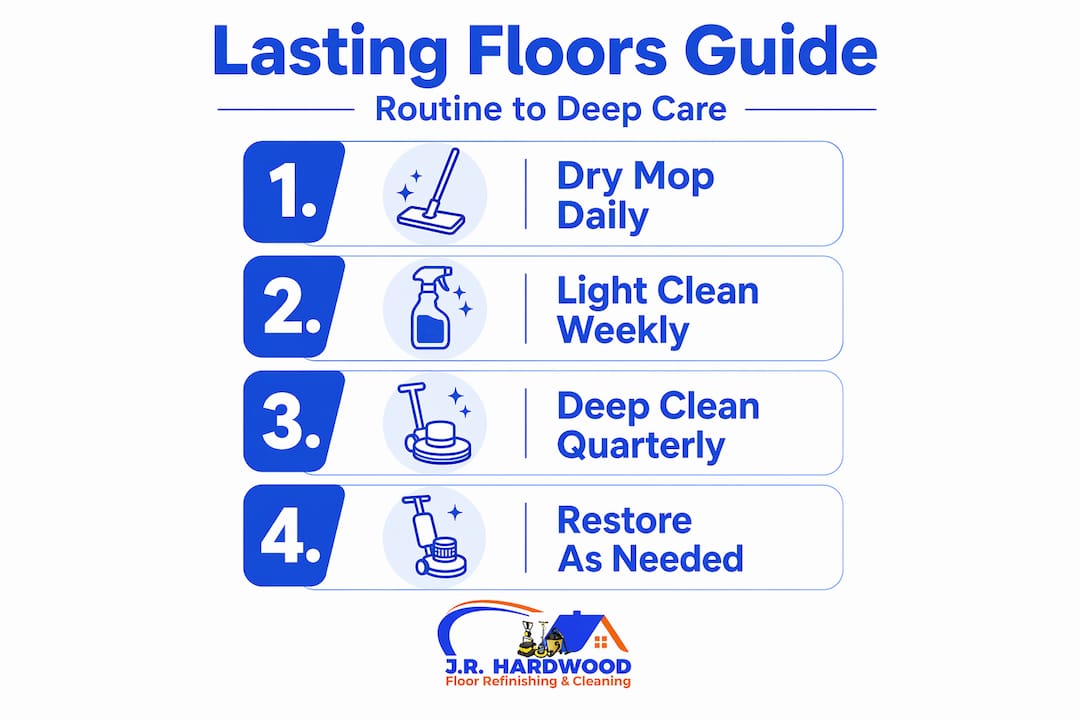
| Maintenance type | Frequency | Primary goal |
|---|---|---|
| Dry mopping | Daily | Remove grit and debris |
| Light wet cleaning | Weekly | Remove surface dirt and buildup |
| Professional inspection | Annually | Identify wear, moisture, and safety issues |
| Screen and recoat | Every 3 to 5 years | Refresh protective finish layer |
| Full sanding and refinishing | Every 5 to 10 years | Restore surface and extend floor life |
Use a hardwood floor maintenance guide to customize this schedule for your home, and check out a hardwood floor restoration guide when you are evaluating whether your floors need restorative work.
Understanding scheduling helps determine when to call professionals for expert hardwood floor care in your Colorado home.
Professional hardwood floor maintenance: elevating durability and aesthetics
DIY maintenance is valuable and necessary. But there is a ceiling to what home cleaning can achieve, especially when your floors have years of accumulated wear. Professional floor care is where the real transformation happens.
Professional floor care cuts hardwood wear by up to 60% through consistent application of expert methods and premium finishes. That is not a minor improvement. That is the difference between floors that last 20 years and floors that last 40.
Here is what professional maintenance brings to the table:
- Documented, repeatable processes that produce consistent results every visit
- Eco-friendly products that protect your indoor air quality and do not accelerate finish breakdown
- UV-curable finishes that cure in minutes rather than days, meaning less downtime in your home
- Expert refinishing that restores the surface at a structural level, not just cosmetically
- Tailored scheduling based on your floor’s species, finish type, age, and how you use the space
Comparing hardwood floor refinishing: DIY vs. professional service helps clarify where each approach makes sense. And if you are curious about advanced finishing options, learning about UV-curable hardwood floor finish can open up possibilities most homeowners have never heard of.
Pro Tip: When hiring a professional for floor maintenance, ask to see before and after photos and check whether they use documented maintenance processes. Consistency of method is what separates a one-time improvement from lasting results.
With professional options clarified, here is a unique perspective on why many homeowners overlook the value of scheduled maintenance.
Why many homeowners underestimate scheduled floor maintenance — and what they’re missing
We see this constantly: a homeowner calls us after years of DIY cleaning, convinced their floors are fine, only to find out the finish has been silently breaking down for two or three years. The floors look okay under normal lighting. But in natural light, the damage is obvious. And by that point, a simple screen and recoat is no longer enough.
The root cause is almost always the same: no documentation, no schedule, and no way to know when the last professional service happened. Inconsistent timing or technique can silently cause premature finish breakdown and safety risks. Repeatability and documentation are what reduce that variance and prevent expensive damage.
There is also a deeper misunderstanding about Colorado specifically. The combination of dry winters, temperature swings between seasons, and high-altitude UV exposure puts more stress on hardwood than most homeowners realize. Floors in Denver or Castle Rock age differently than floors in a climate-controlled coastal home. That means the importance of regular maintenance is higher here, not lower.
We also believe that scheduled maintenance is really about confidence. When you know your floors are on a care plan, you stop worrying about every scratch and start trusting that your home is protected. Your family walks on those floors every day. Your guests notice them when they walk in. Floors that are well cared for feel different. They look like they belong in a well-loved, intentional home.
The path to preventing hardwood floor damage is not complicated. It just requires commitment to a schedule and knowing when to bring in professionals before problems escalate.
How J.R. Hardwood makes scheduling floor maintenance easy and effective in Colorado
If you are ready to stop guessing and start protecting your hardwood floors with a real plan, we are here to make that process simple and stress-free.
At J.R. Hardwood Floor Refinishing & Cleaning, we serve homeowners across Denver, Parker, Castle Rock, Boulder, Colorado Springs, and the surrounding areas with professional floor care built around your home’s specific needs. We offer free over-the-phone quotes based on your floor’s condition and photos, so you know exactly what to expect before we show up. Our professional hardwood floor refinishing services use eco-friendly products, proven techniques, and clear scheduling so your maintenance plan actually gets done. Whether you need a full refinish, a screen and recoat, or a clean and buff, our hardwood floor refinishing guide and floor cleaning checklist for homeowners give you the knowledge to stay on track between professional visits. Let’s build a plan your floors will thank you for.
Frequently asked questions
How often should I schedule hardwood floor maintenance in my Colorado home?
Schedule routine maintenance frequency based on foot traffic and Colorado’s seasonal conditions, with daily dry mopping and professional deep cleaning or refinishing every one to three years depending on wear.
Can DIY cleaning replace professional floor maintenance?
DIY cleaning handles daily dirt well, but professional floor care cuts hardwood wear by up to 60% through expert refinishing, advanced finishes, and tailored care that home cleaning simply cannot replicate.
What safety risks does regular floor maintenance help prevent?
Regular maintenance controls residue buildup, moisture, and traction loss, all of which are the leading causes of slips, trips, and falls that a preventive maintenance program is specifically designed to manage.
How does moisture affect hardwood floors, and how can maintenance help?
Moisture causes warping and structural damage to hardwood; regular maintenance addresses this through humidity monitoring, prompt drying after cleaning, and scheduled professional inspections that catch moisture issues before they escalate.