 Skip to content
TL;DR:
- Pet odors often persist because urine penetrates deep into floors, requiring enzyme cleaners for full removal. Proper cleaning involves blotting, enzymatic treatment, and thorough drying to eliminate biological residues rather than just masking smells. When odors remain after multiple attempts, professional refinishing may be necessary to restore affected hardwood floors completely.
You walk into your living room, everything looks clean, and then it hits you. That unmistakable smell. No matter how many times you’ve mopped, vacuumed, or sprayed air freshener, that lingering pet odor seems to have taken up permanent residence in your floors. For Colorado pet owners who want a home that feels as fresh and welcoming as the mountain air outside, this is one of the most frustrating household challenges out there. The good news? With the right tools, the right steps, and a solid understanding of why odors stick around, you can genuinely eliminate them, not just cover them up.
Table of Contents
- What you need to eliminate pet odors: tools and essentials
- Step-by-step process: removing pet odors from your floors
- Troubleshooting and common mistakes: what to avoid
- Verifying success: how to know the odor is truly gone
- Our perspective: what most cleaning guides miss about pet odor removal
- When to consider expert help for restoring your floors
- Frequently asked questions
Key Takeaways
| Point | Details |
|---|---|
| Enzymatic cleaners work best | Breaking down urine compounds at the source is key for true odor removal. |
| Vinegar and baking soda help | These can deodorize and absorb odors but must be used correctly to avoid surface damage. |
| Proper steps prevent repeat issues | Following a proven process from blotting to enzyme treatment stops odors from coming back. |
| Test all products first | Always do a patch test to avoid damaging wood finishes or causing discoloration. |
| Know when to seek help | Persistent or deep odors might need professional restoration to fully resolve. |
What you need to eliminate pet odors: tools and essentials
With the issue clear, it’s time to start with the proper tools. Having the right supplies on hand before you begin makes every step easier and more effective.
The single most important product in your odor-fighting toolkit is an enzymatic cleaner. These cleaners contain beneficial bacteria that produce enzymes specifically designed to break down the biological compounds in pet urine. That includes proteins, uric acid, and other organic residues. As enzymatic cleaners break down urine odor compounds rather than just masking them, they work at a molecular level where regular cleaners can’t reach. Think of them as the difference between wiping off a stain versus actually dissolving it.
You’ll also want a few supporting supplies:
- White vinegar diluted in water (50/50 ratio): A mild, natural deodorizer for a light pre-treatment step, though it should be used with caution on finished hardwood. More on that in a moment.
- Baking soda: A solid odor-absorbing powder, best used as an overnight step after initial cleaning, especially on carpets.
- 3% hydrogen peroxide: Useful on soft surfaces and carpets for breaking down stubborn stains, but always patch-test before applying.
- Clean white cloths or paper towels: For blotting and absorbing fresh accidents without spreading the mess.
- Rubber gloves: Basic protection from both the pet waste and any cleaning solutions.
- A wet/dry vacuum or shop vac: Helpful for extracting moisture from carpets and deep-grain wood.
- An air purifier with a HEPA and activated carbon filter: Useful not just during cleanup but for ongoing odor prevention strategies so smells don’t quietly creep back into your living space.
Here’s a quick reference for the key supplies:
| Product | Best used on | Primary function |
|---|---|---|
| Enzymatic cleaner | All floor types, carpets | Breaks down odor-causing residues |
| White vinegar solution | Tile, carpet, sealed wood (with care) | Mild deodorizer, pre-treatment |
| Baking soda | Carpets, area rugs | Odor absorption after damp treatment |
| Hydrogen peroxide (3%) | Carpets, grout, some hardwood | Stain and odor lifting (test first) |
| Air purifier | Whole room | Removes airborne odor particles |
For hardwood floors specifically, be very careful about moisture. Excess water can seep into the wood grain and cause warping, swelling, or finish damage. We recommend checking out our guide on best hardwood floor cleaners for pet urine to find products that are tough on odors without being harsh on your floors.
Step-by-step process: removing pet odors from your floors
After gathering the proper tools, it’s time to follow the exact removal steps to ensure real odor elimination, not just masking.
-
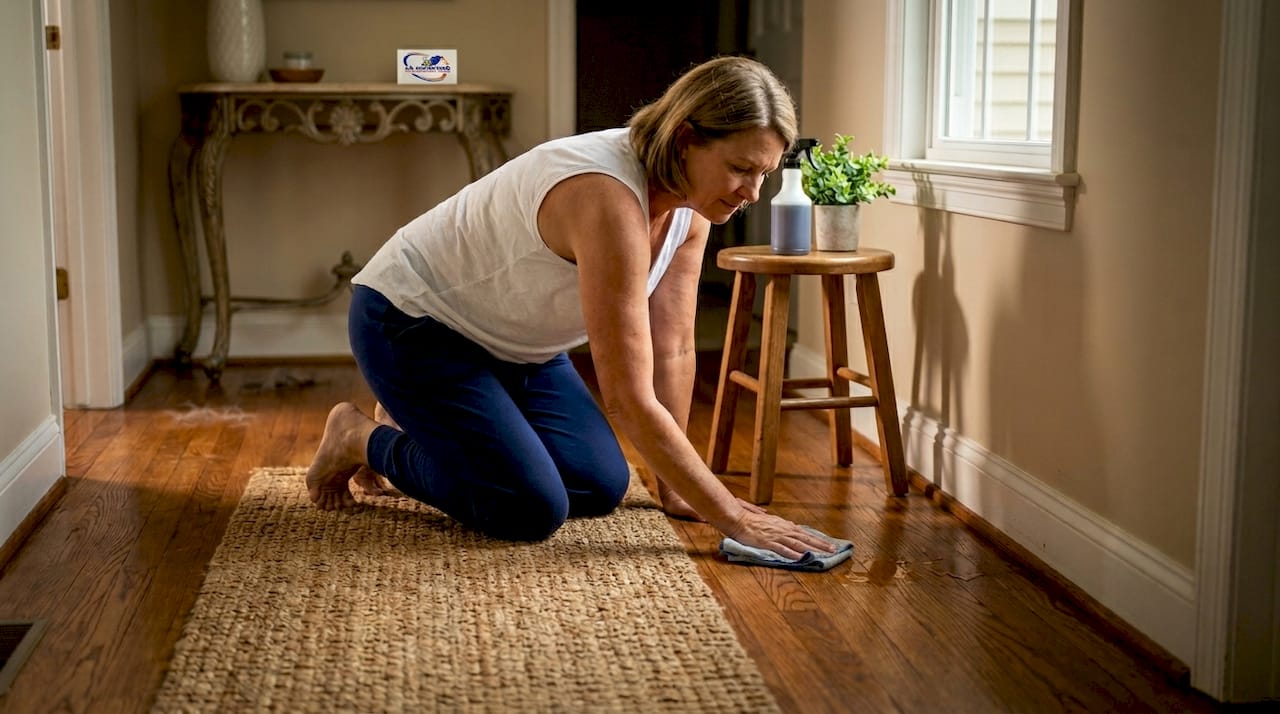
Blot the area immediately. If the accident is fresh, use clean white cloths or paper towels to blot as much liquid as possible. Press firmly and work from the outer edge inward to avoid spreading. Never rub, as that pushes the urine deeper into the material.
-
Apply a diluted vinegar solution as a pre-step (for carpets and tile). Mix equal parts white vinegar and water and lightly spray the affected area. Let it sit for two to three minutes. This vinegar and water step is a mild deodorizing measure that can be useful before enzyme treatment, but skip it on finished hardwood unless you’re certain your finish can handle mild acid.
-
Apply your enzymatic cleaner. This is the most important step. Saturate the area thoroughly, making sure the cleaner reaches the same depth as the urine did. That means being generous. For carpets, the urine often soaks down to the padding, so apply enough product to truly penetrate. Let the enzymatic cleaner sit for the full time listed on the product label, usually 10 to 15 minutes minimum, sometimes longer for stubborn spots.
-
Blot again and let the area dry. Use clean cloths to blot up excess cleaner. Then let the area air dry completely. For carpets, you can place a fan nearby to speed up drying and prevent mold.
-
Apply baking soda for overnight absorption (carpets and rugs). Once the area is slightly damp but not soaking, sprinkle a generous layer of baking soda over the treated spot. Let it sit overnight. The baking soda draws out any remaining moisture and odor compounds, acting like a sponge for smells.
-
Vacuum thoroughly the next day. Remove all baking soda completely. For carpets, go over the spot multiple times in different directions.
-
For carpets, consider a hydrogen peroxide spot treatment. If discoloration or a faint odor remains, a hydrogen peroxide spot approach can reduce foul odors when tested on a small area first and used as directed. Always check a hidden corner before applying to a visible spot, as it can lighten some carpet colors.
“The goal isn’t just to make the smell disappear temporarily. The goal is to remove the biological material causing it. If that material is still in your floor, the odor will come back, especially on warm or humid days.”
Pro Tip: Colorado homes experience significant humidity swings between seasons. Dry winters can temporarily mask odors, and humid summer days can suddenly bring them back strong. If you notice smells returning in warmer weather, the residue likely wasn’t fully removed during your initial cleaning.
You can also find more targeted help in our article on removing pet stains from hardwood floors or check out our hardwood cleaning tips for pet-friendly homes for ongoing maintenance advice.
Troubleshooting and common mistakes: what to avoid
While good steps make a difference, knowing what to avoid is just as crucial to prevent repeat problems or floor damage.
Here are the most common mistakes pet owners make when tackling floor odors:
- Using only soap and water. Plain soap doesn’t break down uric acid crystals or proteins left behind by pet urine. You’re essentially cleaning the surface while leaving the odor-causing biology untouched below.
- Not blotting quickly enough. Every minute that fresh urine sits on your floor gives it more time to soak deeper. On hardwood, it can seep between the boards and penetrate the subfloor.
- Skipping the enzymatic cleaner step. This is the step that actually eliminates the odor at the source. Without it, you’re just managing surface appearances.
- Scrubbing vigorously on hardwood. Scrubbing scratches the finish and can push moisture deeper into the wood grain. Always blot, never scrub.
- Using undiluted vinegar on finished hardwood. Even diluted, vinegar and water should be used cautiously with floor compatibility in mind. Vinegar is acidic and can dull or degrade polyurethane and other common wood floor finishes over time.
- Leaving baking soda on too long or not vacuuming it up completely. Baking soda is effective as a short-term absorbent, but once it has sat and been treated, it needs to be vacuumed thoroughly. Residue left behind can become a sticky paste when it contacts moisture again.
- Using scented masking products instead of actual cleaners. Sprays that smell like lavender or citrus just layer fragrance on top of the odor. The source is still there waiting.
Pro Tip: Before applying any new cleaning product to your floors, always test it in an inconspicuous spot first, like inside a closet or behind a piece of furniture. Give it 10 minutes and check for discoloration, dulling, or any surface reaction. This 30-second habit can save you from a costly mistake.
Keeping your home odor-free long-term also involves smart daily habits. Visit our article on floor care tips for pet owners for a practical guide, and consider pairing it with preventing recurring indoor odors strategies for whole-home freshness.
Verifying success: how to know the odor is truly gone
Once you’ve completed your cleaning routine, it’s important to confirm your hard work has truly solved the problem.
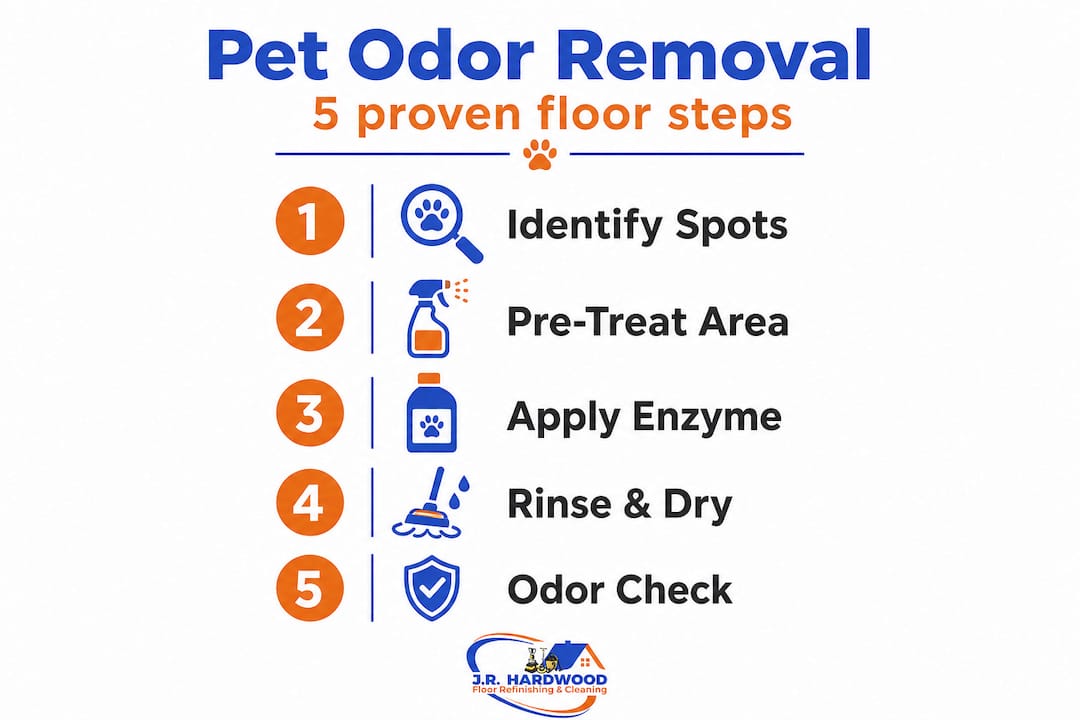
The biggest challenge with pet odors is that they can seem gone one day and come back the next. That’s because urine odor can persist when biologically active residues like proteins and uric acid components remain after standard cleaning. Those residues reactivate when they encounter warmth or humidity, releasing the odor all over again.
Here’s how to verify you’ve actually won the battle:
- Do the sniff test at different times of day. Odors are strongest when floors warm up in the afternoon. If the smell is gone at noon but returns in the evening, residue remains.
- Test during different humidity levels. After a rain or on a muggy day, walk through your home with fresh air in your nose. If you catch even a faint whiff, plan for a second round of enzyme treatment.
- Get someone else to do the check. You’ve been living with your pets and may be “nose-blind” to the smell. A friend or neighbor walking in fresh will notice what you might miss.
- Check under rugs and along baseboards. Urine spreads and wicks along flooring edges. These hidden areas often hold odors long after the central spot is treated.
| Situation | Recommended action |
|---|---|
| Odor is fully gone after one treatment | Maintain with regular floor protection methods |
| Faint odor remains after two treatments | Repeat enzyme treatment, increase saturation |
| Strong odor persists despite multiple attempts | Consult a professional for deep cleaning or refinishing |
| Visible staining or floor discoloration | Evaluate the benefits of professional floor cleaning |
| Odor comes from under floorboards | Professional assessment needed for subfloor damage |
Our perspective: what most cleaning guides miss about pet odor removal
Most guides give you the product list and the steps. What they skip is the real reason so many pet owners stay frustrated even after doing everything right.
Here’s the honest truth we’ve learned from working on floors across Colorado: the odor almost always comes back because the cleaning never went deep enough. Pet urine doesn’t stay on the surface. It wicks down through carpet fibers, through the padding underneath, into the subfloor. On hardwood, it sneaks between boards and soaks into the raw wood below the finish layer. Once it’s there, no surface-level product can fully reach it.
We’ve seen homeowners spend months cycling through spray after spray, following every tip they find online, only to have the smell return every warm afternoon. The product isn’t the problem. The depth of penetration is. Some situations call for real-world floor stain removal tips and professional tools that can extract contamination from levels that consumer products simply can’t reach.
The other thing most guides gloss over is the cost of waiting. Every day that urine sits in wood, the staining gets darker and the odor sinks deeper. What might have been a straightforward clean-and-treat job becomes a full sanding and refinishing project. We’ve talked to many homeowners who wish they had acted faster or called sooner, because catching the problem early is always less expensive than fixing the damage that accumulates over weeks and months.
Our honest take? DIY methods work really well for fresh accidents and light odors. But if you’ve been fighting the same spot for more than two or three treatments without lasting results, the residue has almost certainly penetrated deeper than a spray bottle can address. That’s not a failure on your part. That’s just the physics of porous materials.
When to consider expert help for restoring your floors
If your pet odor issues persist despite your best efforts, here’s when professional restoration makes sense and how to take action.
Sometimes the floor itself needs more than a cleaning. It needs a fresh start. When urine has penetrated into the wood fibers themselves, refinishing is the most effective path forward because it removes the damaged surface layer entirely and seals the wood against future absorption. Think of it like hitting the reset button for your floors.
At J.R. Hardwood Floor Refinishing & Cleaning, we serve homeowners across the Denver Metro Area, from Parker and Castle Rock to Boulder and Colorado Springs. Whether you need a deep clean, a screen and recoat, or a full sanding restoration, we bring the same care and precision to every project. We also offer free over-the-phone quotes so you know what to expect before we ever set foot in your home. If you’re weighing the options, our guide to refinishing your hardwood floors lays out the DIY versus professional decision clearly, and our guide to hardwood floor refinishing walks you through exactly what the process looks like from start to finish.
Frequently asked questions
Can regular mopping remove pet odors from hardwood floors?
No, regular mopping only removes surface soiling. Enzymatic cleaners are needed to break down the biological residues that cause persistent odors, which standard mops and detergents leave behind.
Will vinegar and water fully eliminate pet urine smells?
Vinegar and water help mildly deodorize and work as a short pre-treatment step, but for lasting results, they should be followed by enzymes to address the underlying odor-causing residues.
Is baking soda safe on all types of floors?
Baking soda is generally safe when used carefully. On carpets, vacuum it thoroughly after it has absorbed moisture and odor. On hardwood, use sparingly and clean up completely to avoid residue buildup.
When should I call a professional for pet odor removal?
If odors persist after thorough cleaning or the staining has visibly penetrated into the wood itself, a professional floor restoration service can address damage that consumer products can’t reach.
Can pet odors return after cleaning?
Yes, if odor-causing residues aren’t fully eliminated, smells will return, especially in warm or humid conditions. Using enzyme-based solutions that digest the biological compounds rather than masking them is the most reliable way to prevent odors from coming back.