 Skip to content
Standing in front of freshly sanded hardwood is exciting right up until someone asks, “What stain color do you want?”
That’s the moment most homeowners realize how permanent this choice feels. The stain will shape how the room reads, how dust and scratches show, how your cabinets and walls relate to the floor, and how the whole home feels when the light changes. In Denver hardwood floor refinishing, that decision matters even more because sunlight, altitude, pets, and dry indoor air all influence how a floor looks and performs over time.
If you’re trying to figure out how to choose hardwood floor stain color, don’t start with a tiny store sample and a guess. Start with your house, your wood, your lighting, and the finish system that will protect the color after it goes down. If you want a broader primer on flooring selection before narrowing into stain, this guide on how to choose hardwood flooring is a useful companion resource.
Your Guide to Choosing the Perfect Hardwood Stain in Denver
The biggest mistake I see is homeowners treating stain like paint. It isn’t. Paint sits on top. Stain interacts with grain, porosity, undertone, sheen, and light. The exact same color can look calm and balanced in one Denver home, then muddy or harsh in another.
A good stain choice usually comes from five decisions made in the right order:
Read the room first
Look at natural light, window direction, wall color, ceiling height, and nearby fixed finishes.Identify the wood species
Red oak, white oak, maple, hickory, and pine all take color differently.Decide on the mood
Lighter floors feel more open. Medium browns feel grounded. Dark colors create contrast and drama.Test on the actual floor
Such testing leads to confident decisions.Choose the right protection
The finish matters just as much as the stain, especially if you want durability and a faster return to normal life with a UV-Cure System.
Practical rule: If the stain looks good only on a brochure or a small sample stick, it’s not chosen yet.
In neighborhoods from Wash Park to Highlands Ranch, homes vary widely. A 1920s bungalow, a Cherry Creek condo, and a newer Parker build don’t need the same color strategy. That’s why smart Denver hardwood floor refinishing starts with real conditions inside your home, not trend photos alone.
If you’re comparing project types, service options, or whether your floor needs sanding, recoat, or installation, it helps to review a full hardwood floor service overview before choosing a stain path.
Assess Your Home's Unique Environment and Lighting
You pick a stain in the store, love it on the sample board, then get it onto your floor and it reads completely different by dinner. I see that in Denver homes all the time. Our sun is stronger, our air is drier, and those two factors change how a floor looks and how well that color holds up.

Watch the room from morning to night
Start in the actual room, not with a stain chart. A floor color has to work at 8 a.m., 2 p.m., and after sunset with the lamps on.
East-facing rooms usually look brightest in the morning. South-facing rooms get the most sustained sun, which can wash some stains out and push others warmer. North-facing rooms flatten color and can make grays feel colder than expected. West-facing rooms often look neutral earlier in the day, then pick up a warmer cast in late afternoon.
Check these conditions before you choose:
Direct sun
Bright sun sharpens contrast and exposes undertones fast. If a stain has a green, pink, or gray cast, direct light will show it.Low-light zones
Hallways, corners, and areas under overhangs read darker than the center of the room. A color that looks balanced in the open can feel heavy in those spots.Evening lighting
LEDs, pendants, under-cabinet lights, and lamps all shift floor color. Warm bulbs can make brown stains look richer. Cooler bulbs can make the same floor read flat or slightly ashy.
If you’re improving daylight before refinishing, these expert tips to brighten your home can help you decide whether the floor should lighten the room or provide contrast.
Denver light changes the stain choice
National advice often misses what happens at altitude. Denver’s stronger sun is hard on floor color, especially near large south- and west-facing windows. I’m more careful with pale cool tones here than I would be in a lower-UV market, because they can lose their intended look faster and show uneven sun exposure sooner.
That does not mean you have to avoid lighter stains. It means you should choose them with clear eyes. In a sunny Sloan’s Lake remodel or an open Castle Rock great room, a slightly warm neutral often stays more believable over time than a cooler gray that depends on controlled lighting to look right. If you want examples of warmer and cooler options that work well on oak, this guide to stain colors for oak floors is a good reference point.
Denver’s dry climate matters too. Wood moves more here than many homeowners expect. Seasonal gaps, board shrinkage, and a very dry winter can make extremely dark stain colors less forgiving because they highlight dust, edge lines, and minor variation between boards.
Size, ceiling height, and daily use matter
Stain affects how the room feels, but it also affects how the room lives.
- Light stains make compact rooms feel more open and usually hide dust better in active households.
- Medium stains give the best balance for many Denver homes. They show the grain, work across changing light conditions, and are easier to live with day to day.
- Dark stains add contrast and formality, but they narrow the room visually and show pet hair, dust, and scratches faster.
Ceiling height changes the result. Low ceilings plus limited daylight can make a dark floor feel heavy. Tall ceilings, larger windows, and stronger trim details can support a deeper stain without making the room feel compressed.
For busy homes, color and finish should be discussed together. A household with dogs, kids, or constant traffic may love the look of a darker floor, then hate the maintenance. In those cases, I often steer homeowners toward a more forgiving stain color and pair it with a finish system that stands up better to wear, especially modern UV-curable options for families who need durability and a fast return to the space.
Decode Your Wood Species and Its Natural Undertones
The stain sample you love on one floor can look wrong on yours for one simple reason. Wood species sets the baseline. It affects how stain absorbs, how strongly the grain shows, and which natural undertones stay visible after the finish goes on.
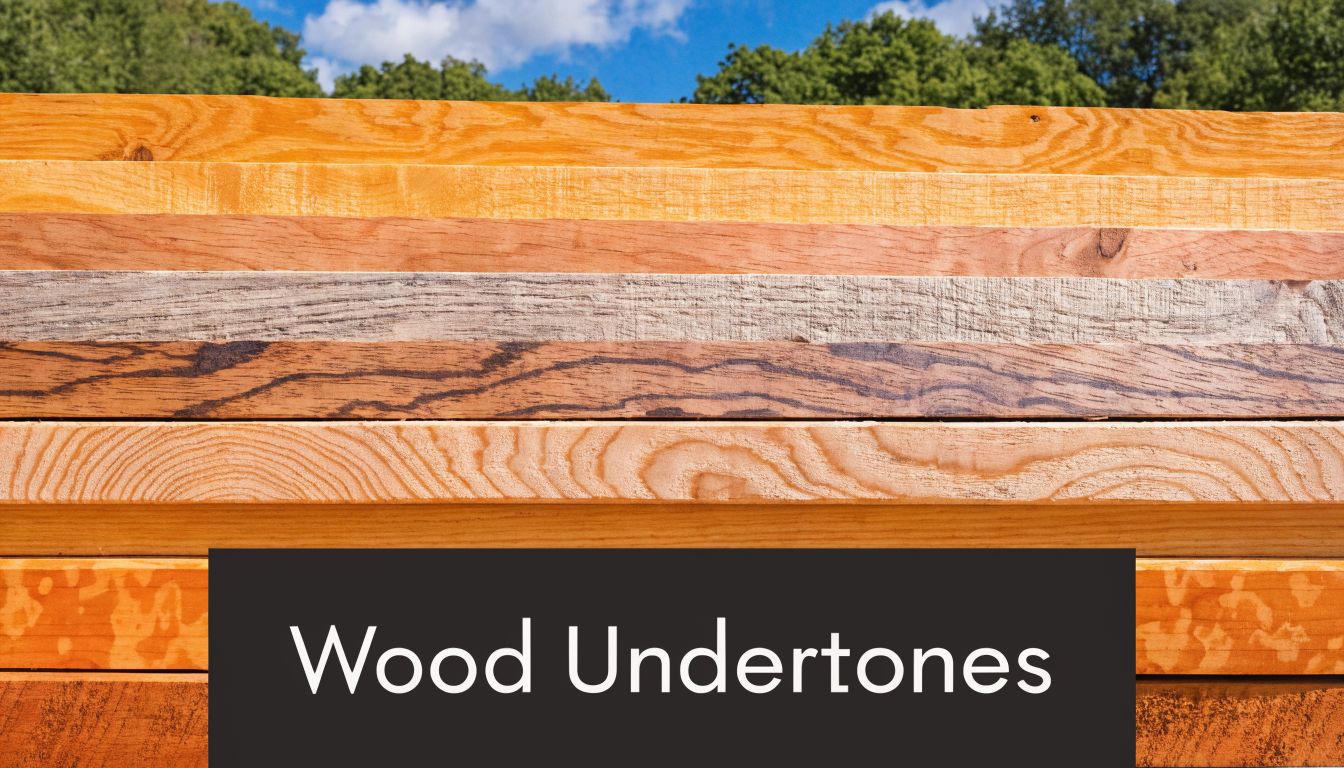
In Denver, that matters even more. Our dry air exposes species differences fast. Woods that already take stain unevenly tend to show it more clearly once seasonal movement, strong sun, and day-to-day wear enter the picture.
Why red oak gives homeowners more flexibility
Red oak is one of the more forgiving floors to stain. It has open grain, it accepts color predictably, and it usually gives clear separation between the base wood and the stain tone. That makes it easier to test everything from lighter browns to deeper, richer colors without the floor turning flat or muddy.
That is one reason so many older Denver homes with red oak can be updated successfully. I can usually show a homeowner several believable directions on red oak. On maple, pine, or a mixed patch floor, the range is narrower and the prep work matters more.
Professional stain lines offer a wide range of colors, but the species still decides how those colors read once they hit the floor. If your home has oak and you want examples specific to that species, this guide to stains for oak floors helps narrow the field before sample testing.
Undertones decide whether a color works or fights the floor
Every wood has a built-in color cast. Stain does not cover that up completely. It blends with it.
That is why two “medium brown” samples can dry into very different results on two different floors.
Here is the practical breakdown I give homeowners:
Red oak
Usually carries pink, salmon, or red warmth. Warm browns often look natural on it. Some cool gray stains can pull dirty or overly pink if the formula is not matched carefully.White oak
More muted than red oak, often with beige, tan, yellow, or slight olive influence. It handles contemporary natural tones well, but the final color can still swing warm or earthy depending on the cut of the boards and what old finish was on the floor.Maple
Tight-grained and harder to stain evenly. It can blotch, especially with lighter or mid-tone colors. On maple, homeowners usually get better results from careful color selection and disciplined sample work, not guesswork from a swatch.Hickory
Naturally dramatic. Light and dark boards live side by side, so stain tends to highlight variation rather than hide it. Homeowners who expect a uniform, furniture-grade look are often happier choosing a different direction.Pine and other softwoods
These woods absorb stain unevenly and can exaggerate lap marks, blotching, and dark patches. Some colors work, but subtle designer tones often do not show with the same clarity they do on oak.
What usually works, and what usually disappoints
A lot of stain mistakes start with an inspiration photo from the wrong species. The color may be fine. The floor underneath it is the key distinction.
A few patterns show up again and again on job sites:
- Gray stain on warm or yellow-leaning wood often turns muddy or greenish.
- Very light stain on unevenly absorbing wood can look weak, cloudy, or unfinished.
- Very dark stain makes grain, filler lines, repairs, and board-to-board variation more visible.
- Natural and medium tones usually give the most honest result because they work with the wood instead of trying to overpower it.
Denver sun adds another layer to that decision. High-altitude UV exposure can shift how warm undertones read over time, especially near large south- and west-facing windows. If a species already has strong red or yellow in it, the wrong stain choice can look more pronounced after a few seasons than it did on day one.
Ask a better question before picking a color. What does this species do well, and what will it fight?
That question saves homeowners from chasing a sample board look their floor was never going to produce.
Match the Stain to Your Design Goals and Lifestyle Trends
A Denver homeowner can love the look of a pale, modern floor on Instagram and still regret it six months later when two dogs, winter grit, and hard afternoon sun start showing on every board. Good stain choices balance style with maintenance, room by room.

What homeowners are choosing now
Design publications and flooring brands continue to favor natural-looking floors, warmer medium browns, soft taupe and greige tones, and low-sheen finishes that highlight the wood's natural appearance. You can see that direction in recent color forecasts from House Beautiful's hardwood flooring trend coverage, which also reflects the move away from heavy red and yellow looks.
That preference holds up in real homes. Medium and natural tones age better with changing furniture, cabinet paint, and wall color. Matte and satin finishes also fit how people live now because they soften glare, read more current, and do a better job hiding everyday traffic than high gloss.
In Denver, that matters even more. Strong sun at altitude can make a floor look warmer and brighter than it did in the showroom, so stains that feel balanced on day one usually hold up better visually over time than extreme cool grays or very orange-brown tones.
If your floor is white oak, this visual guide to stain colors for white oak floors helps compare warmer and cooler directions before you narrow your samples.
Match color family to the way you live
Homeowners usually start with style. I tell them to finish with maintenance.
Light and natural tones
Best for open layouts, contemporary remodels, and homes where you want a clean, airy feel. They hide dust better than very dark floors, but in busy households they can show black scuffs, pet accident staining, and gaps a little more clearly in Denver's dry season.Medium browns
The most forgiving choice for many homes. They work with traditional, transitional, and updated interiors, and they usually do the best job of hiding day-to-day dust, light scratches, and traffic patterns without looking flat.Dark browns and near-black stains
Strong look, higher upkeep. They can be beautiful in larger spaces or formal interiors, but they show pet hair, fine scratches, and sun fade faster, especially near large south- and west-facing windows.
Design style shortcuts that help
Stain names vary by brand, but the design logic stays fairly consistent.
| Home style | Usually best stain direction | Why it works |
|---|---|---|
| Modern and minimal | Natural, beige, greige, matte | Keeps attention on the architecture and avoids an overfinished look |
| Classic traditional | Medium brown, warm neutral, satin | Adds depth without fighting trim, cabinetry, or furnishings |
| Mountain or rustic Colorado | Honey, natural oak, textured medium tones | Fits stone, alder, beams, and warmer materials common in Denver homes |
| Formal or high-contrast interiors | Espresso, ebony-adjacent, darker satin or matte | Creates contrast, but asks for more cleaning and more tolerance for visible wear |
One more trade-off deserves attention. Households with pets and heavy traffic often focus on stain color first, then realize the finish system matters just as much. A color that looks perfect can still become a headache if it scratches easily or takes too long to cure. For many Denver families, especially with dogs, faster-curing UV-cure finish systems are worth considering because they reduce downtime and give the floor a tougher top layer without forcing you into a shinier look.
A good stain supports the house you have, the light you live with, and the maintenance level you can realistically tolerate.
The Critical Importance of On-Site Sample Testing
A Denver homeowner will often pick a stain from a showroom board, feel confident about it, and then watch it turn warmer, darker, or flatter once it hits the actual floor. I see that mistake all the time. Our dry climate, strong sun, and room-to-room light swings make stain samples behave very differently in the house than they do under store lighting.
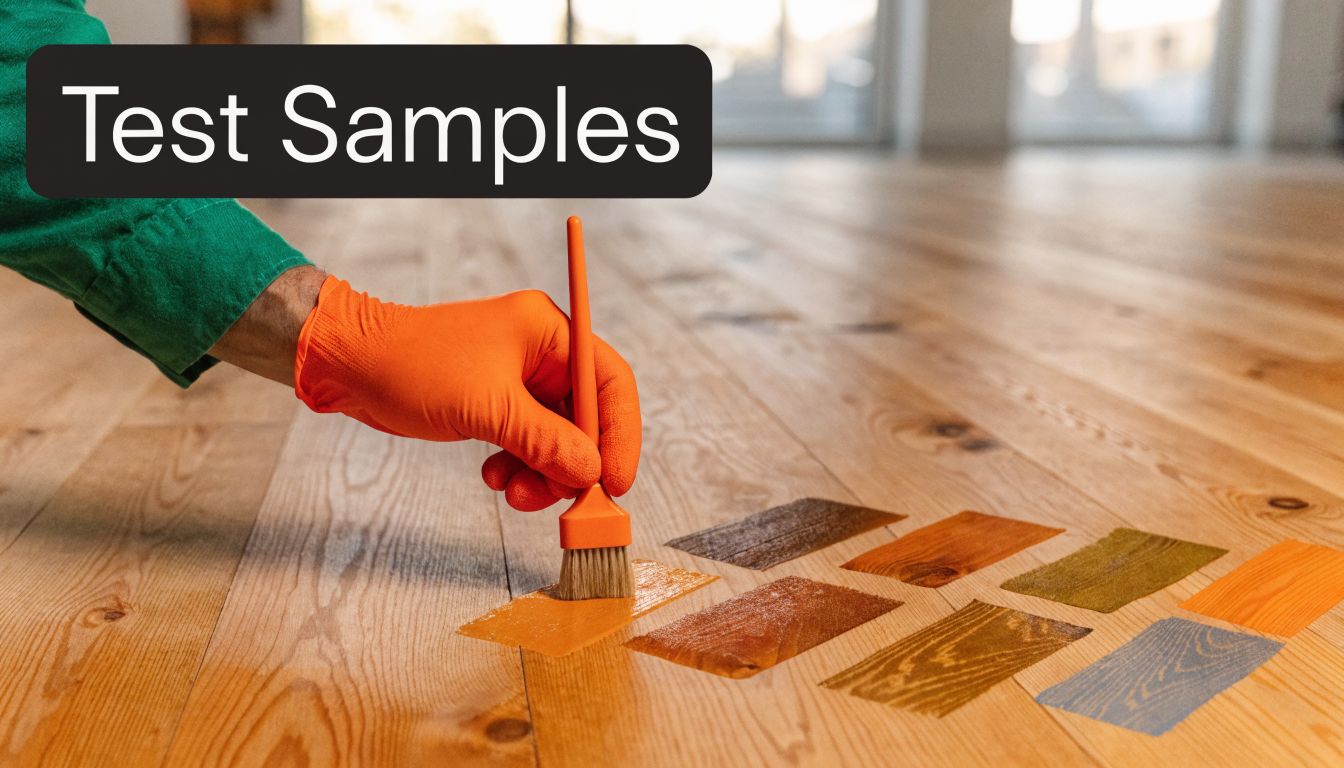
On-site testing gives you the definitive answer. It shows how your species, your sanding prep, your sunlight, and your finish schedule work together before the full floor is committed.
The professional testing method
Good sample testing is done on the floor itself, not on a loose board from the store. I recommend narrowing the field to a few stain options, then applying large samples in more than one part of the room. A proper sample should also follow the same prep plan as the final job, including water popping when the floor will be water popped before staining.
Water popping matters most when homeowners want more pigment and clearer grain definition. It raises the grain slightly so the stain absorbs more evenly and reads closer to the final result. On white oak, that can bring out depth. On red oak, it can also pull more of the natural pink or salmon undertone, which is exactly why testing first matters.
Give the samples time.
Look at them in morning light, late afternoon sun, and at night with lamps on. In Denver, south- and west-facing rooms can make a stain look cleaner at noon and much warmer by sunset. High-altitude UV exposure also changes how you should judge the color. If a stain already looks a little too dark or too amber on day one, it rarely gets better after you live with it.
What to do before you decide
Use this checklist:
Narrow to a short list
Pick two to four realistic options.Place samples where light changes
Test near windows, in interior zones, and in connecting spaces like hallways.Make the samples large
A bigger patch shows grain, undertone, and variation much more accurately than a brush streak.Match the final process
If the floor will be water popped or coated with a specific finish system, the sample should follow that same process.View them for at least a full day
Check them in natural light and under your normal evening lighting.Choose the sample that fits the room
The right stain is the one that works with the whole space, not the one that grabs attention in a tiny square.
If your household has dogs, kids, or a tight move-back schedule, sample the color with the finish plan in mind too. A stain can look right and still be the wrong choice if the topcoat cures too slowly for your house. Homeowners comparing modern finish options usually benefit from reading these instant UV-curable hardwood floor finish questions and answers before they approve a stain sample.
Here’s a close-up look at real refinishing work and process details in motion:
A stain decision made in ten minutes often turns into a floor you stare at for ten years.
Testing on the actual floor costs a little time. It saves far more time than sanding back a color that looked good on a sample board and wrong in your living room.
Beyond Color Sheen Durability and Pet-Proofing with a UV-Cure System
Homeowners often spend days choosing a stain color and only a few minutes choosing the finish. On the floor, the finish does just as much work. It controls how the color reads, how fast you can move back in, and how well that floor holds up to dogs, kids, chair legs, and Denver’s dry air.
In this climate, finish choice matters even more. Strong sun at altitude can age a floor faster, especially in rooms with large south- or west-facing windows. Dry indoor conditions also put more stress on the wood and finish film through seasonal movement.
Sheen changes how the stain actually looks
Sheen is not a small cosmetic decision. I’ve seen homeowners approve a stain sample in satin and feel disappointed when the same color looks flatter, lighter, or more textured under matte.
Here is the practical difference:
Matte
Low reflection. Best for a natural, current look and for hiding everyday dust, paw prints, and minor surface scratches.Satin
A middle-ground finish that gives the floor some clarity and light bounce without pushing too much shine into the room.Semi-gloss
Sharper reflection and a more formal look. It also shows surface wear, swirl marks, and traffic paths faster.
In many Denver homes, matte and satin make the most sense. They fit current design preferences, and they are more forgiving in bright Colorado light.
Pet-proofing starts with the finish system
Pets do not ruin floors overnight. The wear shows up in patterns. Repeated nail traffic near doorways. Water bowl drips. Accidents that sit too long. Scratching at exterior doors. Those are finish problems before they become stain problems.
Pet urine can react with tannins in wood and leave dark discoloration, especially on oak. No finish makes a floor invincible, but some systems buy you more protection and less downtime. UV-cured finishes harden almost immediately after curing, which is a real advantage for households that cannot keep pets off the floor for days. If you want the practical details on timing, use, and maintenance, read these instant UV-curable hardwood floor finish questions and answers.
That speed matters. A traditional finish may look great, but if a dog is back on the floor too early, you can end up with scratches, print marks, or contamination before the coating has fully hardened.
The right stain color still needs a finish system that can survive daily life.
Refinishing package comparison
A higher-performance finish usually costs more up front. In active homes, it often costs less than redoing a floor early because the coating was not matched to the household.
| Package | Price per sqft | Key Feature | Ideal For |
|---|---|---|---|
| Diamond Traffic Plus | $5.50 per sqft | High wear and scratch resistance, UV-curing + Nano Wear | Heavy traffic homes, pets, rentals, active families |
| Platinum Traffic Plus | $4.80 per sqft | 2K water-based finish, Nano Wear Oxide Additive | Homeowners who want strong durability and a modern low-sheen look |
| Gold Traffic Plus | $4.50 per sqft | Scratch resistance, 2K water-based finish | Busy households that want durable performance at a mid-tier price |
| Silver Traffic Plus | $4.20 per sqft | Wear resistance, 1K water-based finish | Lower- to moderate-traffic spaces |
Related services also matter if the color already works and the problem is wear, contamination, or loss of protection:
- Screen & Recoat starts at $2.50/sq. ft.
- Wood Floor Cleaning starts at $1.50/sq. ft.
- Wax Removal starts at $2.50/sq. ft.
- Instant UV-Curable Finish $1.5/sq. ft.
The trade-off is straightforward. If your home has pets, heavy traffic, or a tight move-back schedule, the finish system should be selected with the same care as the stain color. In Denver, that usually means choosing the coating that handles sun, dry air, and real household use, not just the one that looks good on day one.
Frequently Asked Questions About Hardwood Floor Staining
How much does hardwood floor refinishing cost in Denver with a UV-Cure System
Cost depends on the floor’s condition, whether sanding is required, whether you’re changing color, and which finish package fits your traffic level. A simple maintenance service costs less than a full stain change because the labor and prep are completely different.
For reference, Screen & Recoat starts at $2.50/sq. ft., Wood Floor Cleaning starts at $1.50/sq. ft., Wax Removal starts at $2.50/sq. ft., and Instant UV-Curable Finish is $1.5/sq. ft. Full sanding and refinishing depends on species, repairs, stain complexity, and finish selection.
Can you change a floor from dark to light
Yes, but only if the floor has enough wear layer and is properly sanded back to raw wood. Dust-free sanding plays a critical role. A true color reset requires removing the old finish and old pigment consistently, not just buffing the surface.
Floors with heavy pet staining, wax contamination, or deep blackened areas may need a more honest conversation. Sometimes they can be corrected. Sometimes replacement boards or selective installation make more sense.
How long does a UV-Cure System take
The biggest advantage is speed after application. UV-cured finishes cure in seconds, which means homeowners can regain use of the space much faster than with traditional systems, according to the pet-focused finish data cited earlier.
That same-day usability is especially valuable for families, occupied homes, and property managers who can’t afford long downtime.
Should I choose full refinishing or a screen and recoat
Choose full refinishing when the floor has deep wear, color inconsistency, heavy scratches, old stain issues, or when you want a different stain color. Choose a screen and recoat when the wood itself is still in good shape and you mainly need surface renewal and added protection.
A deep clean and buff can also help when the issue is buildup rather than finish failure. Wax removal is the right move when old maintenance products have contaminated the surface and prevented proper bonding.
Start Your Denver Hardwood Floor Transformation Today
A Denver homeowner can love a stain sample in the showroom, then watch it read completely differently once the afternoon sun hits the living room. That is why good stain decisions are made on the floor, under your lighting, with your wood, and with a finish system that fits how the house is used.
The right result usually comes from a handful of steady choices. Read the natural light in each room. Respect the species and undertone already in the floor. Choose a color family that supports the home instead of chasing a short-term trend. Test the stain on site. Then protect that color with a finish that can handle Denver’s dry air, strong UV exposure, kids, dogs, and daily traffic.
Local conditions change the job. High-altitude sun can fade some tones faster than homeowners expect, especially near large south- and west-facing windows. Low indoor humidity can also make wood movement more noticeable through seasonal gaps and board definition. If you are updating floors before listing, projects that increase home resale value tend to work best when the stain, sheen, and floor condition all support the rest of the house.
A well-chosen stain should still make sense after the excitement of day one wears off.
Homeowners in Parker call J.R. Hardwood Floor Refinishing & Cleaning when they want practical answers, dust-free sanding, and finishes that fit real household use. We use advanced UV-curable finish systems that cure immediately after application, which helps families get back into the space faster and cuts the long downtime that comes with many traditional finishing schedules. For pet owners and high-traffic homes, that speed matters, but so does the harder wear surface and the lower odor during the return-to-home process.
📞 Phone: 720-327-1127
📍 Service Area: Parker, Denver, Aurora, Castle Rock, Littleton, Highlands Ranch, and nearby towns across the Denver Metro Area
▶️ YouTube: See our process and results